

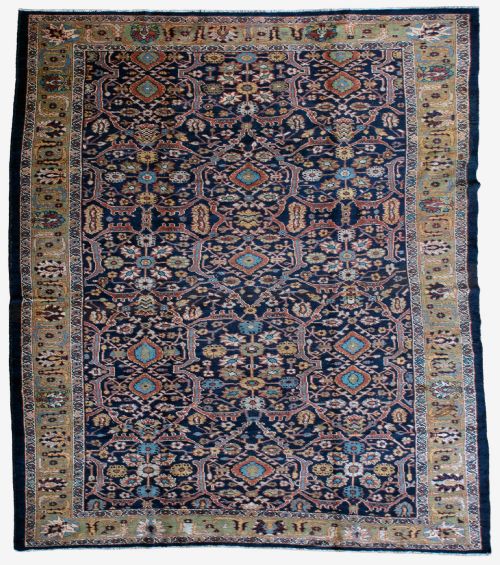
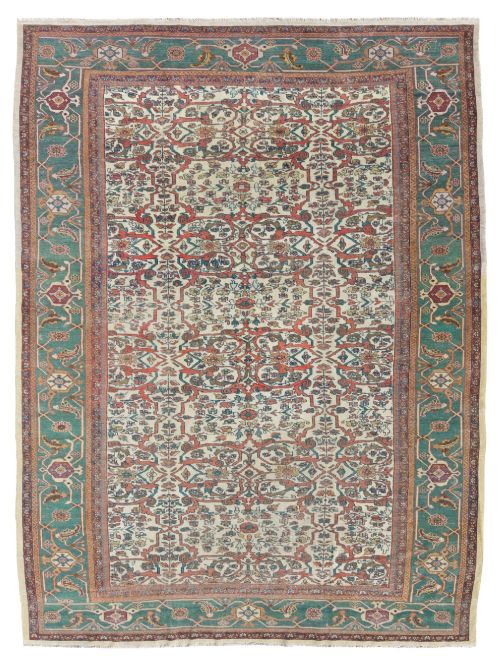
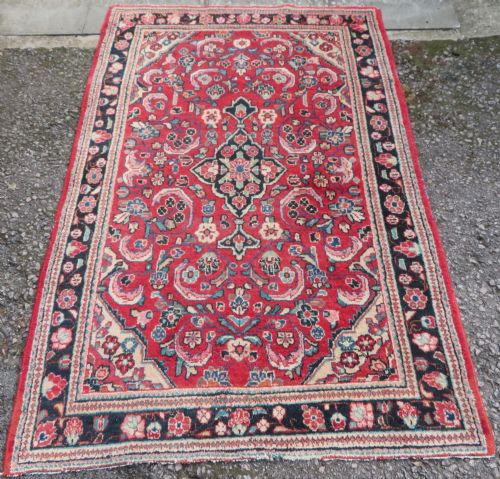
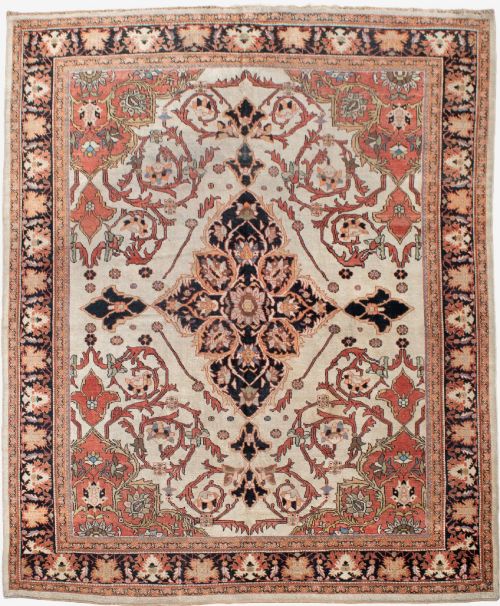
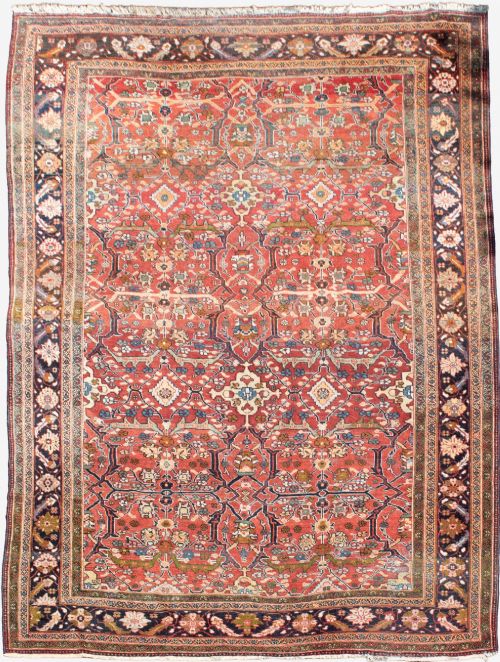


Vintage Mahal Area Carpet
These vintage mahal area carpet pieces bring large-scale West Persian artistry into your rooms.
Vintage Mahal Area Carpet
When you search for a vintage mahal area carpet, you encounter large woven floor coverings originating from West Persia. The pieces listed span from the late nineteenth century into the early decades of the twentieth century, including room-size formats and village rug variations. These floor coverings are predominantly classified as Persian, Persian Ziegler, Persian Sultanabad, and Persian Mahal styles.
The version you are most likely to meet on this page is a room-size carpet or larger format, often measuring over four metres in length. Alongside these large carpets, you find village rugs from the Chahar Mahal Valley region. They serve as substantial foundational pieces for traditional interiors.
What varies in quality
Quality in these floor coverings rests upon the fineness of the weave and the handled condition of the wool pile. Carpets with denser knot counts hold their structure better under foot traffic and preserve intricate botanical or medallion details with sharper definition.
The integrity of the foundation matters equally, as cotton warps and wefts must remain stable across large formats. The subtlety and permanence of the natural dyes separate simpler village productions from finer workshop pieces.
Listings on this site feature wool and cotton materials across periods spanning from 1870 through to 1930.
The Vintage Mahal Area Carpet Glossary
- Mahal
- A style of Persian carpet originating from the Mahal region of West Persia, known for large-scale floral patterns and muted palettes. These pieces date across the nineteenth and early twentieth centuries.
- Ziegler
- A commercial adaptation of Persian carpet design, often featuring softer colours and expansive open fields tailored for Western tastes. These were produced in Persia by firms such as Ziegler and Co.
- Sultanabad
- A nineteenth-century designation for large-format Persian carpets woven in and around the city of Sultanabad, sharing aesthetic traits with Mahal productions.
- Warp
- The vertical threads stretched lengthwise on the loom that form the skeleton of the carpet. Cotton is typically utilised for this foundational structure.
- Weft
- The horizontal threads passed across the warp threads to lock the rows of knots in place. Together with the warp, it forms the woven backing of the piece.
Vintage Mahal Area Carpet: Frequently Asked Questions
Where do these carpets originate?
These pieces originate from West Persia, specifically associated with the Mahal region and the Chahar Mahal Valley.
Production spans from village workshops to larger commercial centres like Sultanabad during the late nineteenth and early twentieth centuries.
What materials make up these rugs?
The structural foundation utilises cotton for both the warp and the weft threads.
Hand-spun wool forms the thick pile that carries the traditional Persian designs and natural dyes.
How do I choose the right size?
Sizes range from smaller village rugs measuring around two metres up to expansive oversize carpets exceeding five metres in length.
Consider the proportions of your room to ensure the border patterns remain visible beyond furniture placement.
What distinguishes Ziegler from Mahal?
Ziegler carpets represent a commercial adaptation featuring softer colour palettes and more open fields designed specifically for Western European markets.
Mahal pieces often display traditional local village patterns with bolder terracotta or ivory ground compositions.