





Oval Wine Cistern
An oval wine cistern is a refined vessel designed for chilling bottles at table, offering both practical utility and stately presence.
Oval Wine Cistern
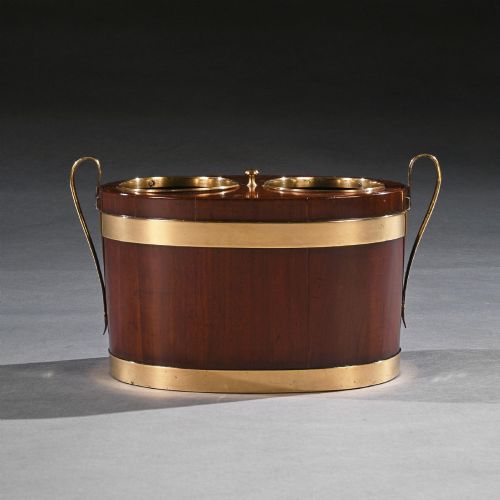
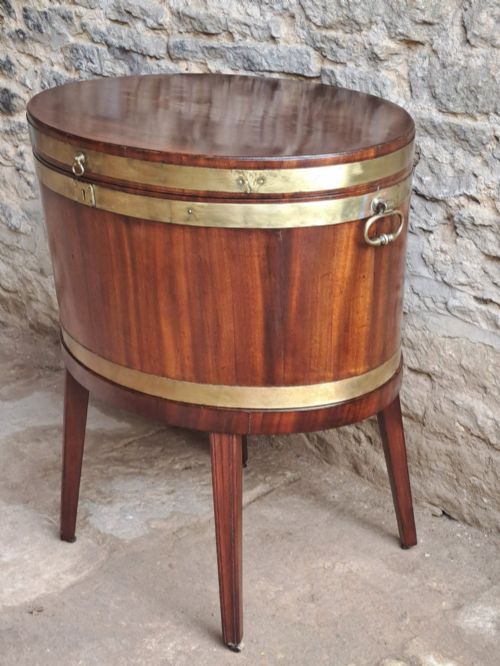
An oval wine cistern is an impressive dining room piece primarily created during the 18th century and the Georgian period. When searching for an oval wine cistern, buyers encounter substantial vessels traditionally built to hold ice and bottles during grand meals.
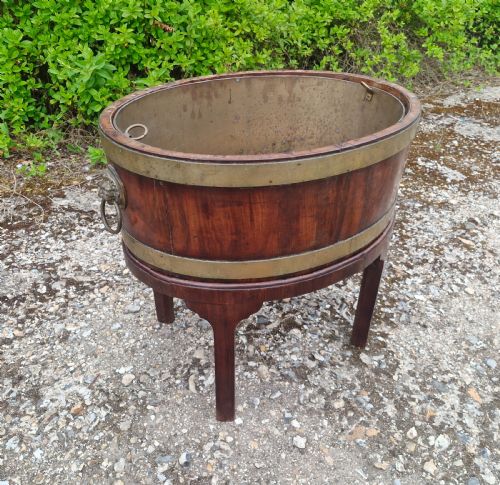
The selections span from George III mahogany examples with brass banding to later Victorian interpretations and Regency neoclassical faux marble designs. Many rest upon original stands, whilst others function equally well as plant jardinieres.
Materials and Construction
Cabinetmakers utilised rich timbers such as mahogany and walnut, often shaping them with coopered staves or solid panels. Brass banding, heavy bronze mounts and zinc linings were incorporated to contain ice and water securely.
Decorative details included fine boxwood inlay, faux marble paint finishes and architectural neoclassical motifs. Stands were constructed to match the main vessel, providing stable elevation for heavy, liquid-filled cisterns.
Oval Wine Cistern Retail Price Guide 2026
Typical asking prices for oval wine cistern among the pieces listed under this phrase on Sellingantiques today, from the lower quarter to the upper quarter. They describe what is for sale here now, not the wider market.
Several examples double happily as champagne buckets and plant pots, proving that historic dining accessories adapt well to modern domestic life.
Assessing Quality and Craftsmanship
Quality rests upon the selection of timber figures, the precision of the cooperage or cabinetry, and the originality of the stands and metal fittings. Superior pieces display crisp brass work, well-preserved linings and harmonious proportions.
Later revival pieces from the Victorian era demonstrate differing standards of hand-craftsmanship compared to 18th century originals. The presence of original mounts, stands and uncompromised timber surfaces elevates the stature of a cistern significantly.
The Oval Wine Cistern Glossary
- Coopered
- Built with curved wooden staves joined tightly together, similar to barrel construction. This method provided the watertight integrity required for holding melting ice.
- Jardiniere
- An ornamental pot or stand designed for holding plants or flowers. Many wine cisterns were adapted for this secondary use over the centuries.
- Cellarette
- A lockable container used for storing bottles of wine within the dining room. These vessels often shared the same spaces and materials as open cisterns.
- Neoclassical
- A style drawing inspiration from classical antiquity, prominent during the Regency period. It introduced motifs such as faux marble and bronze mounts to furniture design.
Oval Wine Cistern: Frequently Asked Questions
How were they used historically?
Servants filled the wooden vessel with ice and water before placing wine bottles inside to cool for the dining table. The waterproof linings protected the surrounding floor and furniture.
They stood nearby during feasts so hosts could replenish glasses without retreating to the cellars.
Can I use an antique cistern for plants?
Many buyers repurpose these vessels as striking indoor plant jardinieres. Their generous proportions accommodate large potted greenery with ease.
Original zinc or metal linings often make them practical for holding soil and moisture safely.
How do I date a wine cistern?
Dating relies upon examining the timber species, joinery techniques, and decorative styles such as Georgian inlay or Regency neoclassical mounts. 18th century pieces typically show characteristic hand-cut dovetails and period brass fixings.
Revival pieces from the late 19th century exhibit slightly different manufacturing signatures and heavier proportions.