

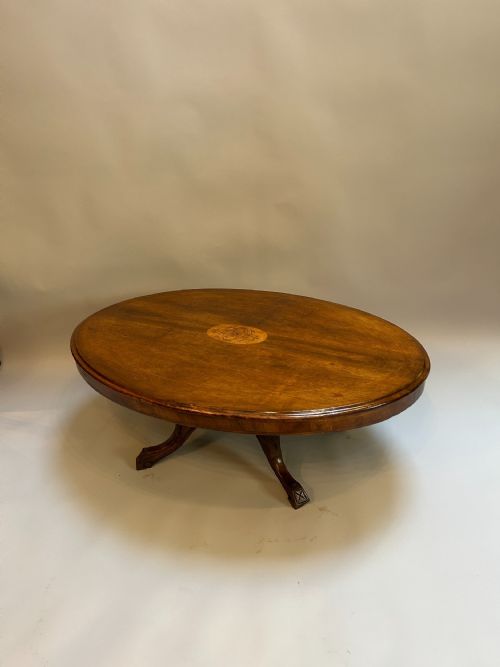


Oval Tripod Table
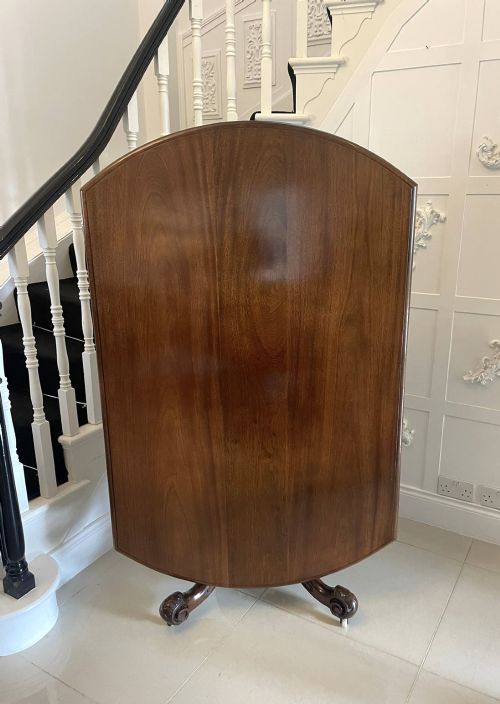
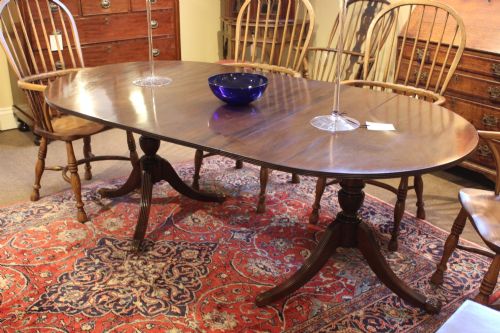
An oval tripod table balances a slender three-legged support beneath a curved top, offering a versatile surface found across Georgian, Victorian, and Edwardian periods.
Oval Tripod Table
When you search for an oval tripod table, you encounter a form designed for portability and display, functioning historically as a wine table, lamp table, or occasional table. These pieces span the 18th century through to the Edwardian era, reflecting changing domestic interiors and social habits.
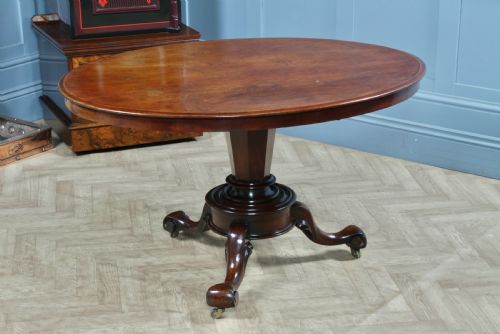
The most common examples on this page are mahogany pieces from the Georgian and Victorian periods, often featuring tilt-top mechanisms for storage against a wall when not in use. You will also find walnut, burr walnut, and exotic timbers, alongside occasional variations in oak, yew, and satin birch.
Beyond standard wine and occasional tables, the selection includes larger dining and centre tables adapted to pedestal bases, as well as specialised forms like worktables and lamp tables. Their origins range across English workshops, Swedish cabinet makers, and Anglo-Indian production.
How they were made
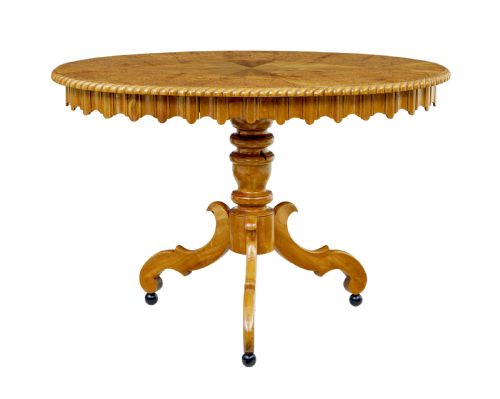
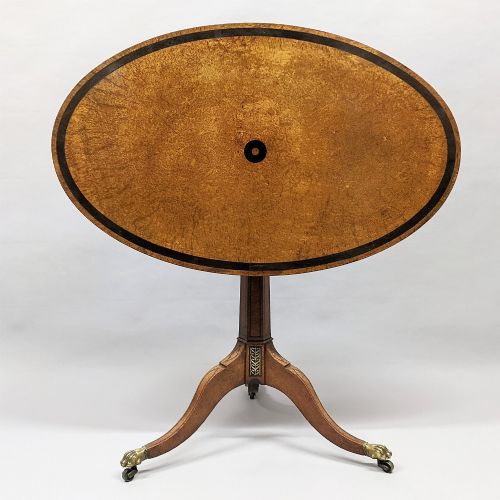
Cabinet makers constructed the tops of these tables from solid timbers or applied veneers such as burr walnut, flame mahogany, and satin birch over a stable secondary wood. Marquetry and boxwood inlay frequently decorated the surfaces, requiring precise hand-cutting and fitting.
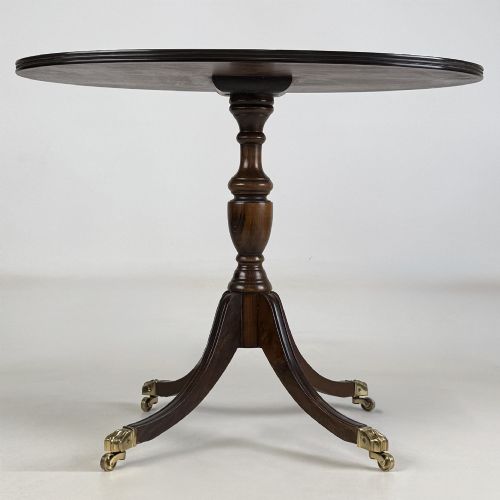
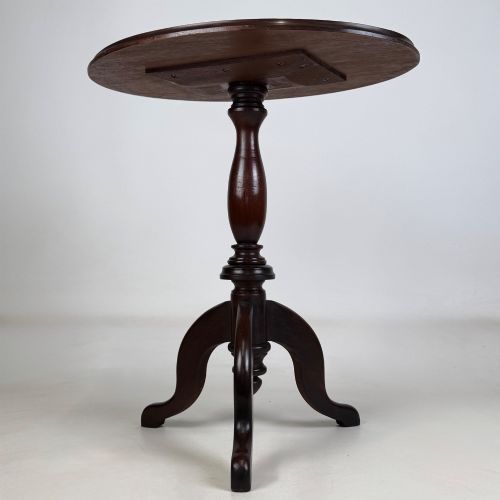
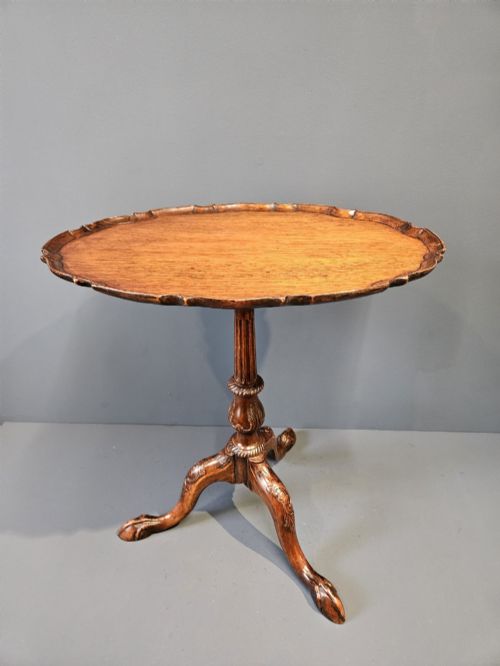
The characteristic tripod base relied on sturdy turned columns joined to three splayed legs, frequently terminating in pad, spade, or carved cabriole feet. Many examples incorporated a birdcage or tilt-top mechanism of brass and wood, allowing the top to pivot and fold flat.
Carving was executed entirely by hand, visible in rope-twist edges, pie crust borders, and floral motifs along the knees and borders. Finishes depended on shellac polish or natural oils that built up a warm patina over decades of use.
Listings feature oval tripod tables spanning the 18th, 19th, and early 20th centuries, executed in mahogany, walnut, oak, and exotic specimen woods.
What varies in quality
The choice of timber underpins the distinction between standard utility items and exceptional pieces, with figured veneers, matched burr walnut grains, and exotic woods commanding higher regard. Grain alignment across the oval top and the neatness of inlaid banding indicate the skill invested in the initial construction.
Structural integrity rests on the tightness of the joints where the tripod legs meet the central pillar, as well as the smooth operation of any tilt-top or birdcage mechanism. Heavy, balanced bases with well-proportioned cabriole or tapered legs provide stability that lighter, poorly assembled versions lack.
The crispness of hand carving on the column and feet separates routine production from superior craftsmanship. Sharp detailing in pie crust edges and clean lines without excessive sanding distortion preserve the maker's original intent.
Edwards & Roberts
The Oval Tripod Table Glossary
- Tilt-top
- A hinged tabletop mechanism that allows the surface to pivot vertically into a flat position when not in use. This clever design saved valuable floor space in smaller period rooms.
- Tripod base
- A pedestal support dividing into three distinct feet or legs. It provides stable placement on uneven historic floors without wobbling.
- Pie crust edge
- A raised, decoratively carved border shaped in small curves resembling pastry crusts. This technique prevented items from rolling off the tabletop.
- Burr walnut
- A prized wood veneer harvested from tree growths that produces swirling, highly decorative grain patterns. Cabinet makers utilised it on prominent surfaces to catch the light.
- Occasional table
- A small, movable table designed for specific, intermittent tasks such as holding a lamp or serving wine. They populated drawing rooms and parlours across the 19th and early 20th centuries.
Oval Tripod Table: Frequently Asked Questions
What was an oval tripod table used for?
These tables served flexible domestic purposes, frequently acting as moveable stands for wine bottles, tea services, or lamps during evening gatherings.
Because many featured tilt-top mechanisms, servants could store them compactly against drawing room walls when the floor needed to be cleared for dancing or dining.
How do I spot a tilt-top mechanism?
Look beneath the tabletop for a wooden or brass block catch that releases the pivot, allowing the surface to fold vertical to the pillar.
Original mechanisms should move smoothly on their pivot pins without excessive lateral play in the locked horizontal position.
Are these tables suitable for modern coffee tables?
Smaller occasional and wine tables generally sit too high and possess too small a surface area to function as standard sofa companions.
However, lower Victorian centre and coffee table variants provide appropriate heights and broader proportions for contemporary living spaces.
How do I tell Georgian from Victorian examples?
Georgian versions typically rely on understated mahogany or oak construction with simpler tripod bases and clean, restrained lines.
Victorian pieces often introduce heavier burr walnut veneers, complex marquetry inlays, darker ebony accents, and more heavily carved cabriole legs.