

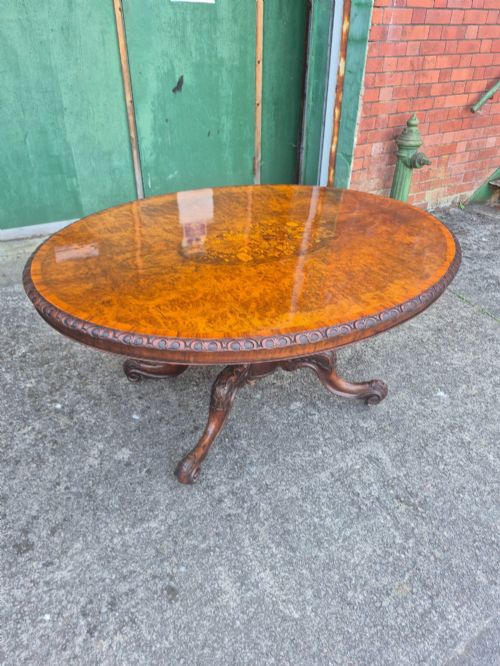
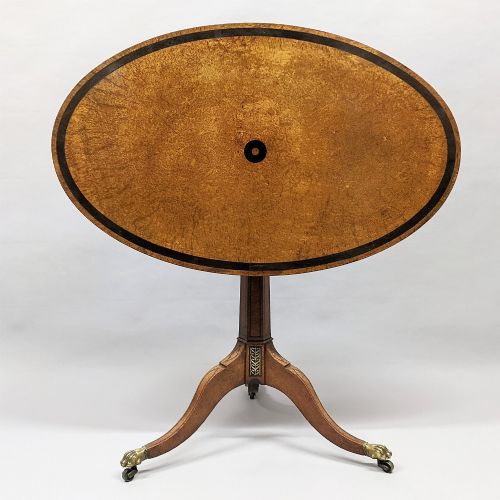
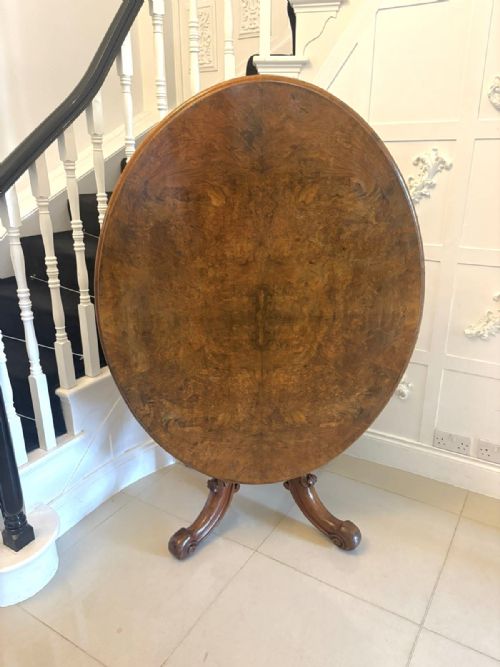
Oval Tilt Top Breakfast Table
When you search for an oval tilt top breakfast table, you enter a tradition of pedestal furniture designed to save space and display fine timbers.
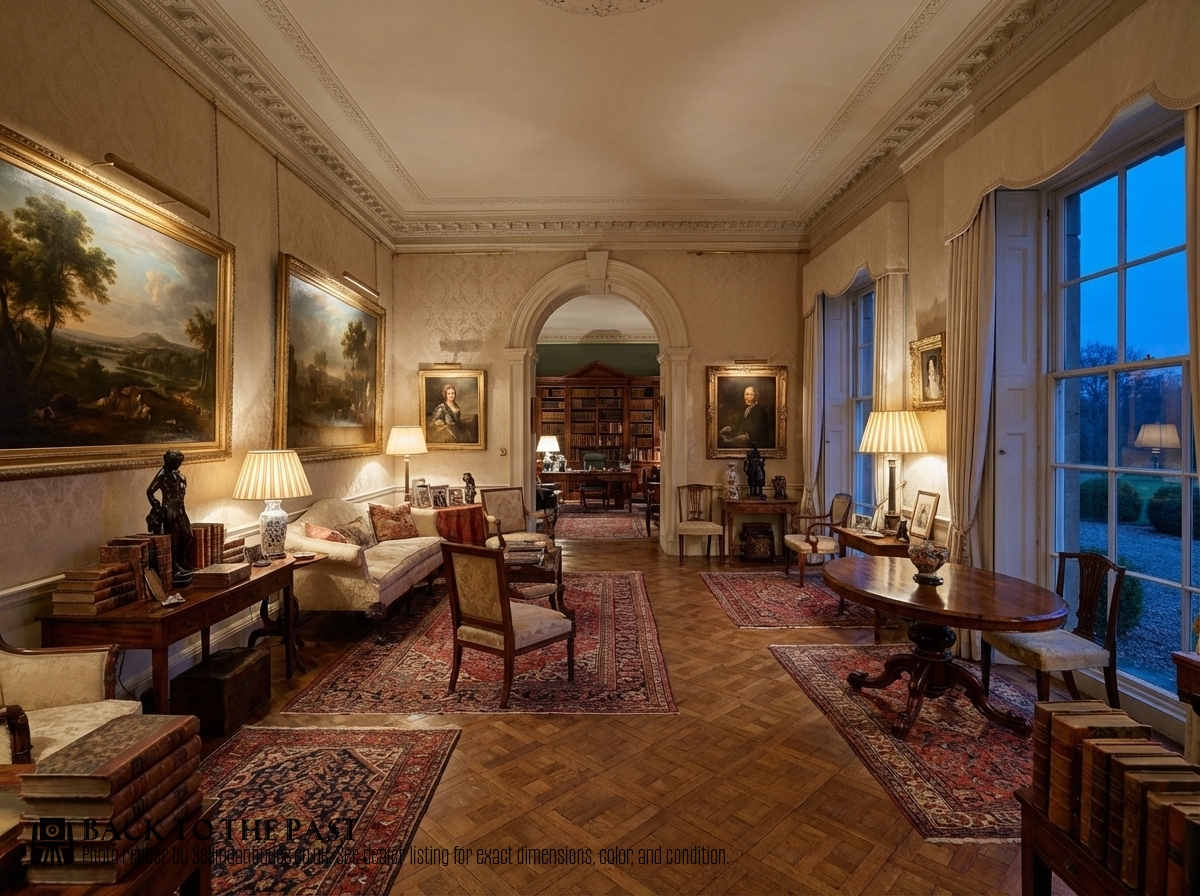
Oval Tilt Top Breakfast Table
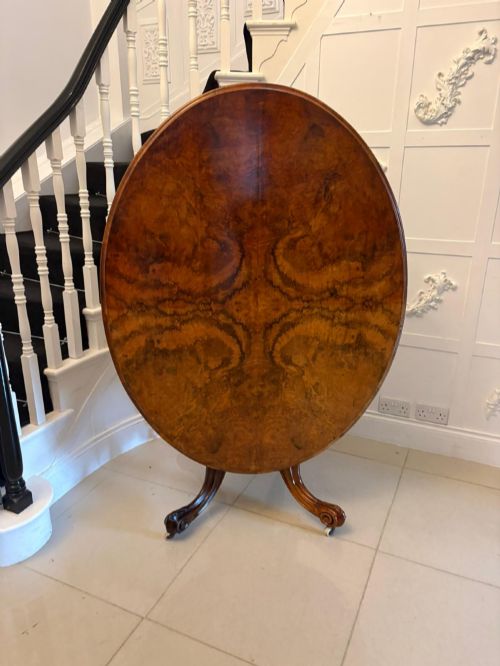
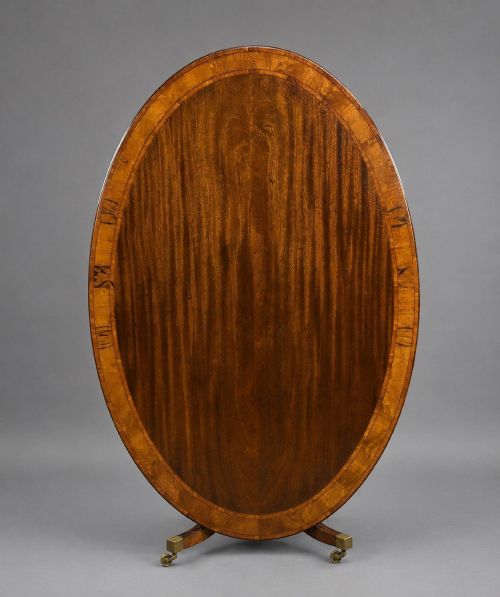
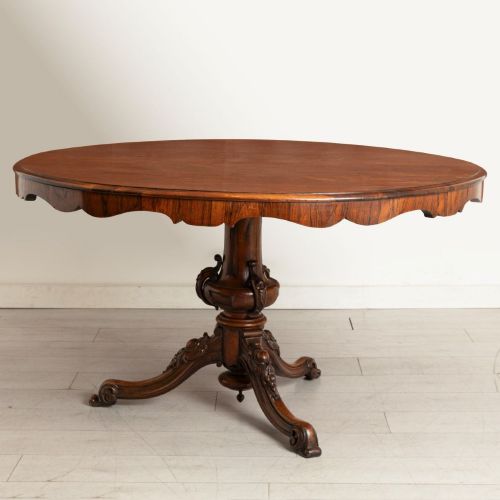
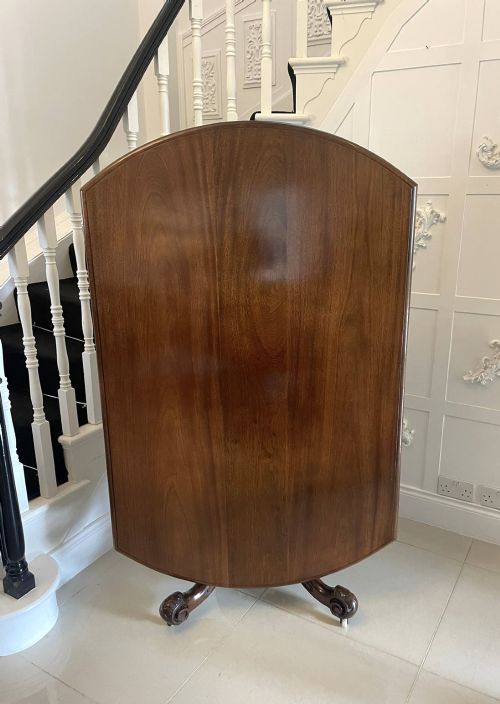
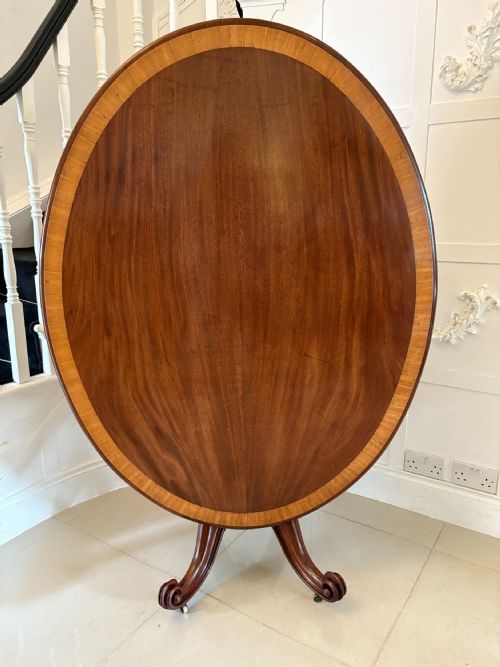
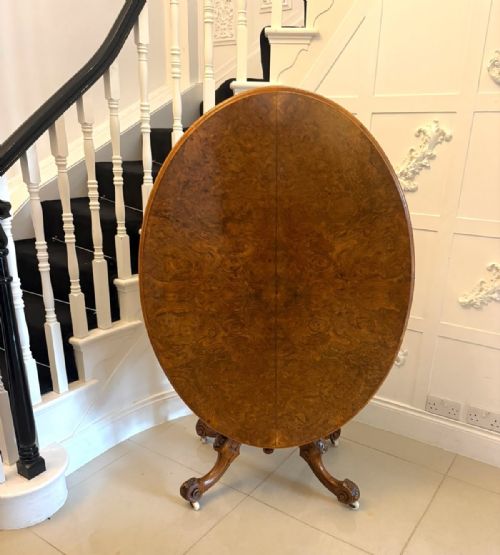
An oval tilt top breakfast table is a pedestal dining or centre table featuring a mechanism that allows the top to rotate and lock into a vertical position when not in use. These pieces primarily date from the Georgian, Regency, William IV and Victorian periods, spanning the eighteenth and nineteenth centuries.
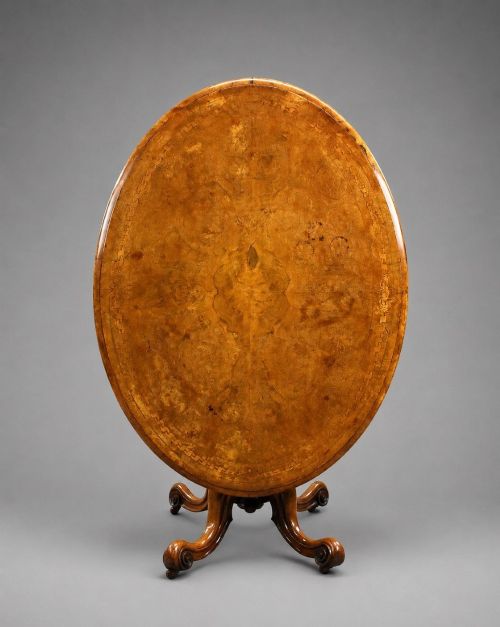
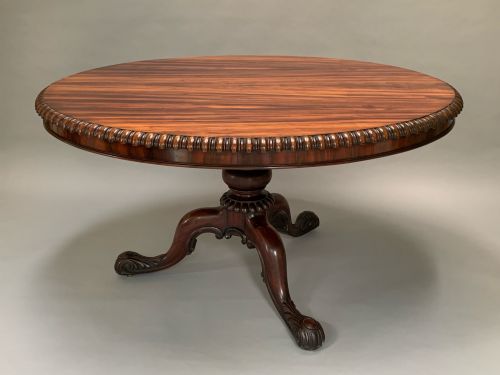
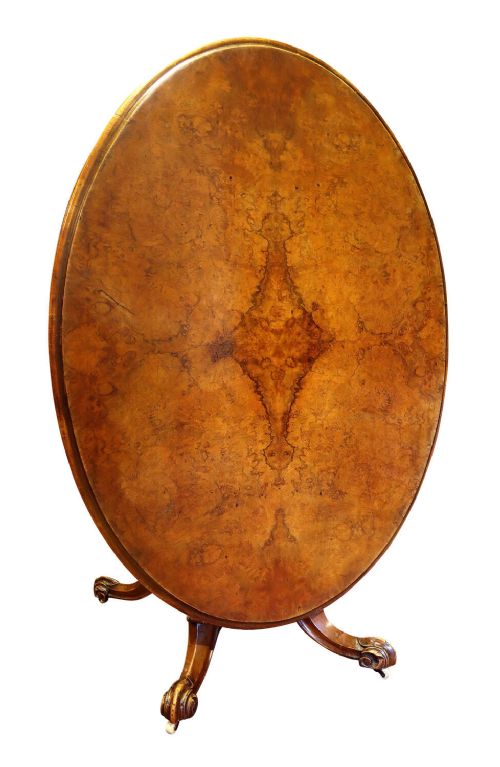
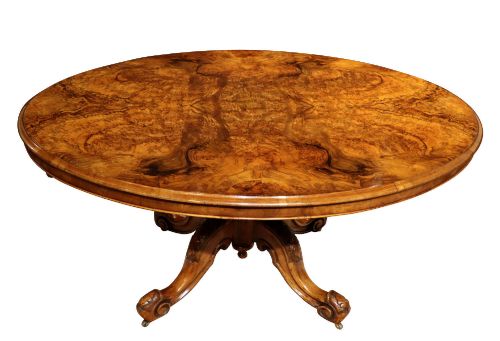
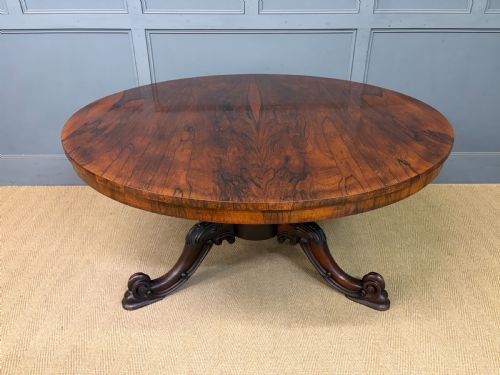
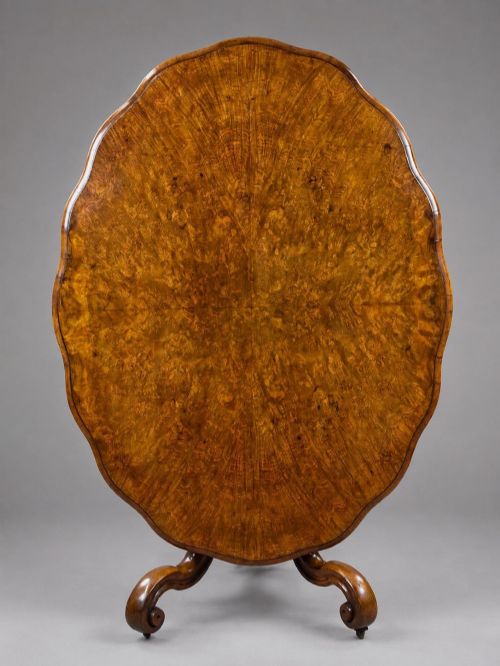
The most common version met on this page is the Victorian burr walnut loo table or breakfast table, often resting on a carved pillar and a quadrapod or tripod base. Mahogany and rosewood examples also appear frequently, originating from workshops that produced large dining and centre tables for domestic interiors.
How they were made
Cabinet makers utilised dense native and exotic hardwoods such as mahogany, walnut and rosewood, frequently applying burr walnut veneers to the tabletop to create rich, figured grain patterns. Crossbanding in satinwood or boxwood provided contrasting borders, whilst brass fittings secured the tilt mechanism and castors.
The mechanism relied on a robust wooden or metal catch block beneath the top, allowing the surface to pivot smoothly on a turned central pillar. Solid timber was carved by hand for the bases, particularly on the scrolling legs and pedestal collars associated with mid-nineteenth century production.
What varies in quality
The distinction between ordinary and exceptional examples rests upon the choice of timber and the depth of carving on the base. Tables featuring highly figured burr walnut or meticulously matched veneers command attention for their visual richness.
Structural stability during the tilt action and the crispness of hand-carved details on the pillar and feet separate standard production pieces from master workshop output. The harmony of proportions between the oval top and the supporting pedestal defines the overall visual balance.
Gillows·Edwards and Roberts
The Oval Tilt Top Breakfast Table Glossary
- Tilt top
- A tabletop mounted on a pivoting mechanism that allows the surface to be stored vertically against the pedestal when not in use. This feature originated to clear floor space in smaller rooms.
- Loo table
- A nineteenth-century card and social table that doubled as a breakfast or centre table, sharing the oval tilt top format. These tables accommodated evening games as well as morning meals.
- Burr walnut
- A prized timber veneer sourced from the growth warts of walnut trees, yielding complex swirling grain patterns. Cabinet makers selected these sections for decorative impact on tabletops.
- Crossbanding
- A border technique where thin strips of wood veneer are laid perpendicular to the main grain of the tabletop. This frames the central panel with a contrasting tone.
- Quadrapod base
- A pedestal support terminating in four carved feet or legs, often fitted with brass castors. This configuration provided stability for large oval surfaces.
Oval Tilt Top Breakfast Table: Frequently Asked Questions
How do I use a tilt top table?
Release the brass catch beneath the tabletop to pivot the surface from horizontal to vertical. This allows the table to stand flat against a wall when floor space is needed.
Return the top to the horizontal position and secure the latch before placing items on the surface. Ensure the mechanism locks firmly to maintain stability during daily use.
Where were these tables placed originally?
These tables served multiple functions in nineteenth-century homes, functioning as breakfast tables in morning rooms or centre tables in larger entrance halls and drawing rooms.
Their mobility made them practical for shifting light positions or clearing rooms for evening entertaining and social gatherings.
How do I date a mahogany breakfast table?
Examine the timber density, the style of the pedestal base, and the construction of the underside framework. Georgian and Regency pieces often feature simpler turned pillars and lighter proportions.
Victorian iterations tend to display heavier carved quadrapod bases and more elaborate burr veneers or marquetry inlay work.
Can an oval tilt top table seat six people?
Many examples measuring across the oval top comfortably seat six to eight guests for dining. The lack of corner legs provides uninterrupted legroom around the pedestal base.
Check the overall length and width dimensions in the listing to confirm chair placement and seating capacity for your dining space.