




Oval Satinwood Side Table
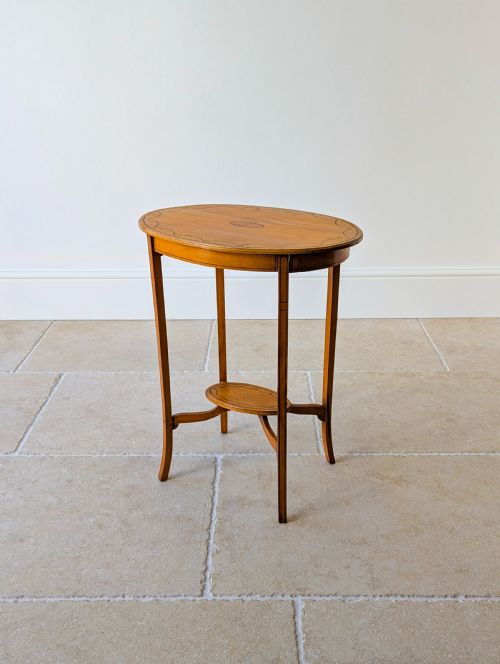
An oval satinwood side table brings light, grain and a refined profile to a room, appearing in Sheraton revival and Edwardian forms.
Oval Satinwood Side Table
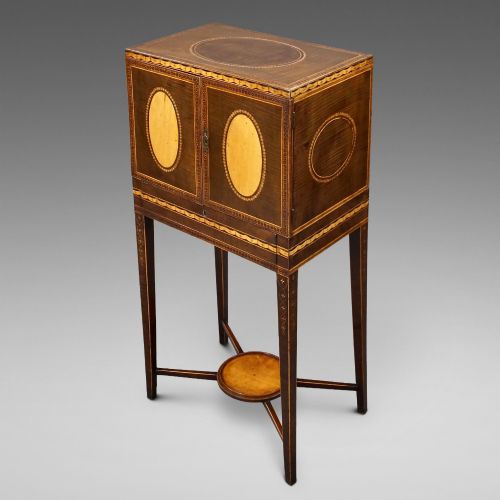
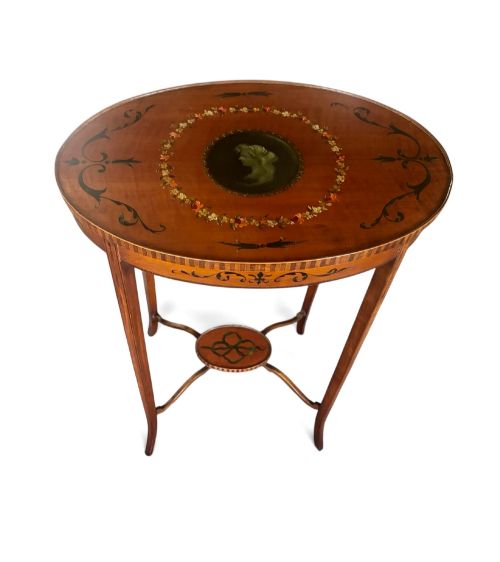
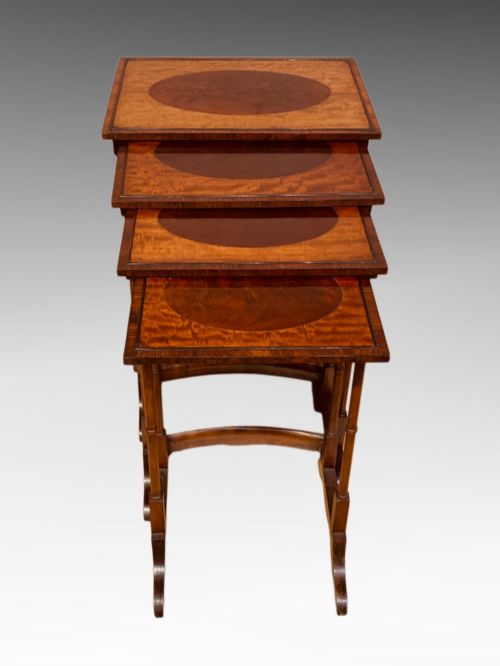
An oval satinwood side table is a light piece of furniture designed for display or writing, most frequently encountered in Edwardian and Sheraton revival variations across this selection. These tables bring a pale, reflective timber surface to a room, often supported by slender tapered legs or arranged in multi-tiered etagere forms.
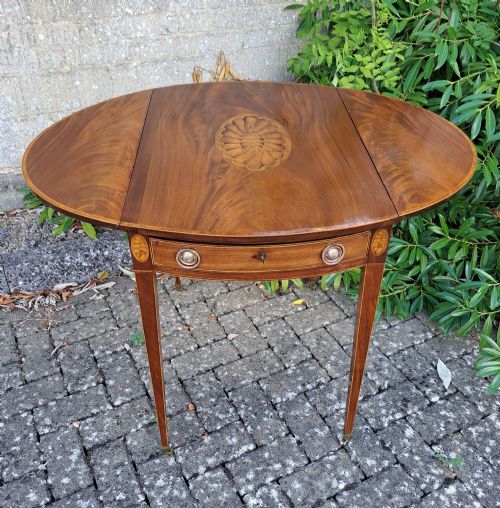
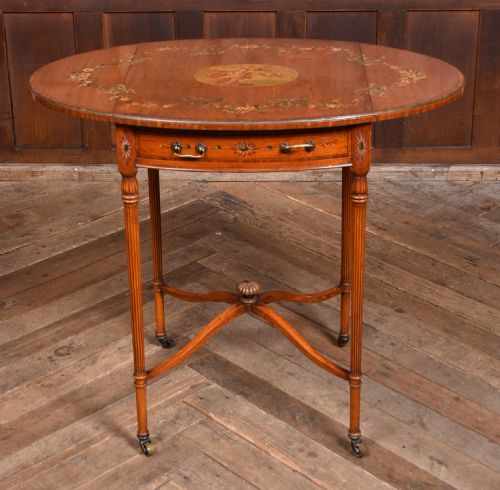
The materials span from genuine satinwood to satin walnut, enriched with contrasting banding in mahogany, kingwood, rosewood and boxwood. Pieces range from drop-leaf pembroke tables and writing desks to simple occasional tables and multi-tiered window stands.
How they were made
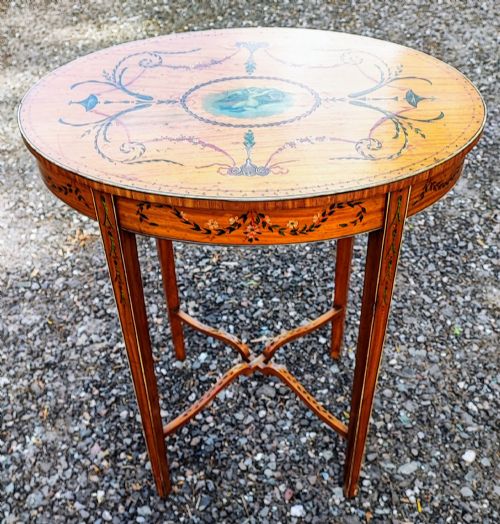
Cabinet makers utilised fine veneers of satinwood laid over stable secondary timbers like mahogany, securing the delicate grain patterns with crossband axes in rosewood or kingwood. Surface ornamentation relied heavily on intricate boxwood inlay and hand-painted floral or neoclassical motifs.
Structural elements incorporated brass fittings, gilt bronze mounts and marquetry panels, demonstrating precise joinery suitable for lighter, decorative domestic furniture.
A tiny occasional table designed to hold a kettle by the hearth.
What varies in quality
The distinction between tiers of quality rests on the crispness of the marquetry inlay and the choice of secondary timbers beneath the satinwood veneer. Hand-painted floral decorations show varying degrees of artistic control, separating simple factory output from delicate studio work.
Construction details such as the integration of solid banding, the balance of the proportions and the preservation of the original polish dictate the standing of an individual piece.
Edwards and Roberts
The Oval Satinwood Side Table Glossary
- Satinwood
- A lustrous tropical timber prized for its pale, golden-yellow colour and natural sheen. It forms the primary visual surface for late eighteenth and Edwardian revival furniture.
- Crossbanding
- A strip of veneer applied to the border of a table top so that the grain runs perpendicular to the central panel. This technique frames the satinwood core.
- Marquetry
- The art of forming decorative patterns using fitted pieces of various coloured woods and veneers. It appears frequently on tabletops in floral or neoclassical designs.
- Etagere
- A set of open shelves or tiers designed for displaying small objects. These lightweight pieces often feature oval satinwood trays.
- Pembroke table
- A small occasional table with hinged drop flaps on either side. Many examples incorporate satinwood banding and single drawers.
Oval Satinwood Side Table: Frequently Asked Questions
What is an oval satinwood side table used for?
These tables served primarily as light display surfaces for lamps, books or ornaments in drawing rooms and parlours. Their portable nature allowed them to be moved easily around domestic spaces.
In period settings they also functioned as writing tables, kettlestands or small bedside stands depending on their height and tier arrangement.
How do I tell Edwardian pieces from 18th century originals?
Edwardian and Sheraton revival pieces usually display brighter, more uniform satinwood veneers and machine-assisted precision in their boxwood stringing. They often date from around nineteen hundred.
Eighteenth century examples, including George III pieces, exhibit deeper patination, hand-cut joinery details and denser underlying mahogany structures.
What timbers are used alongside satinwood?
Mahogany frequently forms the structural carcase or secondary timber underneath the decorative satinwood veneers. Kingwood, rosewood and boxwood appear in contrasting bandings and stringing.
Some tables utilise satin walnut as an alternative timber while maintaining the pale visual appearance associated with genuine satinwood.
How do I care for a satinwood surface?
Satinwood responds best to cleaning with a soft, dry cloth and occasional applications of microcrystalline wax to protect the polish. Avoid placing these tables in direct sunlight or near heat sources to prevent the veneer from drying.
Keep moisture away from the surface to protect the painted floral decorations and delicate boxwood inlay.