



Oval Satinwood Box
An oval satinwood box brings warmth and refined figure to a room, offering a tactile home for small treasures.
Oval Satinwood Box
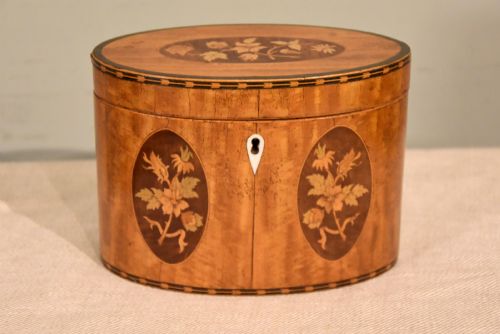
When you search for an oval satinwood box, you are looking at small domestic containers and display pieces built with figured timbers. The most common forms found on this page are tea caddies and small display cabinets dating from the Georgian, Edwardian, and nineteenth-century periods.
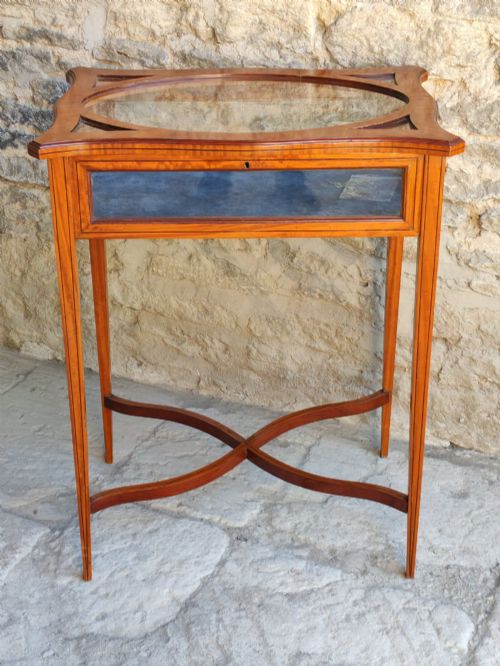
These items serve as both functional storage and decorative objects, ranging from tea caddies designed to hold loose leaves to bijouterie tables and cabinets meant to showcase small collections. Makers utilised the blonde, shimmering grain of satinwood to create elegant, curved silhouettes.
The styles span from Sheraton and Georgian neoclassical designs through to later Edwardian revivals, showing how cabinet makers favoured symmetrical oval shapes and delicate proportions. Each piece reflects the refined tastes of its period, relying on subtle wood tones rather than heavy carving.
How they were made
Craftsmen built these pieces using solid timbers and fine veneers, laying satinwood over firmer woods like mahogany to achieve smooth curved surfaces. Workshops incorporated contrasting materials such as harewood, boxwood, ebony, and bone for stringing and decorative inlay.
Makers constructed tea caddies and small cabinets with tight joints to protect contents from moisture, fitting them with brass hinges and escutcheons. The delicate surface patterns rely on precision cutting and contrasting wood grains rather than thick ornamentation.
Oval Satinwood Box Retail Price Guide 2026
Typical asking prices for oval satinwood box among the pieces listed under this phrase on Sellingantiques today, from the lower quarter to the upper quarter. They describe what is for sale here now, not the wider market.
Current listings feature pieces spanning from the 18th century through the Edwardian period, utilising materials including satinwood, harewood, brass, and glass.
What varies in quality
Quality rests primarily in the choice and figure of the satinwood veneer, where older pieces show a deeper, more lustrous chatoyancy across the curved body. The crispness of the inlaid stringing and the precision of the boxwood and ebony details distinguish finer workshops from standard production.
Structural integrity also separates the range, visible in how cleanly the oval lids and doors align with their frames without warping. Original brass hardware and well-preserved interior linings elevate a piece above those with replaced fittings or heavy restoration.
The Oval Satinwood Box Glossary
- Satinwood
- A pale, hard timber with a natural golden sheen that reflects light across curved surfaces. Cabinet makers prized it during the eighteenth and nineteenth centuries for high-status furniture and small decorative boxes.
- Stringing
- Thin lines of contrasting wood inlaid into the surface of a piece to create geometric borders. Craftsmen used materials like boxwood and ebony to frame panels on satinwood boxes.
- Harewood
- Sycamore wood that has been stained grey, often used in Georgian and Sheraton marquetry. It provides a cool, muted contrast against the warm golden tones of satinwood.
- Bijouterie
- Small decorative items or the specialised cabinets and tables designed to display them. These glazed or glass-topped pieces protect delicate curiosities while keeping them visible.
- Caddy
- A small container originally built to store tea leaves securely under lock and key. Georgian examples often featured internal lidded compartments for different tea varieties.
Oval Satinwood Box: Frequently Asked Questions
What were oval satinwood boxes used for originally?
Many of these pieces functioned as tea caddies, designed to store valuable tea leaves securely in locked compartments. Other variations served as small display containers for personal trinkets and keepsakes.
Their compact size allowed them to sit neatly on side tables or desks in reception rooms. Today, they remain useful for holding small items while adding period character to a surface.
How do I date an oval satinwood box?
Dating relies on examining the construction methods, wood types, and decorative styles visible on the piece. Georgian and eighteenth-century examples often feature Sheraton influence with fine harewood and boxwood inlay.
Later Edwardian pieces tend to show lighter framing and different interior linings. Comparing the brass hinges and internal compartments to known period examples helps narrow down the decade of manufacture.
How do I care for satinwood furniture?
Keep satinwood pieces away from direct sunlight and strong heat sources to prevent the blonde veneer from fading or drying out. Dust them gently with a soft, dry cloth rather than using heavy liquid polishes.
Maintaining a stable room temperature protects the delicate wood veneers and inlaid stringing from cracking. Waxing occasionally with a suitable microcrystalline wax helps preserve the natural sheen of the timber.