




Oval Satinwood Accent Table
An oval satinwood accent table brings warmth and lightness to a room through delicate timbers and refined proportions.
Oval Satinwood Accent Table
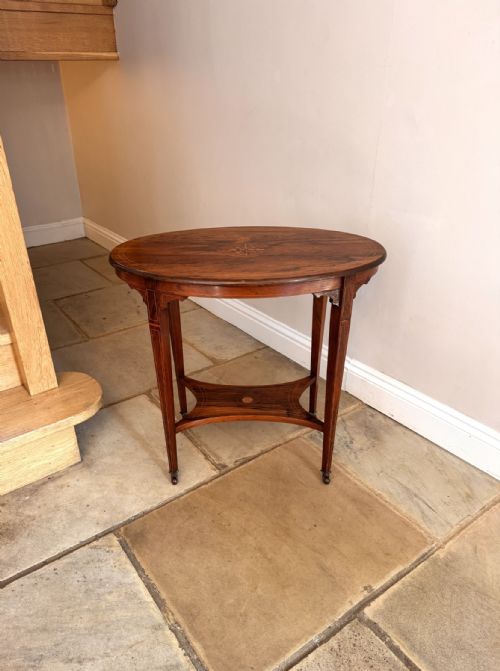
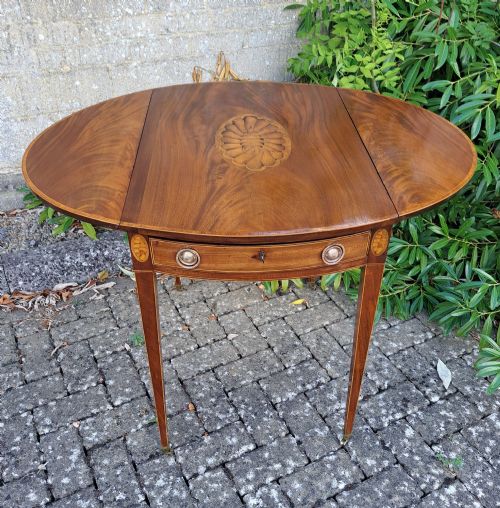
An oval satinwood accent table appears most frequently in Edwardian interpretations and nineteenth-century designs influenced by the Sheraton revival and Georgian aesthetics. These pieces serve primarily as occasional tables, side tables, or Pembroke tables within a room.
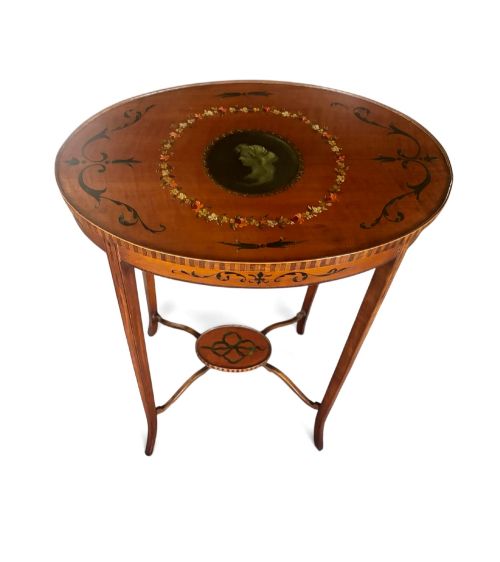
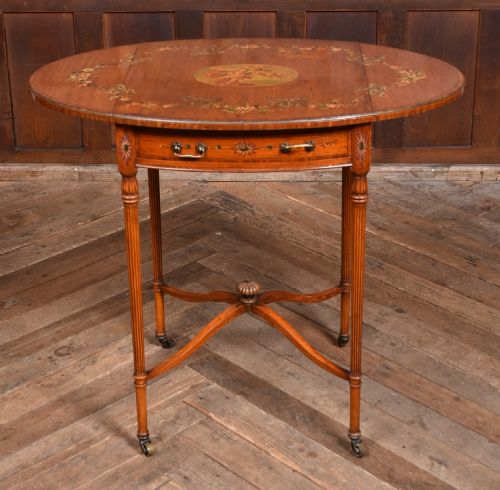
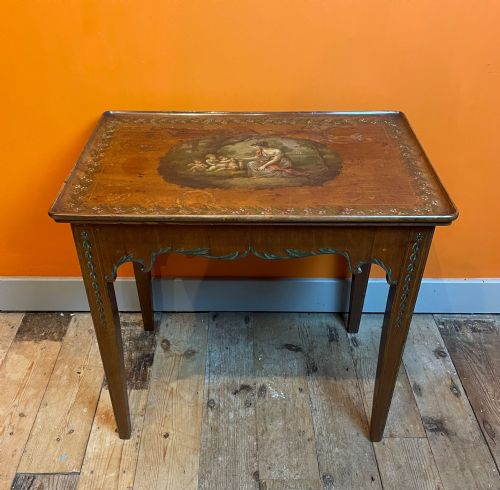
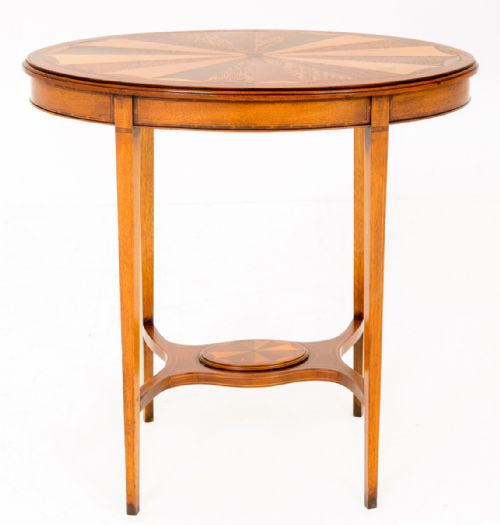
The evidence shows forms ranging from simple occasional tables to drop-leaf Pembroke tables and coffee tables. Many examples incorporate painted floral decoration or geometric timber inlay upon their surfaces.
Buyers will encounter items spanning the Georgian era through to the Edwardian period, with Edwardian Sheraton Revival pieces forming a substantial portion of the available selection.
Materials and construction
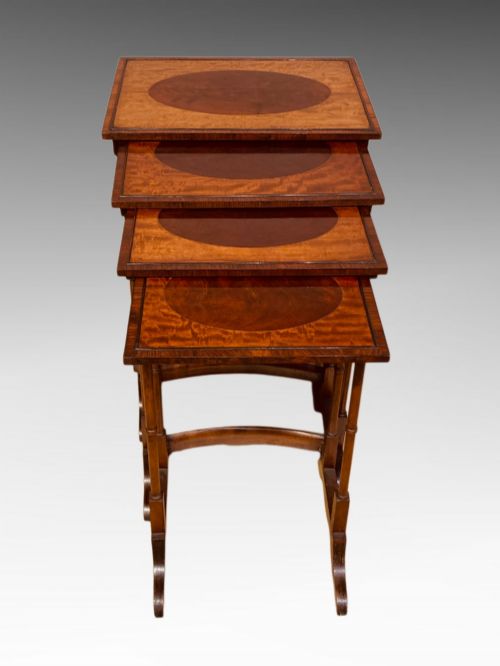
Makers utilised satinwood as the principal timber or veneer, frequently complemented by contrasting woods such as mahogany, kingwood, and rosewood for banding and inlay. Timber inlay and marquetry define the surface enrichment on many examples.
Hand-painted decoration featuring floral motifs or neoclassical scenes appears across nineteenth-century and Edwardian pieces. Brass fittings occasionally accent drop-leaf Pembroke tables and multi-tiered occasional tables.
Oval Satinwood Accent Table Retail Price Guide 2026
Typical asking prices for oval satinwood accent table among the pieces listed under this phrase on Sellingantiques today, from the lower quarter to the upper quarter. They describe what is for sale here now, not the wider market.
Listings demonstrate that painted floral decoration and timber inlay are the two primary decorative techniques found on satinwood tables.
Judging the work
Quality rests upon the precision of the timber inlay and the crispness of the hand-painted decoration. Finer examples display meticulous marquetry and harmonious contrasts between satinwood and surrounding banded timbers like kingwood.
Structural integrity in drop-leaf mechanisms and the stability of slender occasional table legs separate the more accomplished pieces from simpler workshop output. The depth of finish and the retention of original painted details significantly influence the character of each table.
Edwards and Roberts
The Oval Satinwood Accent Table Glossary
- Satinwood
- A hard, yellow-brown timber with a natural sheen that takes a fine polish. It serves as the primary surface material for decorative tables.
- Pembroke table
- A small, drop-leaf table with hinged flaps on either side. These tables often feature single drawers and slender legs.
- Marquetry
- The art of applying pieces of veneer to a structure to form decorative patterns. It differs from inlay by assembling the pattern before fixing it to the surface.
- Sheraton Revival
- A late nineteenth and early twentieth-century design movement inspired by the neoclassical furniture of Thomas Sheraton. It relies on light timbers and painted decoration.
- Bandings
- Narrow strips of contrasting timber laid around the edges of a table top to create a border. Kingwood and rosewood frequently supply this contrast.
Oval Satinwood Accent Table: Frequently Asked Questions
What is an oval satinwood accent table?
These pieces are small movable tables featuring a curved wooden top finished in light satinwood. They function as decorative side or occasional surfaces in domestic spaces.
Such tables often incorporate painted motifs or contrasting timber banding. Their compact proportions allow them to sit easily beside seating or against walls.
How do I distinguish Edwardian pieces from Georgian ones?
Edwardian examples often display Sheraton Revival characteristics with bright painted floral decoration and machine-cut veneers. Georgian pieces tend to rely on structural timber contrast and hand-cut marquetry.
Examination of the underlying construction timber helps clarify the age of the piece. Georgian tables typically show older framing methods compared to Edwardian work.
Where should I place an occasional table?
These tables suit sitting rooms as lamp tables or display surfaces for small objects. Their finished backs and refined legs allow placement where they remain visible from all angles.
Avoid positioning them in direct sunlight to protect the satinwood veneer and any hand-painted decoration. Stable flooring prevents wobble on tables with slender legs.