



Oval Rosewood Dining Table
An oval rosewood dining table brings nineteenth-century warmth into a room, combining rich tropical timber with graceful curved proportions.
Oval Rosewood Dining Table
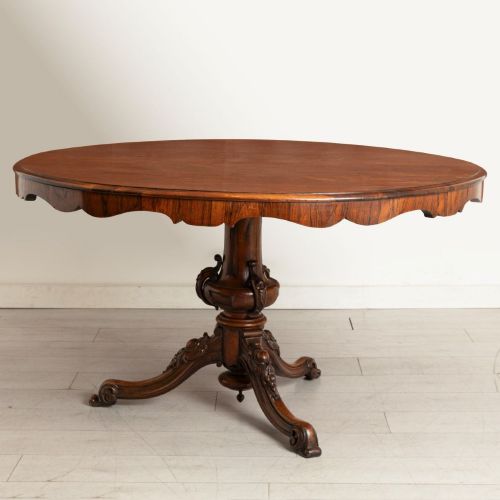
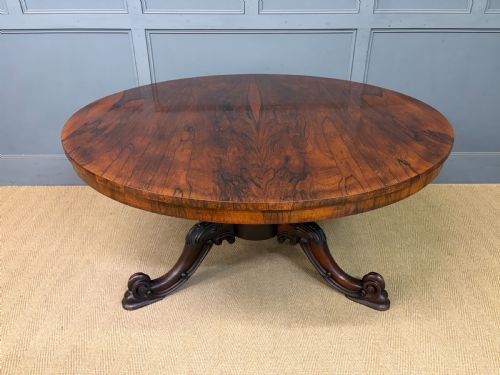
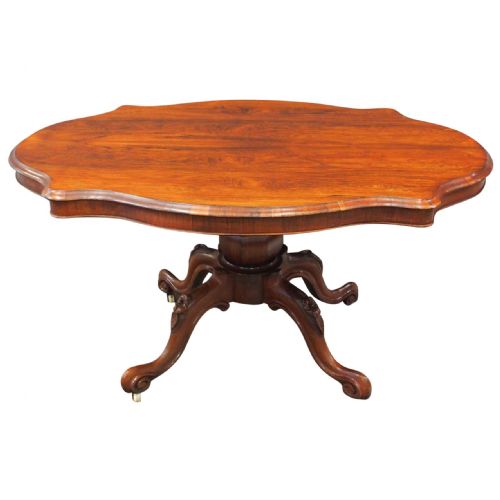
An oval rosewood dining table is typically a nineteenth-century Victorian or William IV piece designed for formal dining or central placement in a reception room. You will most frequently encounter tilt-top loo tables and pedestal centre tables shaped with curved margins.
The material palette draws heavily on dark exotic timbers, often utilising rosewood veneer over sturdier secondary woods or pairing rosewood with contrasting elements like calamander, mahogany, or brass. These pieces range from compact breakfast tables to large pedestal dining tables.
Origins cluster tightly around the nineteenth century, spanning decades from the 1850s through to the 1870s. Makers and workshops of the period utilised solid timber for turned and carved bases alongside finely figured veneers for the expansive table tops.
Materials and construction
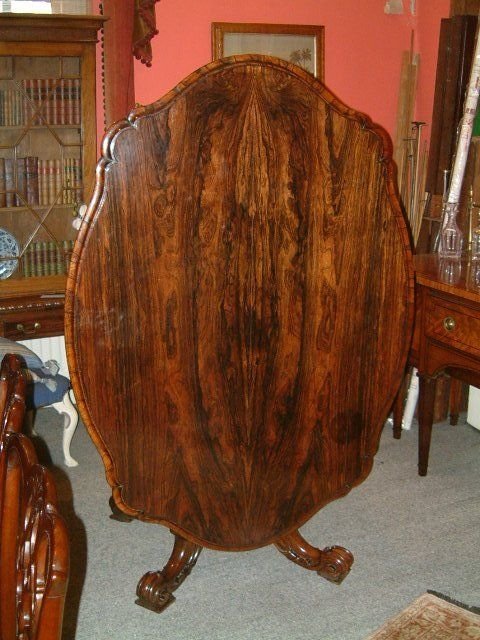
Cabinet makers constructed the tops using thin rosewood veneer laid over stable secondary woods, allowing them to display the striking natural grain patterns of the timber. Solid rosewood was reserved for structural elements such as turned pedestal columns and carved support bases.
Many examples incorporate specialised tilt mechanisms that allowed the heavy top to pivot vertically when not in use, saving floor space. Heavy brass fittings and castors frequently support the central pillars, permitting movement of these substantial pieces.
Victorian card players kept these tilt-tops upright against the parlour wall, freeing the room for dancing until the evening games began.
Distinctions in quality and finish
Quality rests upon the selection of the rosewood timber and the symmetry of the veneer layout across the oval top. Superior examples demonstrate exceptional carving on the pedestals and crisp moulded edging around the perimeter.
The stability of the tilt mechanism and the integration of secondary woods like mahogany or calamander also mark the division between standard workshop production and high-end cabinet work.
Gillows
The Oval Rosewood Dining Table Glossary
- Loo table
- A nineteenth-century multi-purpose table with a tilting top designed for evening games such as commerce or loo, as well as general parlor use. These tables typically feature a central pedestal base.
- Tilt-top
- A table top mounted on a hinged mechanism that pivots to a vertical position for storage against a wall. This construction method saved valuable floor space in period homes.
- Rosewood
- A dense, heavily figured tropical hardwood prized for its dark purple-brown coloration and rich grain patterns. It formed the primary show wood for high-status Victorian and William IV furniture.
- Centre table
- A freestanding table designed to be viewed from all sides and placed in the middle of a room rather than against a wall. They frequently share the same pedestal proportions as dining and loo tables.
Oval Rosewood Dining Table: Frequently Asked Questions
How do I use a tilt-top table?
The top releases via a brass catch underneath, allowing the surface to pivot flat or vertical. This mechanism was originally intended for storing the table against the wall when the room was needed for other purposes.
In daily use, ensure the latch locks securely into the horizontal position before placing heavy items on the surface.
Were these tables used for dining?
Many nineteenth-century examples served multiple functions as breakfast, loo, or centre tables depending on the household needs. Their generous proportions and sturdy pedestal bases made them suitable for sitting around.
Larger variations built during the Victorian era function effectively as everyday dining tables in modern settings.
How do I identify a Victorian table?
Look for characteristic nineteenth-century construction traits such as heavy turned rosewood pillars, tripartite or quadruped carved bases, and rich veneer work. Dates often align with mid-century decades from the 1850s to the 1870s.
William IV examples display slightly earlier neoclassical influences, whereas later Victorian pieces lean toward heavier, robust carving.
Is rosewood sensitive to sunlight?
Tropical hardwoods can lighten or change tone when exposed to direct, strong sunlight over extended periods. Position the table away from south-facing windows to preserve the deep natural colour of the timber.
Routine polishing with appropriate wood care products helps maintain the moisture and lustre of the antique surface.