




Dark Wood Loo Table
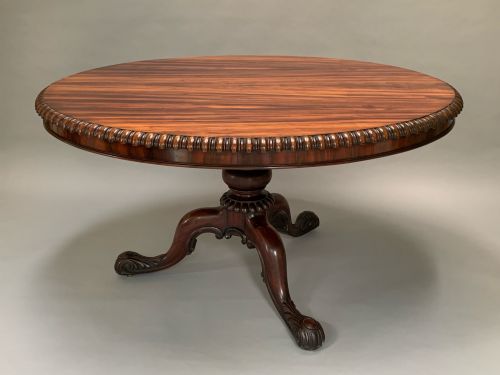
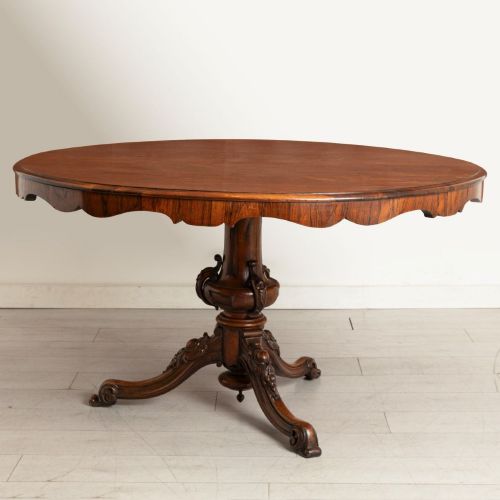
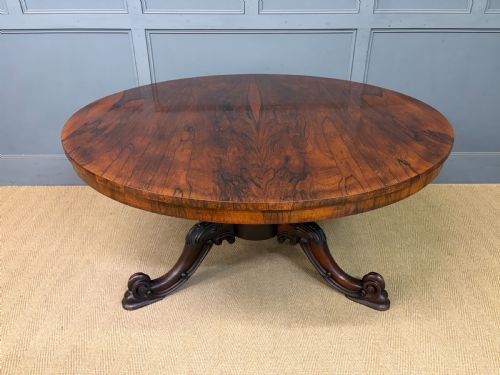
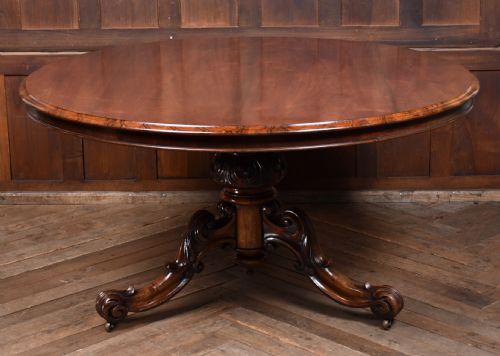
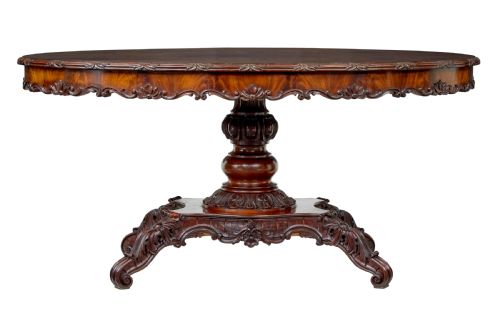
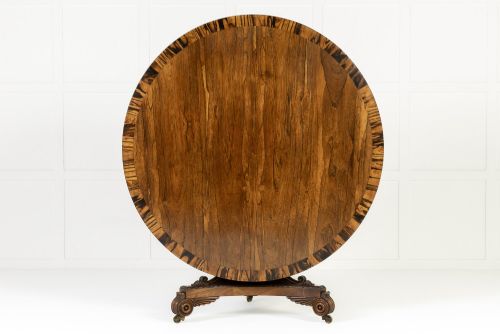
A dark wood loo table offers a tilting top and rich rosewood or mahogany grain, serving as a grand centrepiece for a period room.
Dark Wood Loo Table
A dark wood loo table is fundamentally a multi-functional piece designed for the nineteenth-century interior, frequently appearing as a circular or oval tilting table. Buyers examining this page will primarily encounter Victorian and Regency examples configured for dining or general centre use.
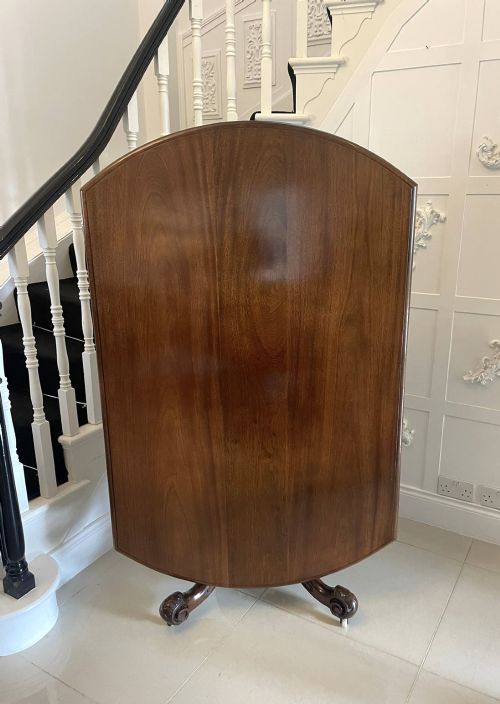
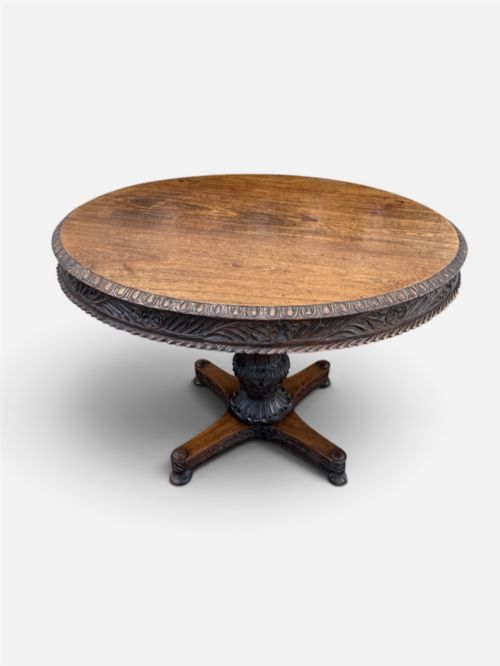
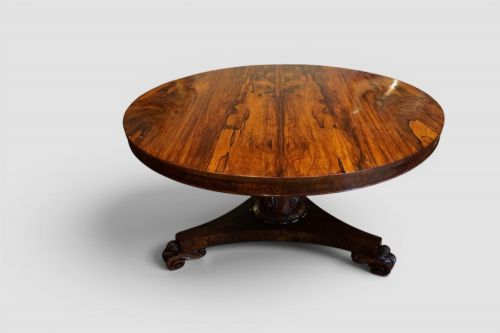
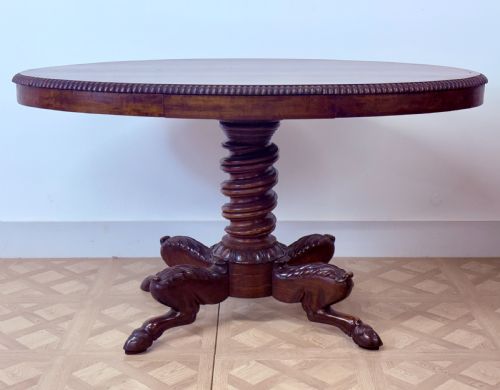
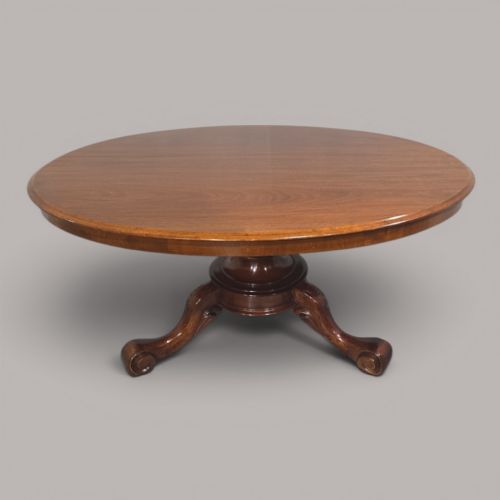
The form relies on dark timbers, predominantly rosewood, mahogany, and walnut, resting upon substantial turned or carved pedestals. Many specimens incorporate tilt-top or snap-top mechanisms to allow the surface to fold away vertically when not in use.
Origins span standard English workshops as well as regional variations including Anglo-Indian production. The scale ranges from compact circular breakfast models to large oval dining versions suitable for principal reception rooms.
Materials and construction methods
Cabinetmakers utilised dense tropical hardwoods such as rosewood, mahogany, and burr walnut, often applied as fine veneers over stable secondary timbers. Selected pieces demonstrate decorative contrasting details through wood inlay and brass work.
Structural integrity depends upon sturdy central pedestals, frequently featuring tripod or quadruped scroll feet, joined to heavy timber blocks. Tilting actions utilise pivoting iron or brass catches housed beneath the main board.
Listings span the nineteenth century, focusing heavily on Victorian and Regency periods executed in rosewood, mahogany, and walnut.
Assessing quality and craftsmanship
Superior examples distinguish themselves through the selection of highly figured timber veneers, such as flame mahogany or burr walnut, matched symmetrically across the top. Finely executed hand-carved foliage upon the pedestal and base further separates high workshop production from plain utilitarian stock.
Mechanical precision dictates day-to-day usability, specifically how securely the tilt-top mechanism locks into the horizontal position without wobble. Original brass castors and hidden drawers add to the desirability of a piece.
Gillows·James Winter of Wardour Street in London
The Dark Wood Loo Table Glossary
- Tilt-top table
- A table with a hinged mechanism allowing the surface to rotate and store vertically against its base. This design saves floor space when the furniture is unoccupied.
- Centre table
- A freestanding piece finished on all sides to stand in the middle of a room rather than against a wall. These function variously for dining, display, or general assembly.
- Rosewood
- A heavy, durable timber prized for its dark purple-brown grain and oily lustre. It forms the primary material for the majority of nineteenth-century examples here.
- Marquetry
- Decorative patterns formed by fitting together thin veneers of different coloured woods. Artisans apply this technique to create elaborate floral or geometric table tops.
- Macassar ebony
- An exotic striped hardwood featuring dark brown and yellowish streaks. It yields an exceptionally dense and polished surface on select Regency pieces.
Dark Wood Loo Table: Frequently Asked Questions
What is a dark wood loo table used for today?
These tables function effectively as grand dining surfaces, breakfast tables, or striking centrepieces in spacious living areas. Their substantial presence anchors a room while providing practical utility for daily use.
Many owners utilise the tilt-top function to place the table against a wall as a decorative console when floor space is required for other activities.
How do I operate the tilt-top mechanism safely?
Most mechanisms rely on a brass catch or wooden wedge beneath the top that releases the locking pin. Support the table edge firmly with one hand while releasing the latch with the other to control the rotation.
Ensure any items are removed from the surface before attempting to tilt the heavy timber top into a vertical storage position.
How do I tell a Regency table from a Victorian one?
Regency examples generally display restrained classical lines, sometimes incorporating brass inlay or ebony accents. They often date from the early nineteenth century and lean toward architectural simplicity.
Victorian pieces tend to feature heavier carvings, elaborate pedestal bases, and highly figured rosewood or walnut veneers reflecting mid-century manufacturing trends.
How should I care for antique rosewood and mahogany?
Maintain the timber by keeping the surface away from direct sunlight and steady heat sources that can dry out old veneers. Dust gently with a dry cloth and apply occasional natural wax to nourish the grain.
Avoid placing damp items or unsealed cups directly onto the polished wood to prevent ring marks and water damage to the finish.