





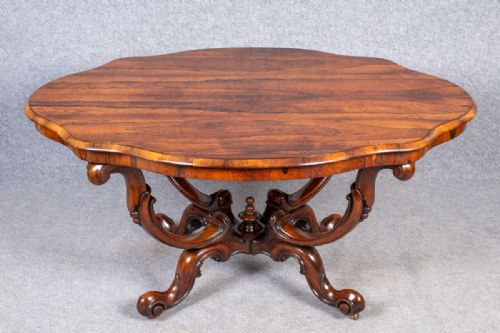
Shaped Rosewood Centre Table
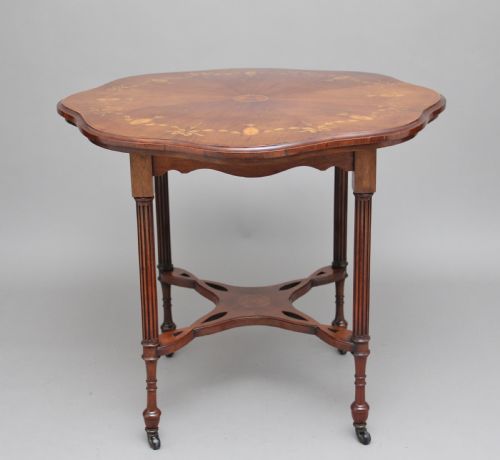
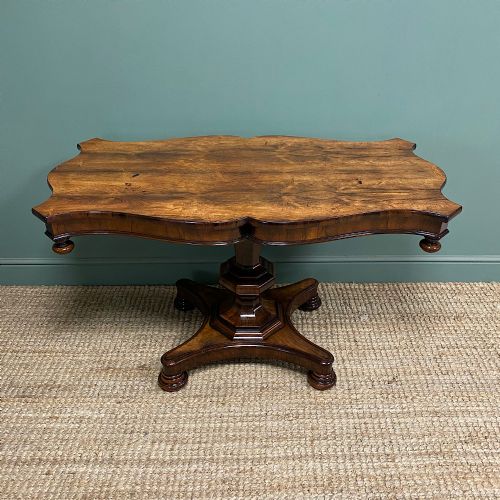
A shaped rosewood centre table is a freestanding Victorian or Edwardian piece designed to anchor a room with rich timber grain and fluid curves.
Shaped Rosewood Centre Table
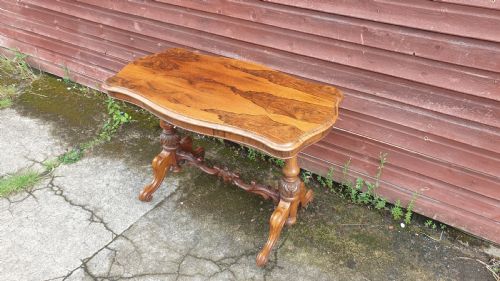
When you search for a shaped rosewood centre table, you are looking at substantial nineteenth-century furniture designed to sit proudly in the middle of a room rather than against a wall. The pieces available range from large Victorian dining tables and stretcher bases to smaller Edwardian occasional tables.
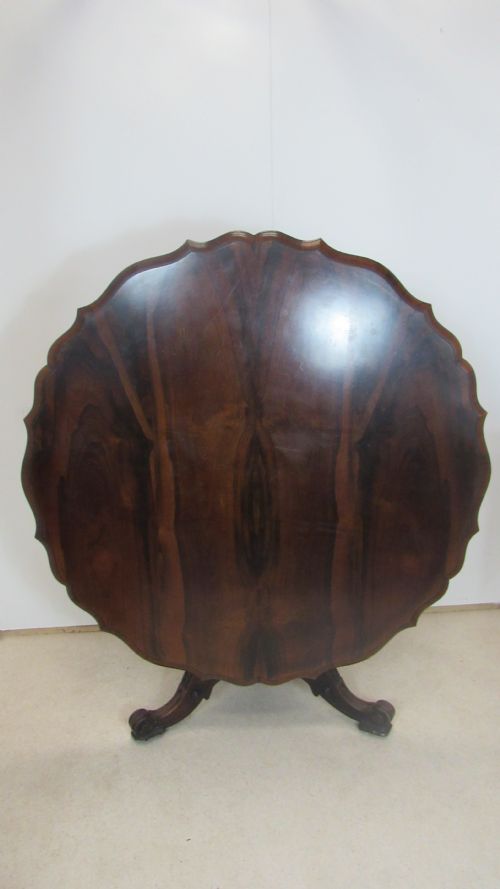
The most common form you will meet on this page is the Victorian shaped top table, often featuring an oval or circular surface supported by a central column or basket base. These tables were built to be viewed from all sides, which explains the careful attention given to the timber across the entire top.
Makers drew on several distinct styles, moving from robust William IV designs to lighter Edwardian pieces and Louis XV revival forms. Alongside standard centre tables, the listings include related side and occasional formats sharing the same characteristic rosewood construction.
Materials and construction
Cabinet makers relied heavily on rosewood as the primary timber, often applied as a fine veneer over a secondary wood base to showcase rich grain patterns. Many examples incorporate wood inlay, boxwood, and kingwood to create intricate marquetry details across the surface.
Metal and gilt bronze mounts appear on specific revival pieces, whilst brass components frequently facilitate the movement of castors beneath the heavy bases. Fruitwood accents occasionally supplement the primary timber scheme in multi-coloured marquetry panels.
Some Victorian tables conceal small castors beneath their elaborate wooden basket bases, allowing heavy rosewood to glide across the carpet with surprising stealth.
Judging quality and craftsmanship
The distinction between standard examples and the finest pieces lies in the ambition of the timber work and the crispness of the shaping. Superior tables display seamless matching of rosewood veneer across curved edges and complex basket bases.
Marquetry quality separates simpler utilitarian furniture from high-end revival pieces, where boxwood, kingwood, and fruitwood are cut with microscopic precision. The integrity of the underlying wood structure and the fluidity of the shaped outline determine the overall standing of the table.
The Shaped Rosewood Centre Table Glossary
- Centre table
- A freestanding table designed to be placed in the middle of a room rather than against a wall. These pieces finished with decorative detail on all sides.
- Marquetry
- Decorative patterns formed by the insertion of small pieces of veneer into a fitted wood ground. This technique allows for complex multi-coloured floral or geometric motifs using boxwood and kingwood.
- Basket base
- A structural support configuration resembling an open basket, found beneath the tops of certain Victorian tables. This form provides both stability and decorative visual weight.
- Stretcher
- Horizontal timber members connecting the legs of a table to improve rigidity. Victorian stretcher tables use these bars to brace the central support structure.
Shaped Rosewood Centre Table: Frequently Asked Questions
Where should I place a centre table?
These tables are designed to sit in the middle of a principal room, such as a drawing room or entrance hall. Because they are finished on all sides, they work best when you can walk entirely around them.
Ensure you leave adequate clearance for movement, as their substantial rosewood pedestals and shaped tops demand space to be fully appreciated.
How do I care for rosewood veneer?
Keep nineteenth-century rosewood away from direct sunlight and strong heat sources to prevent the timber from drying out and the veneer from lifting. Dust regularly with a dry, soft cloth.
Avoid modern liquid polishes containing silicone, relying instead on traditional beeswax applied sparingly when the wood appears dry.
What is the difference between a centre table and a side table?
A centre table is finished on all sides and intended to stand freestanding in an open space. Side tables are generally smaller and designed to sit flush against a wall.
Whilst both appear in rosewood, the centre table usually commands more elaborate carving, shaping, or marquetry.
How can I tell a Victorian table from an Edwardian one?
Victorian tables generally feature heavier proportions, darker rosewood tones, and robust pedestal or basket bases. They often incorporate bold shaping and rich marquetry.
Edwardian pieces tend to be lighter in scale, functioning as occasional or side tables with more delicate legs and restrained use of wood inlay.