



Oval Pedestal Side Table
An oval pedestal side table brings compact grace to a room, offering a curved surface raised on a central pillar.
Oval Pedestal Side Table
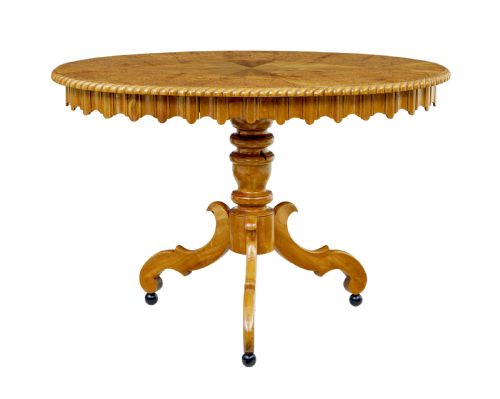
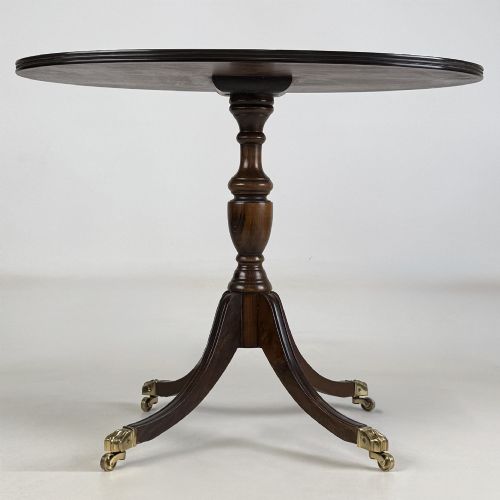
An oval pedestal side table combines a curved tabletop with a central support, serving as a flexible surface for lamps, drinks, or display. The listings here span several distinct eras, bringing together Georgian, Victorian, Edwardian, and Regency pieces.
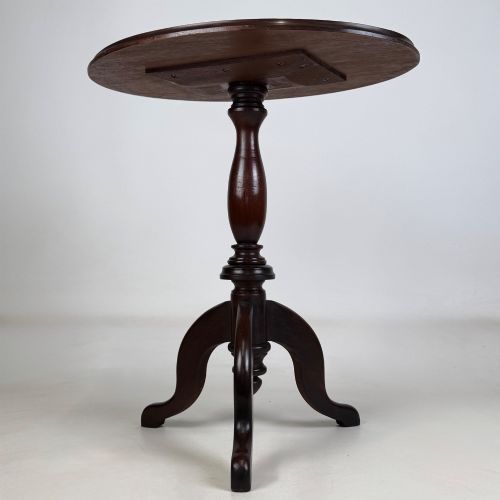
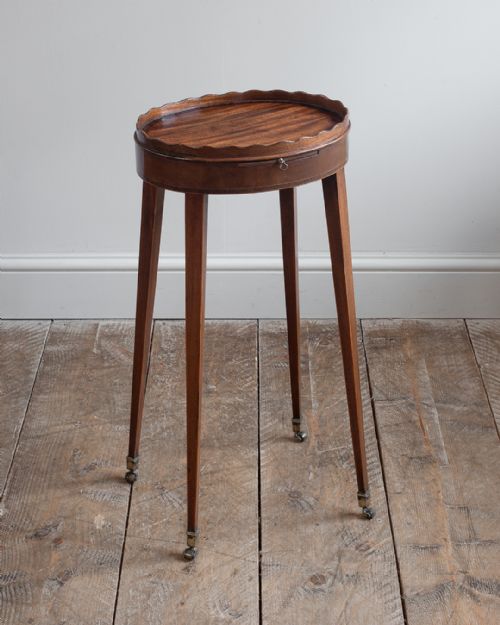
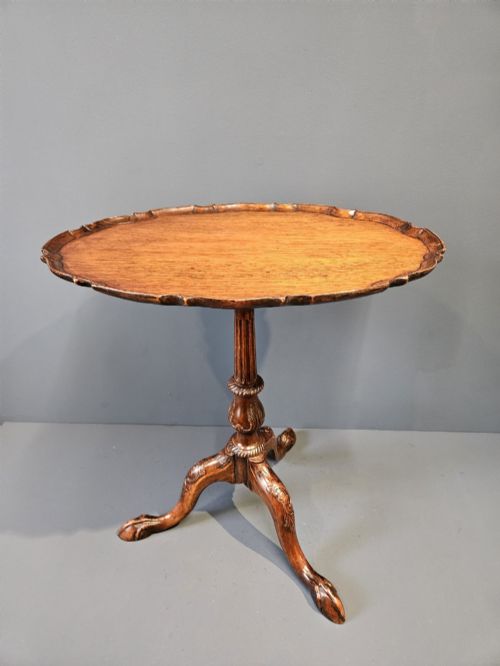
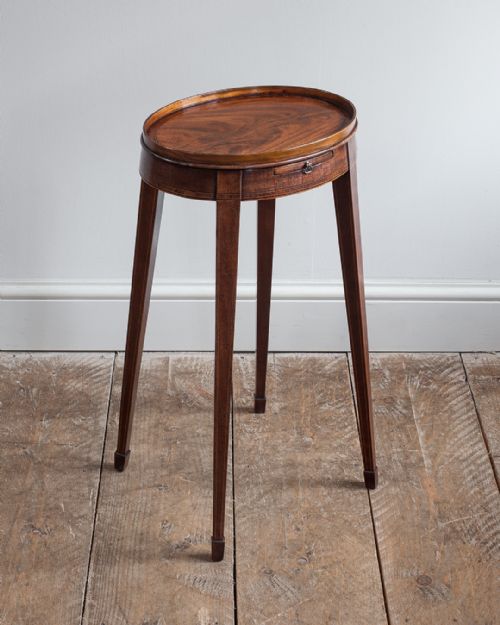
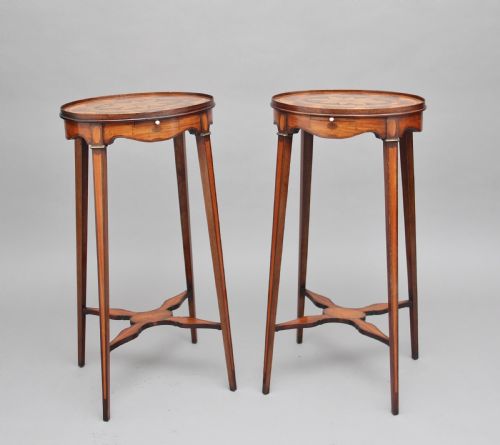
Most examples you encounter on this page function as occasional tables, wine tables, or urn stands. They appear in forms ranging from simple tripod bases to elaborately inlaid centre tables and tilt-top designs.
Materials and Construction
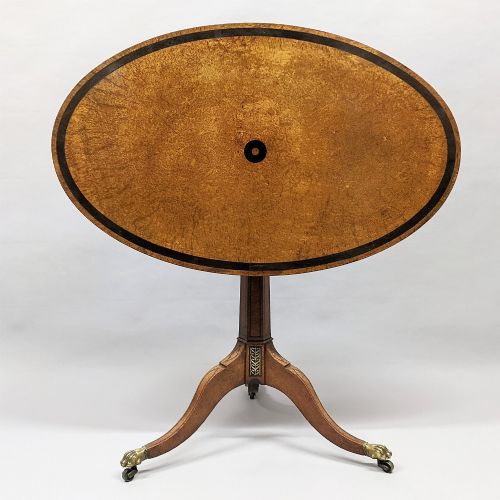
Cabinetmakers built these tables using dense hardwoods like mahogany and walnut, frequently selecting figured veneers such as burr walnut and burr birch for visual texture. Workshops added decorative detail through boxwood inlay, ebony, and satinwood, applying these elements to tops and borders.
Support structures typically rely on a turned pillar fixed to a tripod or platform base, sometimes incorporating tilt-top mechanisms. Surfaces often receive hand-carved elements, painted decorations, or polished finishes that highlight the natural grain of the timber.
Several tilt-top tables wait patiently to fold flat against the wall like polite guests who know when to save floor space.
Judging Quality
Structural stability at the central join and the smoothness of any tilt-top or pedestal mechanism indicate the original maker's skill. Finer examples retain intact marquetry, well-matched timber grains, and patination achieved through decades of careful polishing.
The Oval Pedestal Side Table Glossary
- Pedestal
- A single central support beneath a tabletop, often terminating in a tripod base with three feet. This construction allows maximum legroom around the perimeter of the table.
- Tilt-top
- A tabletop hinged to the central pillar so it can pivot vertically to save space when not in use. This mechanism requires careful joinery to remain stable in the horizontal position.
- Burr walnut
- Wood taken from the gnarled growth of a walnut tree, yielding complex, swirling grain patterns. Cabinetmakers sliced this timber into thin veneers for decorative table tops.
- Inlay
- Pieces of contrasting wood, metal, or shell set into a recessed surface to form patterns. Boxwood and satinwood provide pale contrast against darker grounds like mahogany.
- Urn stand
- A small, tall table originally designed to hold a tea urn. These pieces typically feature slender proportions and raised galleries or edges.
Oval Pedestal Side Table: Frequently Asked Questions
What is an oval pedestal side table used for?
These tables provide a convenient surface for holding lamps, books, or decorative objects without occupying much floor space. Their compact footprint makes them suitable for placement beside seating or in corners.
Historically, specific variations served specialised tasks such as holding tea urns, wine bottles, or serving as intimate centre tables. Today, they adapt easily to modern rooms as versatile accent furniture.
How do I identify a Georgian oval table?
Georgian pieces, dating from the 18th and early 19th centuries, typically utilise solid mahogany or finely figured veneers. They often feature simple tripod bases with delicate birdcage or tilt-top mechanisms.
Proportions tend to be classical and restrained, prioritising functional elegance over heavy ornamentation. Look for traditional joinery techniques and patination that reflects long use.
Where should I place a tilt-top table?
Tilt-top tables function effectively either tilted flat against a wall as a decorative panel or set horizontally for everyday use. Placing them in a corner or beside an armchair allows the carved pedestal and base to remain visible.
Ensure the floor is level so the tripod base maintains steady contact across all three feet. Avoid positioning the mechanism directly next to strong heat sources that could dry the timber.
What distinguishes Victorian and Edwardian examples?
Victorian tables often feature rich burr walnut veneers, elaborate marquetry inlay, and substantial proportions designed for formal reception rooms. Centre tables and loo tables from this era demonstrate deep, polished tones and sturdy pedestals.
Edwardian pieces tend to show lighter construction, occasionally adopting Sheraton revival styles with satinwood details or pie crust edges. The palette broadens in this period to include satinwood, mahogany, and varied inlay motifs.