
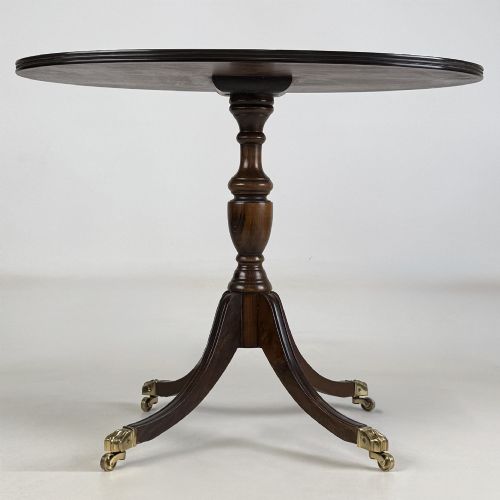
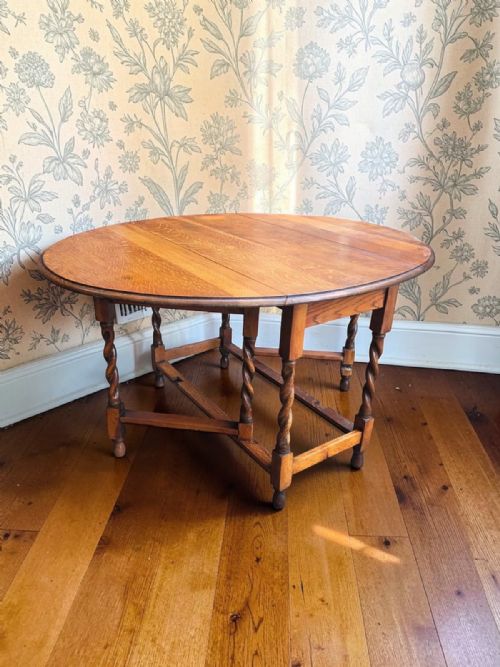
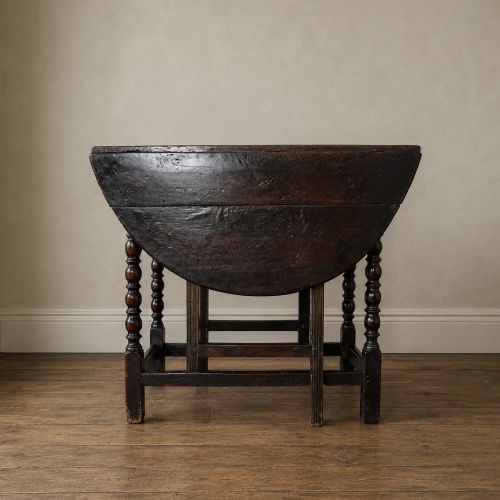
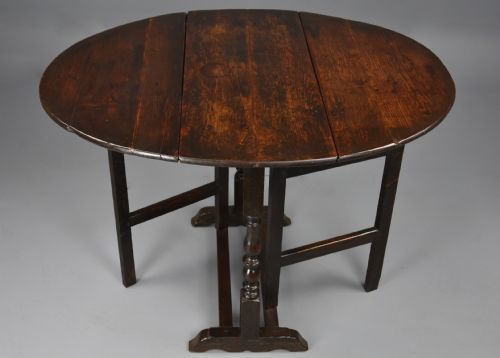
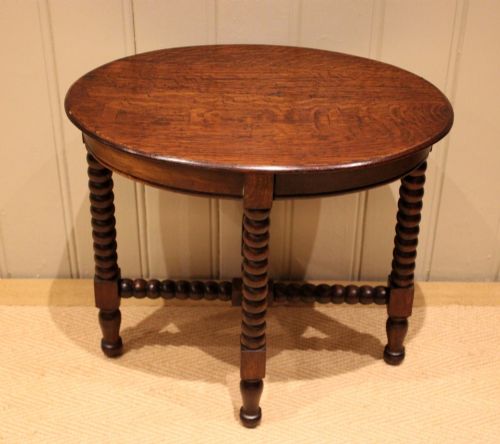
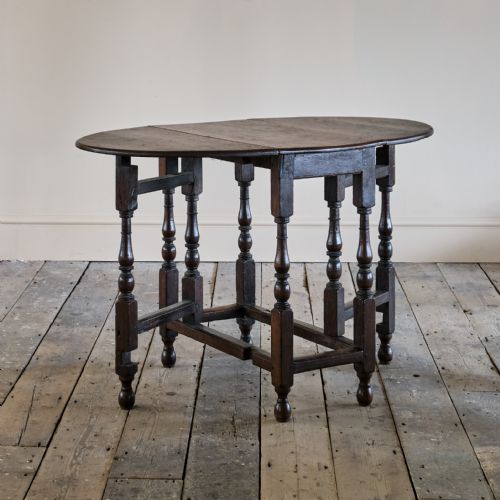


Oval Oak Side Table
An oval oak side table brings useful surface space and centuries of carpentry into a room, offering practical design with distinct grain.
Oval Oak Side Table
An oval oak side table represents a practical form of domestic furniture that appears across multiple periods, ranging from the seventeenth century through to the Edwardian era and the twentieth century. These pieces function primarily as occasional tables, coffee tables, or small side tables in various living spaces.
The versions most commonly met on this page include seventeenth and eighteenth-century gateleg and drop-leaf designs alongside Edwardian and twentieth-century occasional tables. Cabinetmakers constructed these forms using solid oak, often shaping the tops into ovals to soften room layouts and save floor space.
Makers adapted the oval oak side table format over generations, producing examples with barley twist legs, fixed frames, or hinged leaves. The surviving inventory bridges centuries of English vernacular and revival styles, showing consistent use of timber frames suited to daily domestic service.
How they were made
Carpenters relied principally on solid oak, selected for its strength and distinctive grain, while occasionally incorporating secondary timbers like mahogany, walnut, or burr oak veneer on specific surfaces. Metal fittings in brass or iron appeared on hinges, handles, and structural braces.
Construction methods involved pegged mortise and tenon joints for early frames, supplemented by turned structural elements such as barley twist legs on later nineteenth and twentieth-century examples. Artisans shaped oval tops by hand-sawing and planing solid timber planks, finishing surfaces with traditional oils or waxes.
The inventory spans the seventeenth, eighteenth, nineteenth, and twentieth centuries, including Edwardian and Victorian eras.
What varies in quality
The standard of an oval oak side table depends upon the selection of timber, the integrity of the structural joinery, and the preservation of original surfaces. Tables retaining early patination and undisturbed timber frames demonstrate superior craftsmanship compared to heavily altered examples.
Proportion and execution of turned elements, such as gateleg supports or barley twist legs, distinguish finer pieces from simpler utilitarian production. The precision of joinery in folding leaves and the quality of veneering on later decorative tops determine the overall tier of the piece.
Heals of London
The Oval Oak Side Table Glossary
- Gateleg table
- A table with hinged leaves supported by swing-out legs that pivot from the frame to hold the leaves upright. This clever mechanism allows a compact surface to expand significantly for dining or general use.
- Barley twist
- A type of turned wooden leg carved in a spiral resembling a twist of barley. This decorative feature gained immense popularity during the seventeenth century and saw a major revival in the Victorian and Edwardian periods.
- Drop leaf table
- A table featuring a fixed centre section and two hinged flaps that drop down when not in use. It provides flexible surface area in smaller rooms.
- Patina
- The surface sheen and colour developed over decades or centuries through handling, waxing, and exposure to light. Original patination serves as a key indicator of age and careful preservation.
- Occasional table
- A small, portable table designed for intermittent use in a sitting room or hallway. These pieces often serve to hold lamps, books, or decorative objects.
Oval Oak Side Table: Frequently Asked Questions
How do I date an oak table?
Dating relies on examining construction methods, tool marks, timber selection, and hardware. Early pieces feature hand-sawn boards and pegged joinery, while later examples show machine milling.
Style revivals can complicate identification, as Victorian and Edwardian workshops frequently recreated seventeenth-century Jacobean designs using contemporary joinery techniques.
Where should I place a side table?
An oval side table fits well beside seating areas, in hallways, or as an occasional surface in a bedroom. The curved edges help maintain smooth traffic flow in narrow spaces.
These tables accommodate lamps, books, and small decorative items without dominating the room layout.
How do I care for antique oak?
Antique oak benefits from regular dusting with a soft, dry cloth and occasional treatment with traditional beeswax to nourish the timber. Direct sunlight and sudden humidity changes should be avoided.
Proper maintenance preserves the original surface sheen and protects the wood grain over time.