


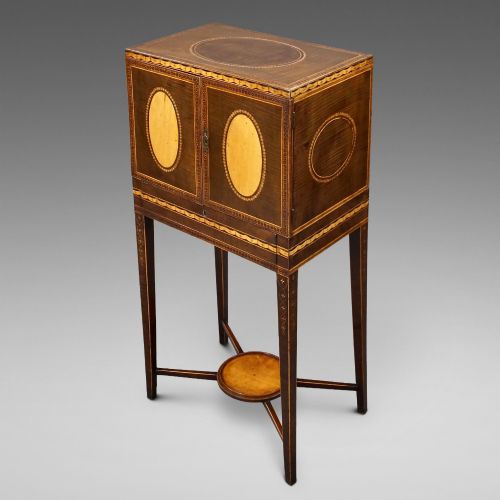
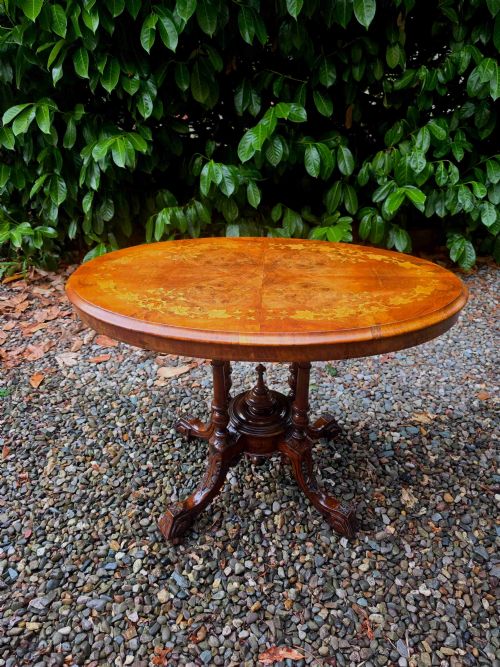
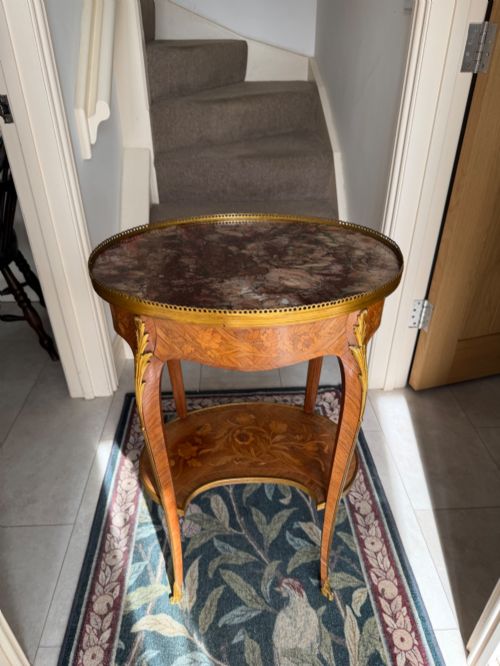
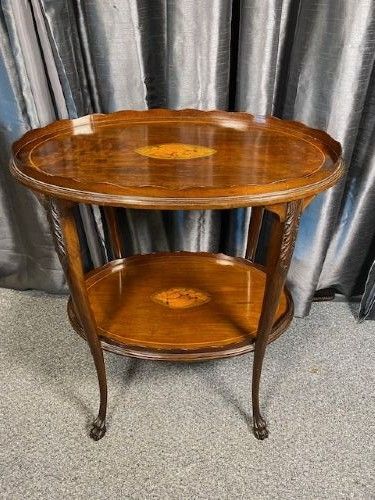
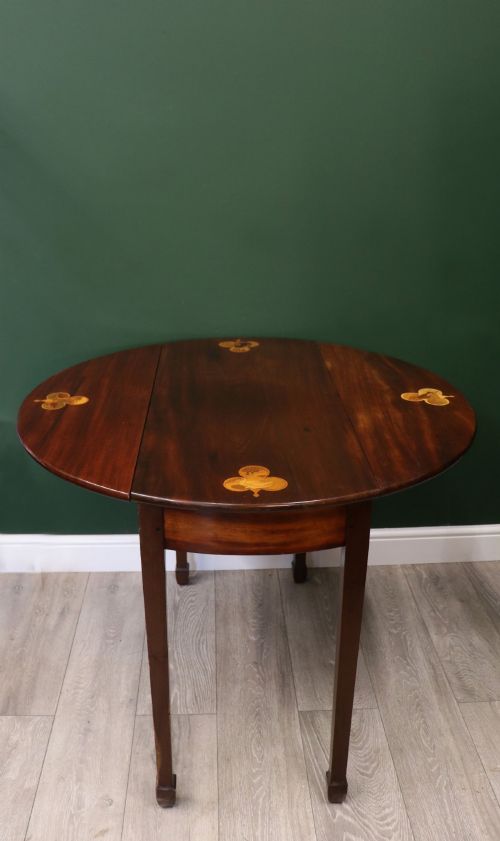
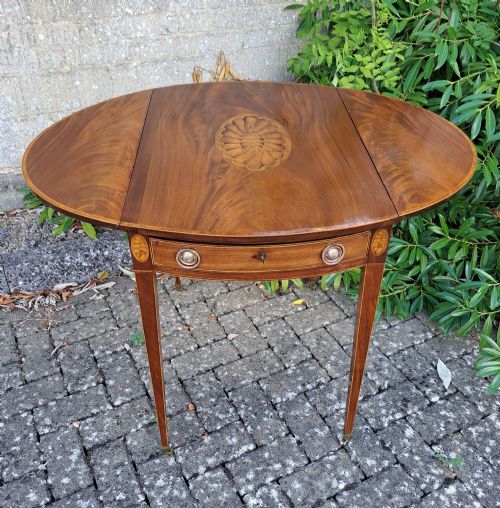


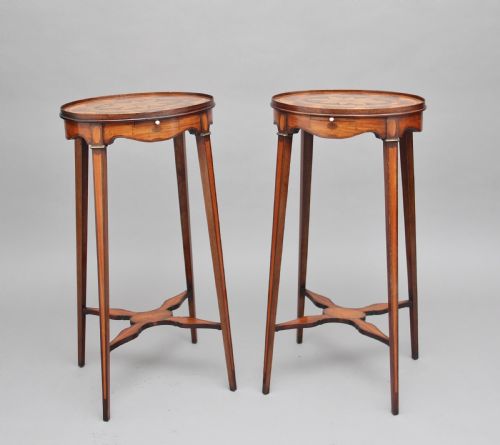

Oval Marquetry Side Table
An oval marquetry side table brings intricate floral and geometric woodlays to a room, offering a compact surface for lamps and drinks.
Oval Marquetry Side Table
An oval marquetry side table provides a compact surface with a curved outline, appearing across Victorian, Edwardian, and nineteenth-century periods. These pieces serve as occasional, lamp, or centre tables in sitting rooms and halls.
Makers and workshops in England and France produced these pieces using native and exotic timbers, often incorporating drop leaves or tier structures. The selection on this page ranges from modest walnut occasional tables to elaborate French kingwood and satinwood designs.
The defining feature across the range is the curved top decorated with contrasting wood veneers. Buyers encounter various forms, including Pembroke tables, Sutherland tables, and small bedside cabinets with similar oval proportions.
What Varies in Quality
The crispness of the marquetry cutting and the choice of timber set the standard for each piece. Dense burr walnut and figured satinwood indicate higher workshop standards than plain native hardwoods.
Construction details such as hand-cut dovetails in drawers and the stability of the leg joints reveal the maker's hand. Finer tables balance decorative veneers with robust internal framing that prevents warping over time.
François Linke·A. Beurdeley·Haentgos Freres Paris·Charles Topino
The Oval Marquetry Side Table Glossary
- Marquetry
- A decorative technique of applying thin pieces of wood veneer to a structure to form pictorial or floral patterns. It differs from parquetry by creating organic designs rather than geometric grids.
- Parquetry
- A geometric mosaic of wood pieces used for covering floors or furniture surfaces. Squares, triangles, and diamonds form repeating patterns across the tabletop.
- Pembroke table
- A small table with hinged drop leaves on two opposite sides. Introduced in the eighteenth century, it rests on four legs and often includes a single drawer.
- Sutherland table
- A narrow drop-leaf table where the leaves fold down almost vertically. The gateleg action supports the leaves when raised.
- Satinwood
- A durable, yellowish timber prized for its lustrous grain. Makers utilised it extensively during the Sheraton revival period for contrasting inlay.
Oval Marquetry Side Table: Frequently Asked Questions
Where should I place an oval table?
An oval table fits well beside a sofa or in a hallway where sharp corners would obstruct movement. The curved edge softens the geometry of a room while holding a lamp or small objects.
In larger spaces, these tables stand effectively in the centre of a room as display surfaces for decorative items or flower arrangements.
How do I care for marquetry surfaces?
Keep wooden tables away from direct sunlight and heat sources to prevent the veneers from drying and lifting. Use coasters and mats to protect the polished surface from moisture.
Apply a traditional beeswax polish occasionally and buff gently with a soft cloth to maintain the natural lustre of the timber.
How do I distinguish French and English styles?
French tables from the nineteenth century often feature pronounced cabriole legs, gilt bronze mounts, and kingwood or amboyna veneers. Makers in Paris favoured elaborate marquetry and occasional marble tops.
English pieces, particularly from the Victorian and Edwardian eras, tend to rely on mahogany or walnut with subtle boxwood stringing and tapered legs.
What is the difference between a side table and a centre table?
A side table usually stands against a wall or beside seating furniture with one finished side and often a drawer. It serves a practical function for lamps and books.
A centre table is finished on all sides so it can stand independently in the middle of a room, designed to be viewed from every angle.