


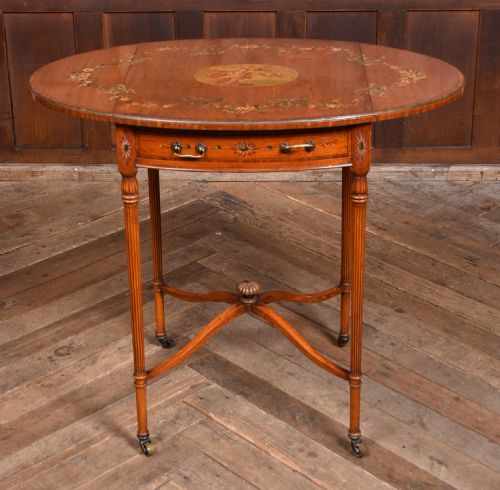


Oval Mahogany Drop Leaf Table
An oval mahogany drop leaf table brings centuries of functional timber design into modern rooms with folding flaps that adjust surface area on command.
Oval Mahogany Drop Leaf Table
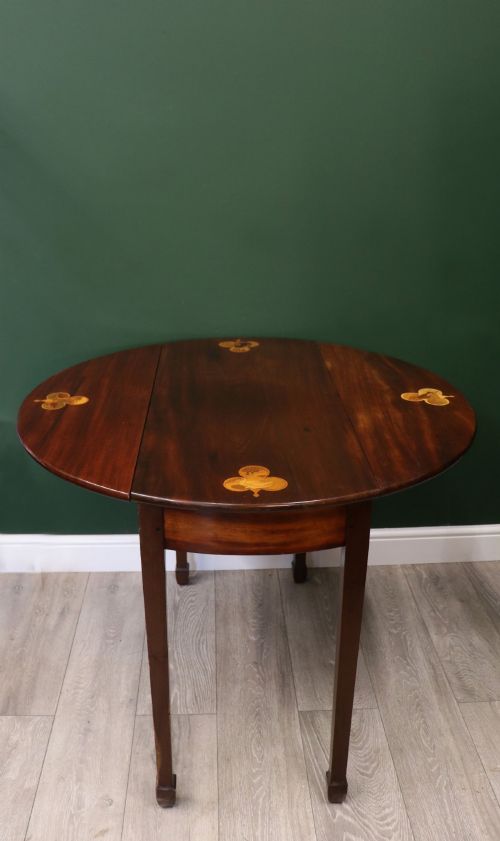
An oval mahogany drop leaf table encompasses various functional formats designed to expand when needed and fold away for compact storage. The selection relies heavily on Georgian, Regency, and Victorian pieces, alongside Edwardian interpretations.
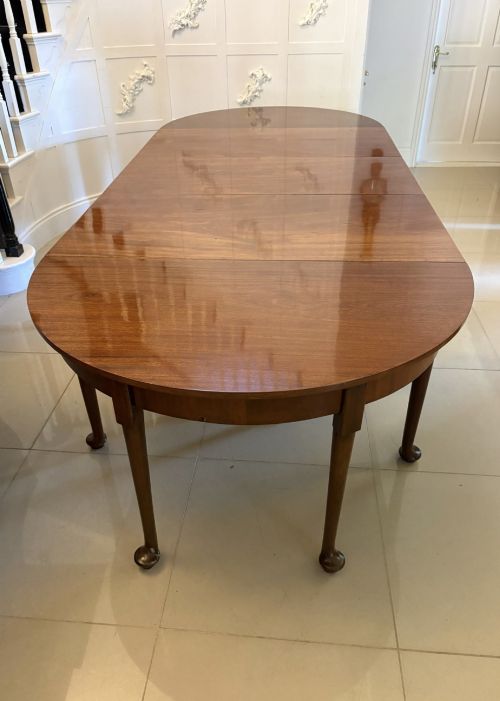
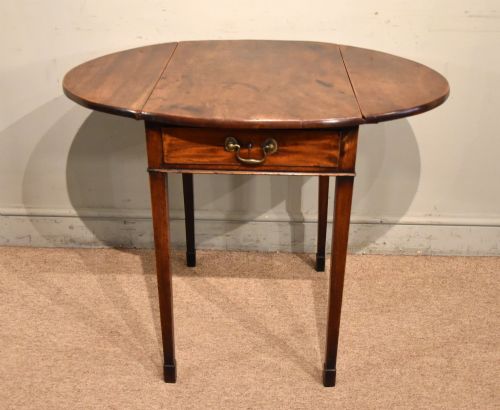
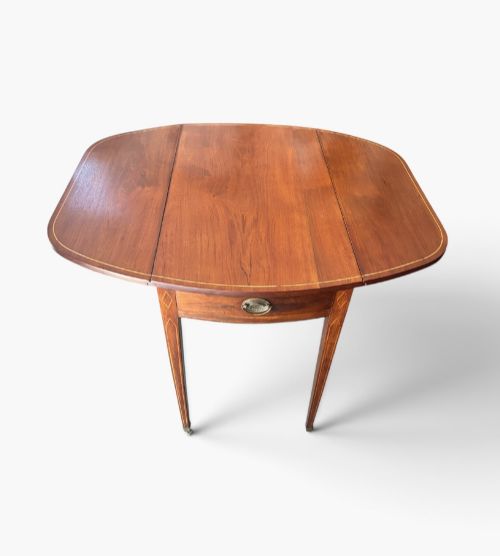
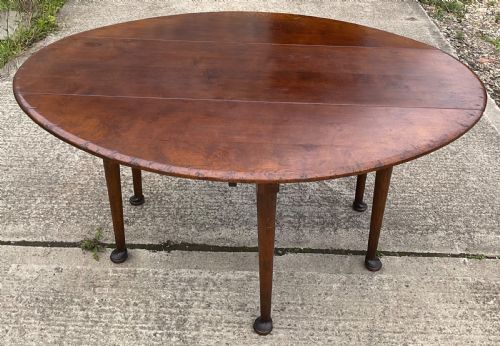
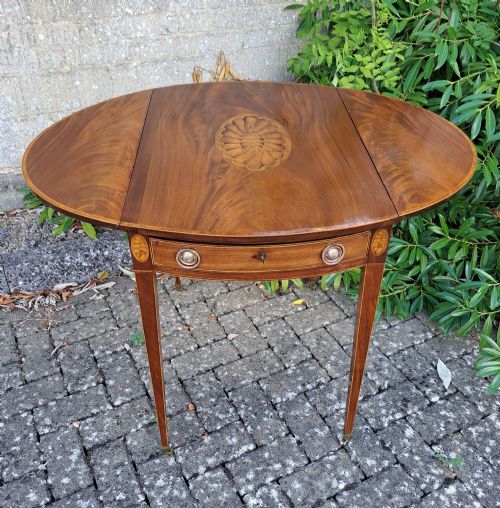
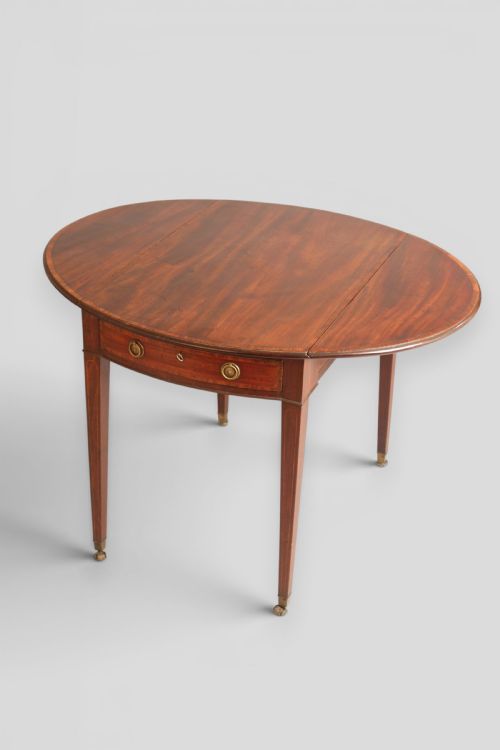
Smaller variations frequently appear as Pembroke tables featuring drawers and slender legs, while larger formats include gateleg dining tables and wake tables built to seat multiple guests. Sutherland tables offer a narrower footprint with particularly slim folding leaves.
Makers across the eighteenth and nineteenth centuries utilised solid timbers and dependable joinery to construct these adaptable items, ensuring they survived centuries of domestic use.
Materials and construction
Mahogany serves as the primary structural timber, often selected for its dense grain and rich tone, while Cuban mahogany appears on earlier examples for superior weight and depth. Supporting elements integrate secondary woods alongside brass hinges and castors.
Cabinetmakers applied decorative techniques such as boxwood inlay, satinwood banding, and marquetry to enhance table borders and drawer fronts. Drop leaves rely on pivoting wooden swing legs, gatelegs, or rule joints to support the horizontal plane when fully extended.
Markers of excellence
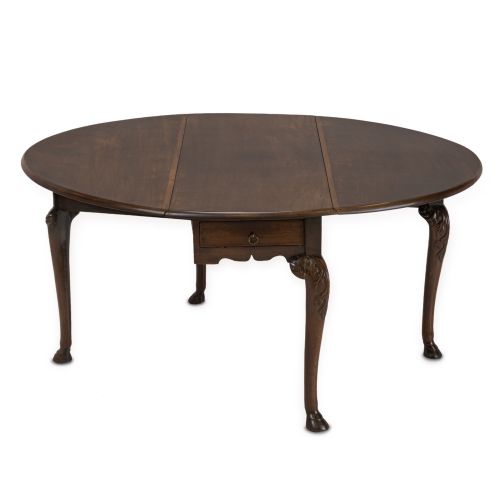
Superior examples distinguish themselves through the choice of timber figure, such as richly grained Cuban mahogany, and the precision of the rule joints connecting the leaves to the main top. Carved details on cabriole legs, pad feet, or claw and ball terminals indicate higher workshop standards.
Proportion and scale dictate the visual balance of the piece when open and closed, where finer tables maintain stability and smooth gateleg action without sagging hinges or warped leaves.
The Oval Mahogany Drop Leaf Table Glossary
- Drop leaf
- A table featuring a fixed central section and hinged flaps that lower or rise to alter the surface area. This mechanism allows the furniture to save space against a wall.
- Pembroke table
- A small rectangular or oval side table equipped with two hinged drop leaves and typically one or two drawers. It emerged during the eighteenth century as a versatile piece for breakfast or writing.
- Gateleg table
- A table with hinged legs that swing outward like a gate to support the dropping leaves. This robust frame provides structural stability under heavy loads.
- Rule joint
- A moulded knuckle joint connecting a table top to its drop leaf. It conceals the gap and hinge mechanism while the leaf remains raised.
- Pad foot
- A rounded foot shape resting flat on the floor at the base of an unsubstantial cabriole leg. It appears frequently on mid-eighteenth-century dining pieces.
Oval Mahogany Drop Leaf Table: Frequently Asked Questions
How do I use a drop leaf table daily?
Keep the leaves dropped against a wall as a console or side table to maximise walking space in smaller rooms. Raise one or both flaps supported by the swing legs whenever you need a dining surface or desk.
Ensure the hinges and swing supports take the weight evenly to prevent strain on the rule joints. Placing felt pads underneath hot dishes protects the polished timber surface from heat marks.
What is the difference between a Pembroke and a gateleg table?
A Pembroke table is generally smaller, featuring narrow drop leaves supported by hinged brackets or rule joints rather than full swinging legs. They often include a small drawer and delicate legs suited for occasional use.
Gateleg tables rely on pivoting legs that swing out from the central frame to hold up large flaps. This design supports substantial dining surfaces and heavier domestic tasks.
How can I tell a Georgian table from a Victorian one?
Georgian tables, particularly those from the mid to late eighteenth century, often display cleaner lines, Cuban mahogany timber, and handcrafted pad or claw feet. Their construction prioritises understated elegance and sturdy gateleg framing.
Can these tables seat a large dinner party?
Larger gateleg and wake formats in the evidence span significant lengths, designed specifically to accommodate six to twelve guests when fully opened out. Their folding leaves make them adaptable for rooms that cannot fit a permanent large dining setup.
Check the clearance underneath the frame and the position of the swing legs to ensure guests have adequate legroom when seated around the extended oval top.