


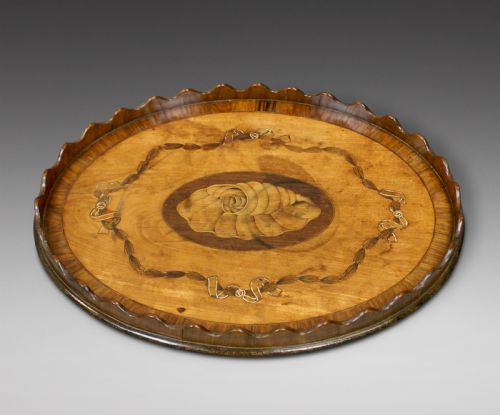


Oval Inlaid Serving Tray
An oval inlaid serving tray is a practical piece of antique furniture and servingware designed to carry drinks or display items with elegance.
Oval Inlaid Serving Tray
When you search for an oval inlaid serving tray, you are looking at functional serving pieces made from the eighteenth century through to the Edwardian era. The pieces seen on this page span the Georgian, Victorian, and Edwardian periods, reflecting changing tastes in domestic hospitality over two centuries.
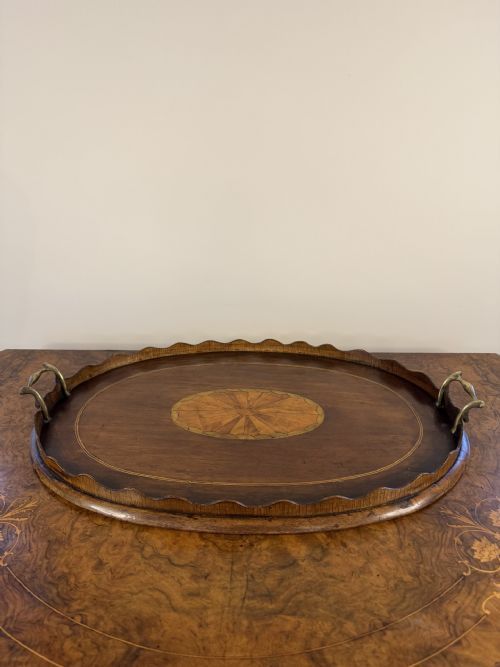
Mahogany forms the structural base for the majority of these examples, frequently paired with lighter satinwood or marquetry details. You will encounter straightforward tea trays alongside more versatile pieces mounted onto occasional tables or stands.
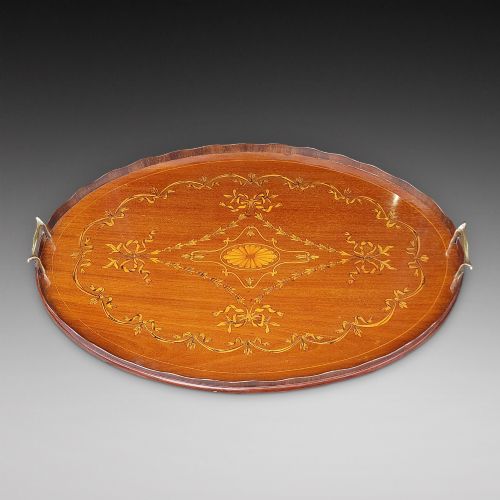
The Edwardian and Sheraton Revival periods contribute numerous examples decorated with contrasting wood inlays. Alongside standard mahogany serving trays, the evidence includes occasional tables and etageres designed to incorporate removable trays.
What varies in quality
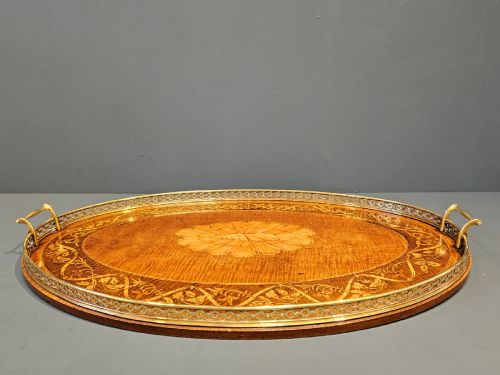
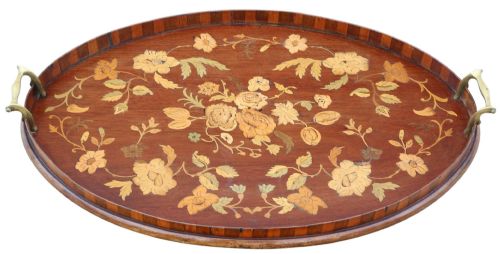
The precision and complexity of the marquetry inlay distinguish finer examples from standard production. Trays featuring crisp, multi-wood botanical or classical motifs demand greater skill from the maker than simpler linear stringing.
Hardware and secondary materials alter the character and execution of the piece. Robust brass handles, pierced galleries, and well-figured mahogany bases indicate higher standards of workshop construction.
One remarkably diminutive surviving example measures as a miniature tray, proving that even eighteenth-century domestic staff had to practice scaling down their tea service.
The Oval Inlaid Serving Tray Glossary
- Marquetry Inlay
- Decorative woodwork created by fitting small pieces of veneer into a prepared background. This technique allows makers to compose intricate pictorial or geometric designs across the tray surface.
- Satinwood
- A lustrous, yellow-toned timber imported from tropical regions and utilised for high-status cabinetmaking. It provides a sharp, bright contrast against darker woods like mahogany.
- Brass Gallery
- A low perforated metal railing fitted around the rim of a tray. Its purpose is to prevent decanters and glassware from sliding off during service.
- Etagere
- A piece of freestanding furniture consisting of a set of open shelves or tiers for displaying objects. Several listings combine this form with a removable serving tray top.
- Toleware
- Painted or japanned metalware produced in various domestic forms during the eighteenth and nineteenth centuries. These pieces often feature dark lacquered surfaces accented with gold leaf.
Oval Inlaid Serving Tray: Frequently Asked Questions
How were oval inlaid serving trays used?
These trays served primarily in polite society for carrying tea services, wine decanters, and glassware between rooms. Servants brought refreshments into drawing rooms upon them, or hosts poured tea directly from them in front of guests.
Over time, many of these pieces transitioned into permanent display items on side tables or occasional stands. Some Edwardian examples were specifically manufactured to lock into designated table frames, functioning as dual-purpose furniture.
How do I date an antique tray?
Dating relies on identifying the underlying timber, the style of the inlay, and the manufacturing technique. Georgian and early nineteenth-century pieces typically exhibit heavier mahogany foundations with restrained stringing.
Edwardian and Sheraton Revival pieces often display brighter satinwood veneers and more exuberant floral marquetry. Examining the construction of the handles and the underside provides additional clues regarding the period of origin.
What is the difference between a tray and an etagere?
A standard tray is a portable, flat serving surface equipped with handles or raised edges for carrying items. An etagere is a multi-tiered piece of furniture designed to stand permanently in a room for display.
Several listings bridge this category by offering a removable tray that sits atop a matching folding stand or table base. This configuration allowed the tray to be lifted off for service while the stand remained stationary.