


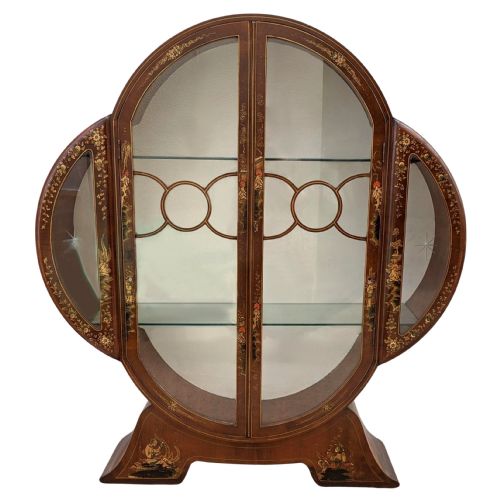


Oval Glazed Cabinet
An oval glazed cabinet brings curved glass and refined timber together to hold treasured objects in a light-filled display.
Oval Glazed Cabinet
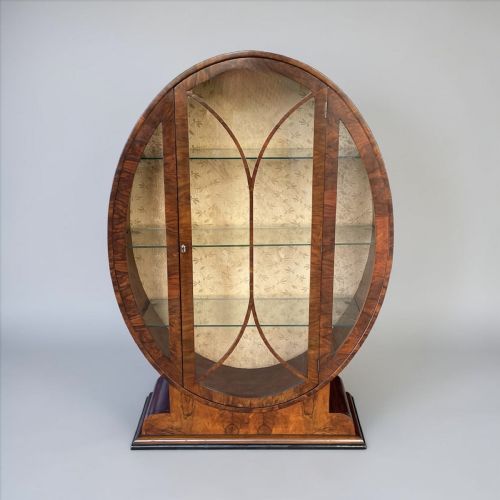
These pieces encompass oval glazed cabinets and closely related forms designed to showcase precious items and books within domestic rooms. When searching for an oval glazed cabinet, buyers encounter diverse iterations spanning the 19th Century, Victorian, Edwardian, Regency, and Art Deco periods, alongside 1880, 1890, 1920, and 1930 examples.
The selection here includes specific variations such as bijouterie tables, display cabinets, display tables, bookcases, drinks cabinets, bijouterie cabinets, and credenzas and sideboards. Styles range from Victorian and Edwardian to Art Deco, Late Victorian, Regency, Louis XVI Style, Colonial, and Aesthetic Movement.
Forms extend from tall pier cabinets and library bookcases to low-standing vitrine display tables intended for jewellery and collectors' pieces. These items serve primarily to exhibit contents clearly from multiple angles while protecting them behind curved or flat glass panes.
Markers of construction and design quality
Superior examples demonstrate meticulous attention in timber selection, particularly in figured walnut, satinwood, and rich mahogany grains. The precision of marquetry and inlay work dictates the refinement of the exterior.
Metal mounts in ormolu or brass, where present, exhibit sharp casting and secure attachment to the frame. The integration of curved glass panes with well-fitted doors and stable internal shelving marks the standard of execution.
Listings feature woods including mahogany, walnut, satinwood, and ebonised timber, complemented by brass and ormolu mounts.
The Oval Glazed Cabinet Glossary
- Bijouterie table
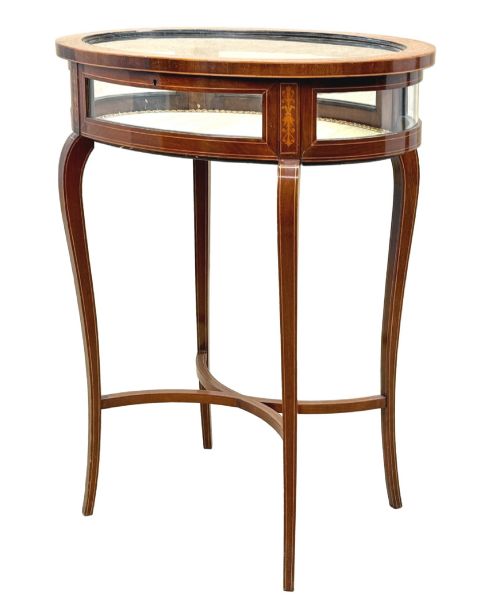
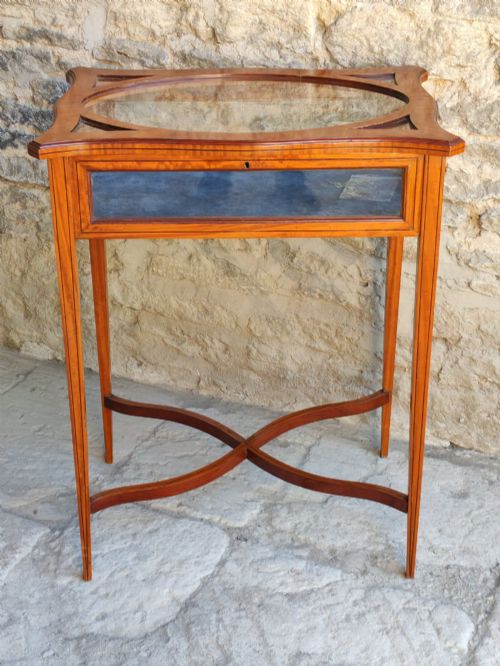
- A glass-topped display table specifically designed for small valuable items, jewellery, and curiosities. These pieces often feature hinged or glazed lids to allow close inspection from above.
- Pier cabinet
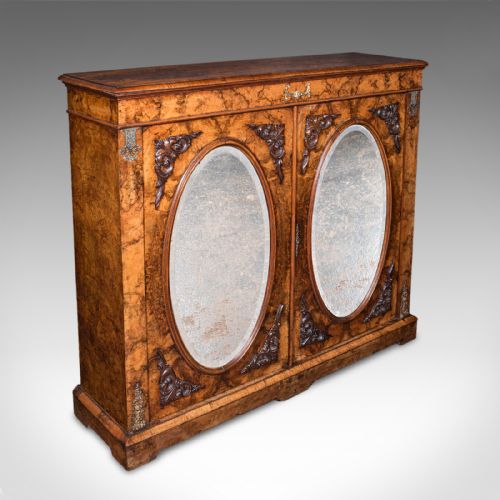
- An upright cabinet designed to fit against a wall space between windows, typically featuring glazed doors. Victorian iterations frequently incorporate walnut timbers and mirrored elements.
- Ormolu
- Gilded bronze mounts applied to furniture for decorative enrichment, common in French-influenced pieces. The material adds metallic contrast to dark woods like mahogany.
- Marquetry
- Decorative veneer patterns formed by fitting together small pieces of various woods and other materials. This technique creates pictorial or geometric surface designs across cabinet doors and tabletops.
- Vitrine
- A glass display cabinet intended for the presentation of porcelain, glass, and small ornaments. The term encompasses both standing cabinets and table-height display cases.
Oval Glazed Cabinet: Frequently Asked Questions
What is an oval glazed cabinet used for?
These cabinets serve primarily to exhibit collections of small valuables, books, and decorative objects while keeping them safe from dust. The glass panels allow viewers to observe contents from multiple angles within a room.
They function as both practical storage and focal points for drawing rooms, libraries, and morning rooms. Their enclosed shelving or glass-topped table compartments protect delicate items while maintaining visibility.
How do I identify an Edwardian piece?
Edwardian examples often feature lighter satinwood or mahogany timbers combined with delicate marquetry inlay. The construction reflects a preference for refined, graceful proportions typical of the early twentieth century.
Common forms from this era include bijouterie display tables and cabinets with slender legs. The decorative language draws inspiration from earlier neoclassical styles while maintaining lighter structural frames.
Where should I place a bijouterie table?
A bijouterie table requires a prominent position where natural light can illuminate the glass top and interior contents. Placing it away from direct sunlight protects both the timber and any fabric linings inside.
These pieces work well in drawing rooms or reception spaces as central or freestanding items. The top surface should remain clear of heavy objects to preserve the integrity of the glass and framing.
What distinguishes Art Deco designs?
Art Deco versions showcase streamlined forms and geometric styling characteristic of the 1920s and 1930s. These pieces move away from complex historical revival ornamentation in favour of clean architectural lines.
The construction emphasises smooth wooden surfaces and straightforward glazing without excessive decorative carving. They suit contemporary interiors seeking a defined twentieth-century aesthetic.