


1930s Display Case
A 1930s display case brings architectural geometry and figured woods together to showcase treasured objects with distinct interwar style.
1930s Display Case
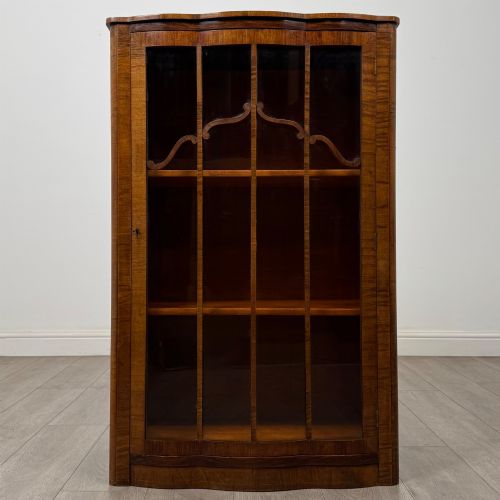
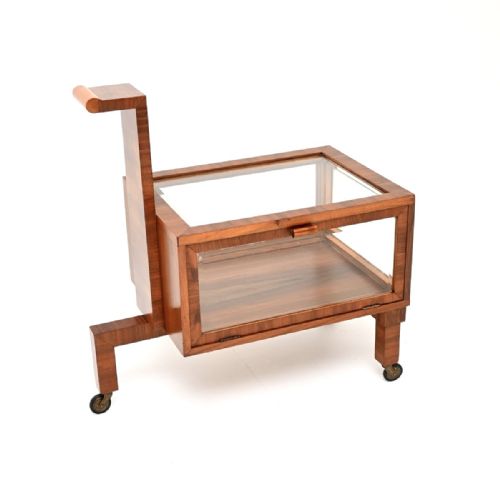
When you search for a 1930s display case, you encounter storage furniture designed to exhibit objects behind glass panels. The selection spans freestanding cabinets, bookcases, corner units, and serving carts from the Edwardian period through the 1930s.
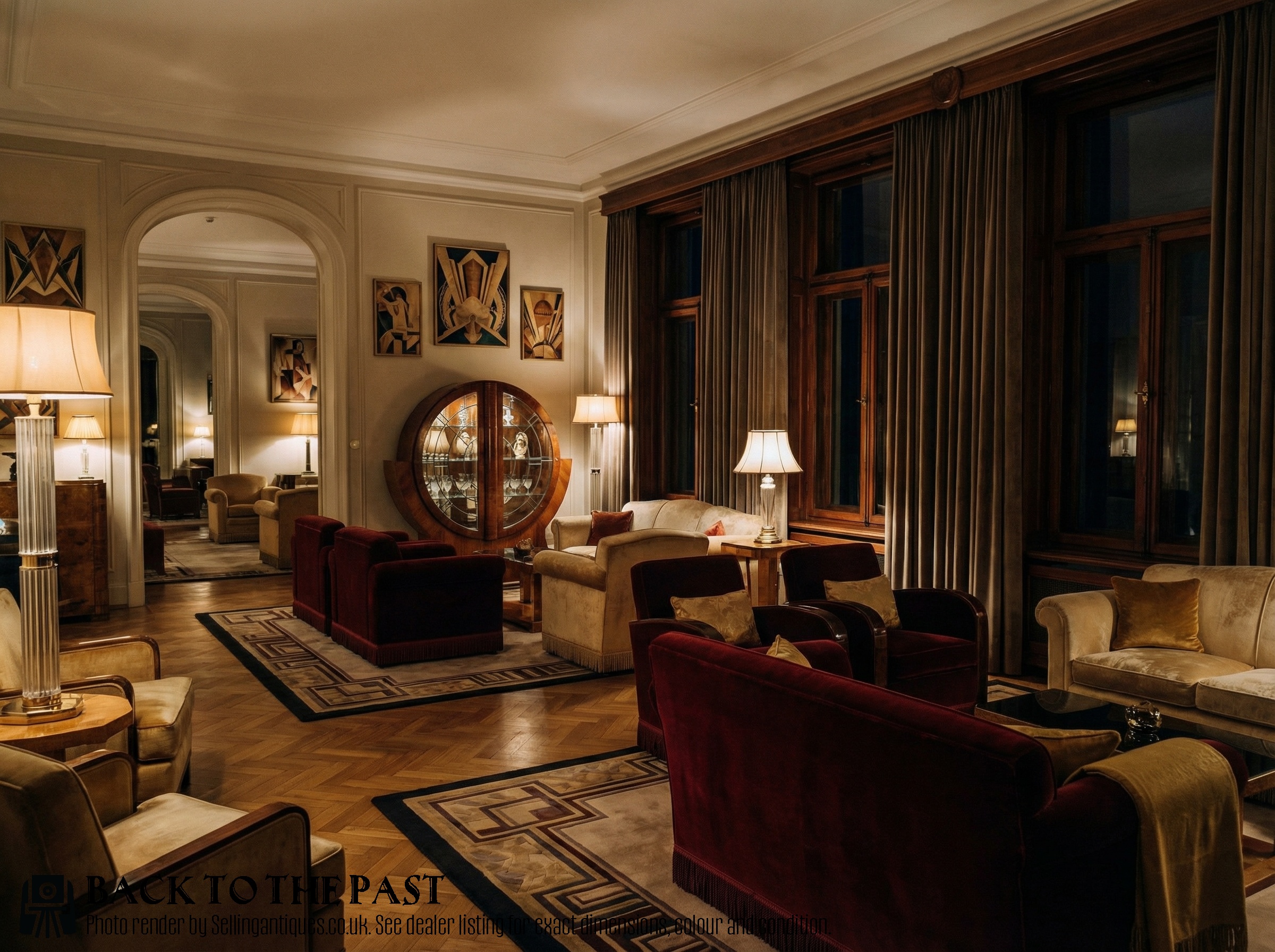
You are most likely to meet walnut and oak forms reflecting Art Deco and interwar commercial aesthetics. These pieces range from upright vitrines and circular cabinets to commercial display counters utilised in shops.
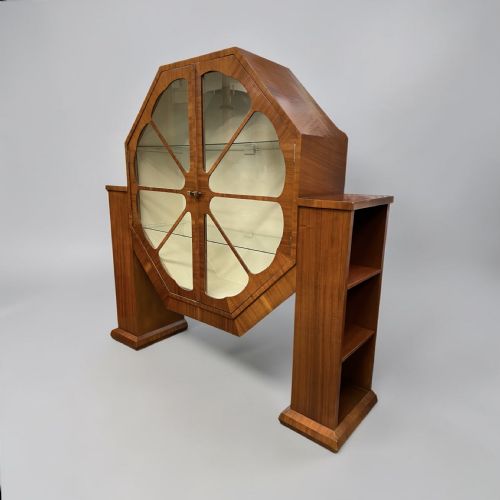
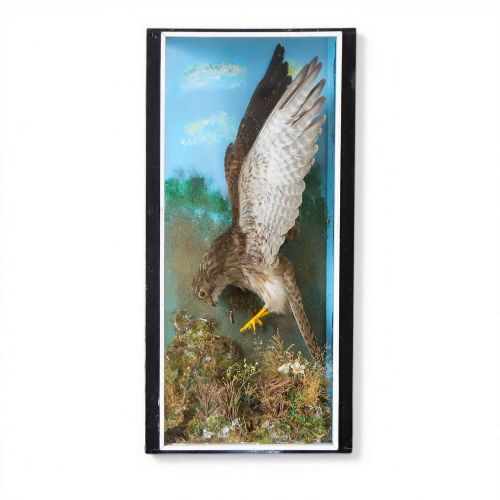
Makers and workshops of the era produced varying formats, including hexagonal, octagonal, and clove-shaped display cabinets. Alongside domestic furniture, the category accommodates specialised items such as taxidermy dioramas and glass vases housed in period frames.
How they were made
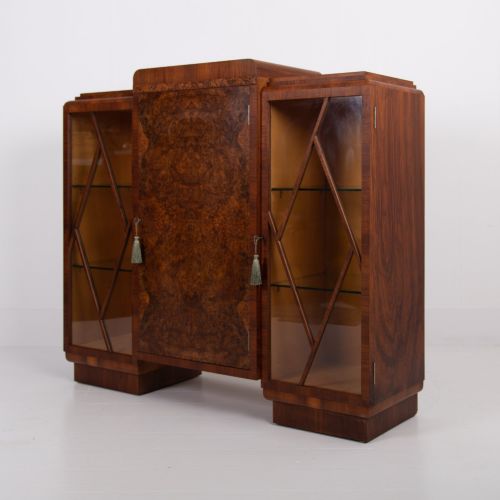
Cabinet makers utilised solid woods and applied veneers, selecting walnut, burr walnut, oak, mahogany, and maple for carcass construction. Surfaces often display prominent figuring, geometric mouldings, and contrasting sycamore inlay.
Glazing techniques combine clear glass panels with leaded segments and metal framing in brass or aluminium. Ironmongery and structural supports integrate brass and other metals to complement the woodwork.
Listings feature walnut, oak, mahogany, maple, and burr walnut alongside brass, aluminium, lead, and glass materials.
What varies in quality
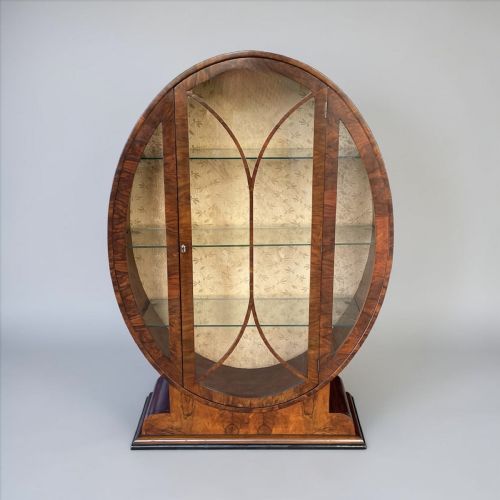
The distinction between standard commercial units and exceptional pieces rests upon timber selection and cabinetmaking ambition. Superior examples employ highly figured burr walnut or maple veneers arranged in balanced grain patterns across curved or circular doors.
Construction detail defines the upper tier, visible in specialised shapes such as cathedral vitrines or hexagonal frames. Fine joinery, original leaded glass, and robust internal shelving separate standard bookcase conversions from purpose-built display furniture.
Epstein·Saml. Elliott and Sons·E. Pollard and Co. Ltd.·Charles Graffart for VSL
The 1930s Display Case Glossary
- Art Deco
- A design style dominant in the 1920s and 1930s characterised by geometric shapes, streamlined forms, and stylised ornamentation. It heavily influences the silhouette of these cabinets.
- Burr walnut
- A prized timber harvested from walnut tree growths, producing swirling, intricate grain patterns. Cabinetmakers used it for decorative veneer panels.
- Leaded glass
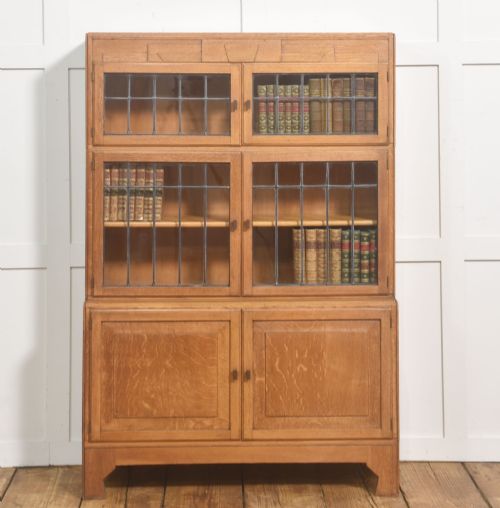
- Glass panes held together by narrow strips of lead, forming geometric patterns across cabinet doors. This technique appears frequently in interwar bookcases.
- Vitrine
- A glass-fronted cabinet specifically designed for displaying fine objects or collections. Many 1930s examples adopt this format in circular or upright shapes.
- Cotswold School
- An Arts and Crafts design movement emphasising traditional craftsmanship and honest construction in wood. Pieces from this tradition utilise solid oak.
1930s Display Case: Frequently Asked Questions
Where should I place a display cabinet?
These cabinets suit living rooms, studies, or dining spaces where their glass fronts can protect collections while remaining visible.
Position them away from direct sunlight to preserve timber veneers and protect delicate interior contents.
How do I identify Art Deco cabinets?
Look for geometric forms, symmetrical wood veneers, and stepped mouldings that define the interwar aesthetic.
Circular, hexagonal, and octagonal shapes also signal the modern design movements of the period.
Are these cabinets suitable for books?
Many examples function as dual-purpose bookcase cabinets featuring adjustable wooden shelving behind glazed doors.
Oak and walnut variants from this era provide sturdy housing for libraries alongside decorative objects.
What is a shop display counter?
Commercial units featuring brass or aluminium frames built for retail environments during the 1930s.
These counters bring industrial glazing techniques into domestic settings for distinctive collections.
Can I store heavy items inside?
Solid oak and mahogany formats offer robust internal framing capable of supporting heavier books and ceramics.
Curved walnut vitrines suit lighter glassware and decorative ornaments rather than dense loads.