
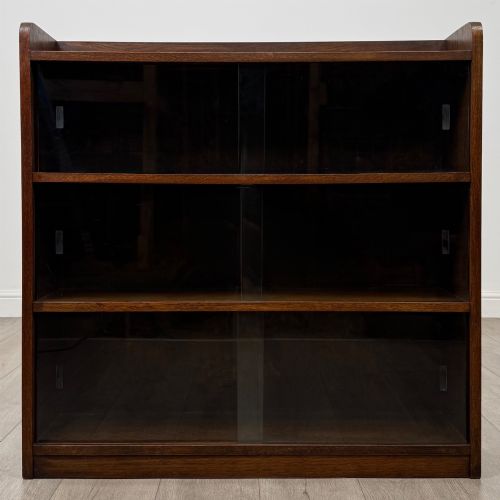
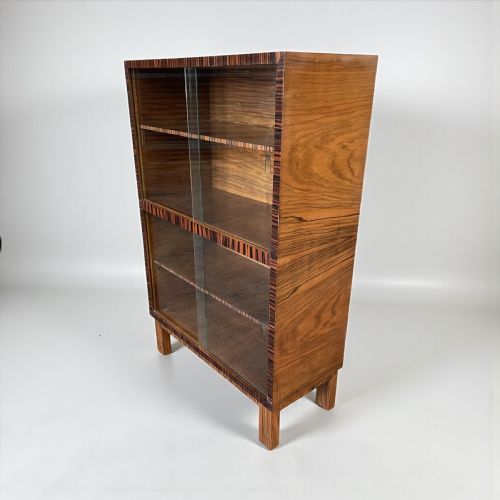


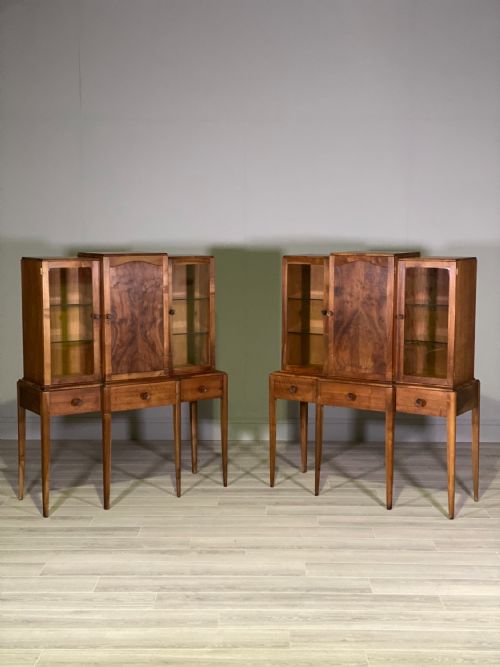

Retro Glazed Display Cabinet
A retro glazed display cabinet brings mid-century or Art Deco character to a room while keeping your collection safely in view.
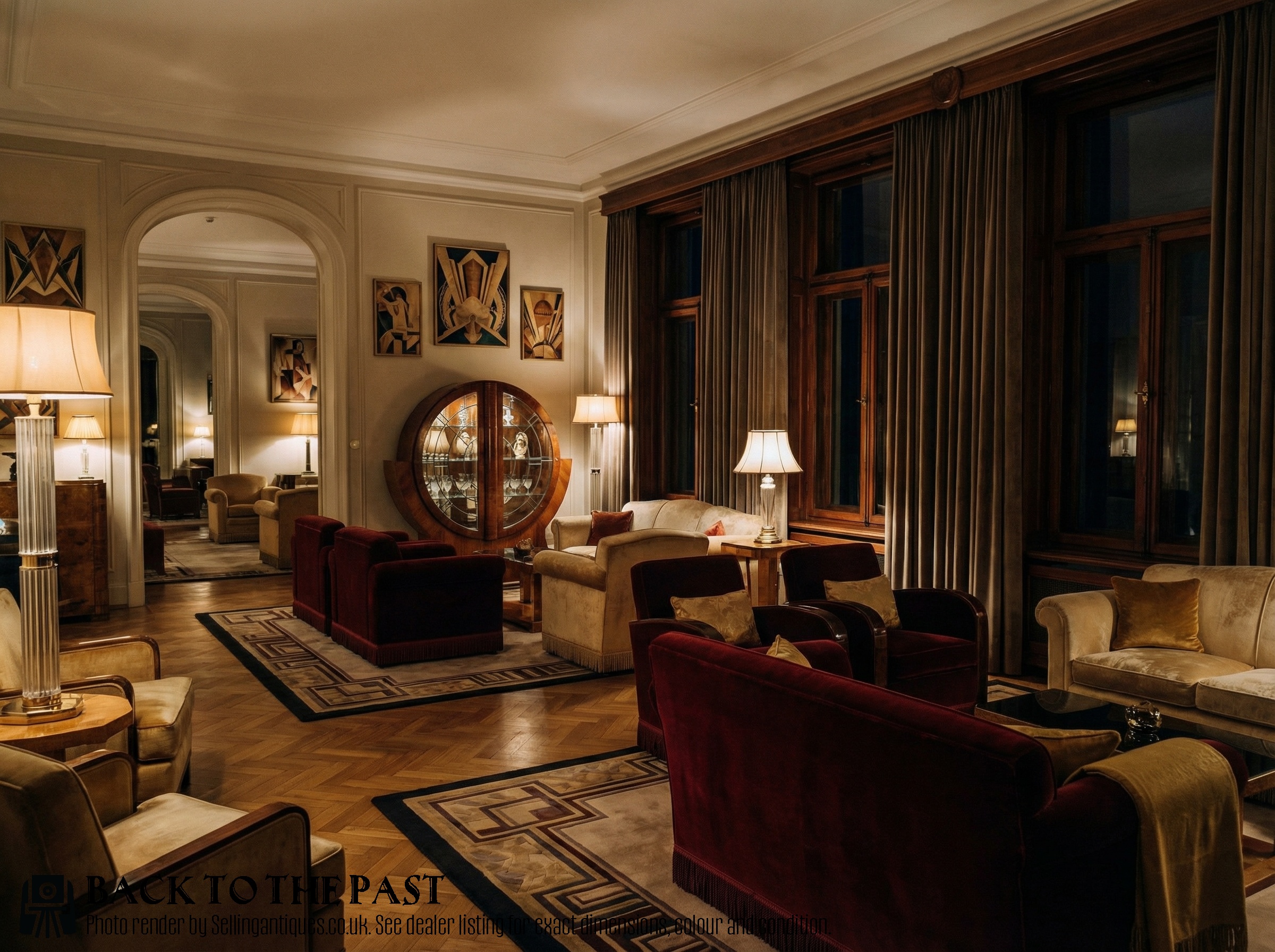
Retro Glazed Display Cabinet
When you search for a retro glazed display cabinet, you enter a field spanning Edwardian, 1930s, and 1950s eras. These pieces combine timber frames with glass doors or panels designed to showcase books, china, and collectables.
You will encounter forms ranging from clove-shaped cabinets and bureau combinations to modular bookcases and medical storage units. The majority hail from the 1930s Art Deco period, alongside Edwardian oak designs and mid-century teak living room cabinets.
How they were made
Construction relies heavily on walnut, burr walnut, oak, and teak timbers, frequently enhanced by decorative veneer work and sycamore details. Cabinet makers utilised brass hardware for hinges, handles, and locks to complement the rich wood grain.
Glazing forms the central functional element, set into timber doors that range from traditional multi-pane Edwardian frames to sweeping curved Art Deco profiles.
One exceptional 1930s design takes the form of a fabulous clove, proving that cabinet makers embraced botanical inspiration.
What varies in quality
Quality reveals itself in the selection of timber veneers, particularly the grain matching on burr walnut or figured oak surfaces. Superior examples demonstrate refined proportions and considered joinery rather than purely utilitarian construction.
The sophistication of the design dictates the tier, moving from simple medical or office storage units to bespoke maker-attributed cabinet work with distinctive shaping and integrated storage configurations.
Epstein·Globe Wernicke·Heals·Phoenix Gallery·Arthur Reynolds Of Ludlow
The Retro Glazed Display Cabinet Glossary
- Burr walnut
- A figured timber veneer taken from the burl growth of a walnut tree, prized for its swirling, highly decorative grain patterns. It frequently defines the front panels of high-status Art Deco furniture.
- Bureau cabinet
- A hybrid furniture form combining a fold-down writing desk with upper glazed display shelving. This dual-purpose design was popular in the 1930s for compact living spaces.
- Veneer
- A thin layer of superior wood applied over a secondary timber base to create decorative surfaces. Skilled application ensures the grain flows naturally across the cabinet doors.
- Globe Wernicke
- A modular bookcase system featuring stacking lawyer's sections with upward-lifting glass doors. These patented units allowed owners to expand their library shelving vertically.
Retro Glazed Display Cabinet: Frequently Asked Questions
What is a retro glazed display cabinet?
A retro glazed display cabinet is a storage piece featuring glass doors, primarily dating from the Edwardian era through the 1930s Art Deco period and into the 1950s.
These cabinets serve to protect items from dust while offering a clear view of books, ceramics, or ornaments inside.
How do I date a display cabinet?
Dating relies on stylistic markers such as straight-lined Edwardian oak framing, geometric Art Deco curves, or clean mid-century teak silhouettes. Materials like burr walnut and specific hardware fastenings also point to particular decades.
Maker signatures or labels provide the most reliable chronological evidence when present.
How do I style a glass cabinet?
Glass cabinets work best when items are arranged with varying heights and negative space to avoid a cluttered look. Grouping ceramics or books by colour or era creates a cohesive visual display.
Ensure the cabinet sits away from direct sunlight to protect the timber and any displayed items from fading.
Are Art Deco cabinets sturdy?
Art Deco cabinets are built from solid timbers like oak and walnut, often reinforced with internal framing and heavy veneer applications. They are robust enough for daily use when placed on a level floor.
Care should be taken with the glass panels during relocation.