
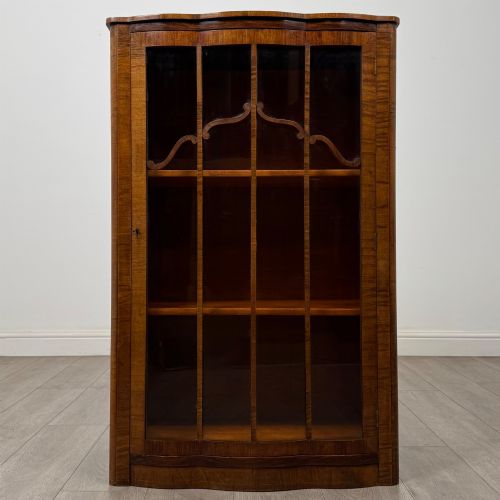


Figured Walnut Display Case
A figured walnut display case brings exceptional warmth and grain movement to a room, showcasing collections behind glass.
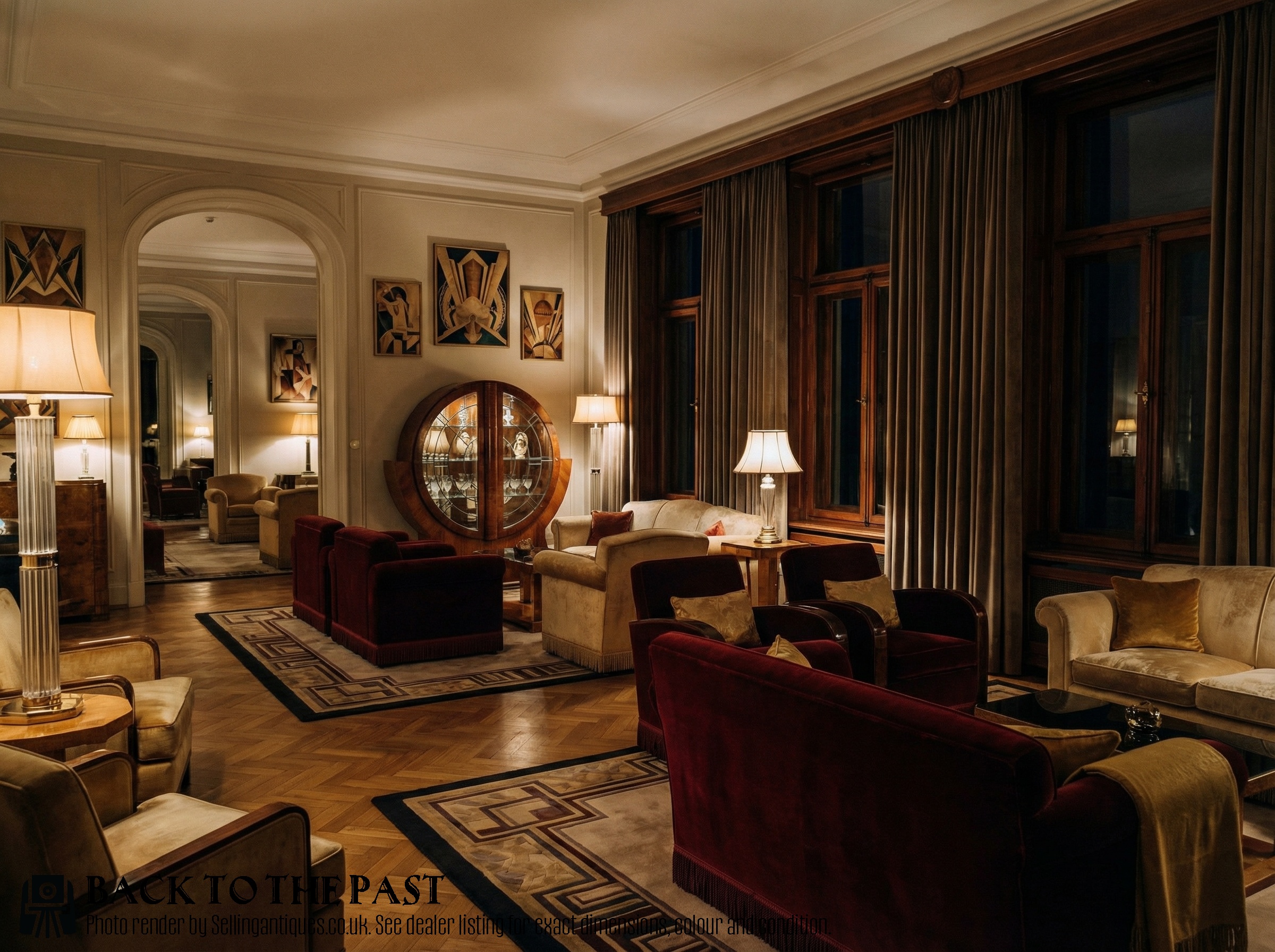
Figured Walnut Display Case
A figured walnut display case brings together rich timber surfaces and protective glass housing for cherished objects. These pieces span from the mid-nineteenth century through the Edwardian era and into the geometric lines of the Art Deco period.
The most common forms on this page include Victorian pier cabinets and upright display cabinets, alongside circular, hexagonal, and cathedral vitrines from nineteen thirty. Buyers encounter both English craftsmanship and French pieces incorporating marble tops or architectural bookcase designs.
Victorian examples often favour pier cabinets and credenzas with rich marquetry inlay, whilst nineteen thirties pieces showcase the dramatic grain of burr walnut in rounded or angular shapes. Each format serves the primary purpose of holding treasured items in plain sight.
How they were made
Cabinetmakers utilised figured walnut and burr walnut veneers applied over solid secondary timbers to create striking symmetrical patterns across doors and panels. Marquetry inlay in contrasting woods and tulipwood banding frequently border these polished surfaces.
Metal elements provide both structural support and ornamental contrast, with brass details and gilt ormolu mounts fitted to Victorian pier cabinets and French bookcases. Glazed doors use timber framing to protect the interior whilst maintaining clear visibility.
If a cabinet starts looking at you, check the geometry; nineteen thirty designers built circular and hexagonal vitrines just to keep your eyes moving.
What varies in quality
The visual impact of the timber grain sets finer examples apart, particularly where burr walnut or figured walnut veneers create book-matched patterns across the front. The precision of marquetry inlay and the integration of tulipwood banding dictate the refinement of nineteenth-century pieces.
Architectural ambition and joinery detail define the upper tier, seen in circular or hexagonal Art Deco shapes and French marble-topped carcasses fitted with substantial ormolu mounts. Lower tiers rely on simpler rectilinear proportions with standard timber framing.
The Figured Walnut Display Case Glossary
- Figured walnut
- Timber cut from walnut trees where the grain grows in swirling, mottled, or flame-like patterns. This wood is sliced into veneers to highlight the natural decorative qualities across cabinet doors.
- Burr walnut
- A growth on a walnut tree that produces dense, highly swirled grain clusters. Cabinetmakers prize this material for creating decorative focal points on luxury furniture.
- Pier cabinet
- A low freestanding cabinet designed to sit against the wall space between windows. Victorian examples often feature glass doors and Ormolu mounts.
- Ormolu
- Gilded bronze ornamentation applied to furniture. It provides metallic contrast against dark walnut surfaces on nineteenth-century pieces.
- Marquetry
- Inlay work using various coloured woods to create decorative patterns and pictures on furniture surfaces. It appears on Victorian display pieces alongside tulipwood banding.
Figured Walnut Display Case: Frequently Asked Questions
What is a figured walnut display case?
A figured walnut display case is an enclosed cabinet featuring glass panels and decorative wood grain, used to store and exhibit collectibles.
These pieces range from mid-nineteenth-century Victorian pier cabinets to nineteen-thirties Art Deco vitrines.
How do I style a display cabinet?
A display cabinet works best when filled with objects of varied heights and materials that complement the warm tones of walnut.
Keep the interior lighting balanced and avoid overcrowding the glass shelves to let the timber grain remain the focal point.
How do I tell Victorian from Art Deco cabinets?
Victorian cabinets typically feature marquetry inlay, ormolu mounts, and formal proportions, often built as pier cabinets or credenzas.
Art Deco cabinets from nineteen thirty favour geometric shapes like circles and hexagons, relying on unadorned burr walnut grain.
Where were these display cases made?
The pieces recorded here include English craftsmanship from the Victorian and Edwardian eras, alongside French examples.
French pieces from the mid-nineteenth century frequently incorporate marble tops and distinct bookcase formats.