
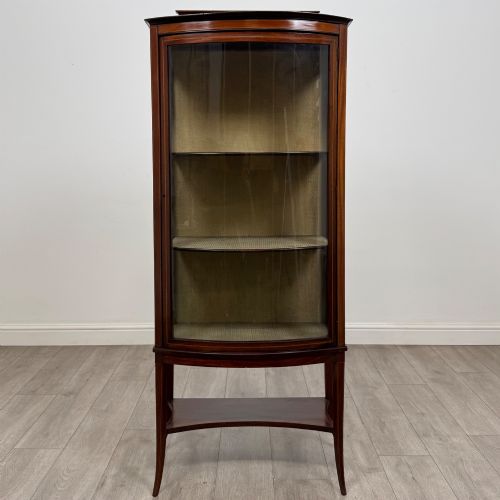
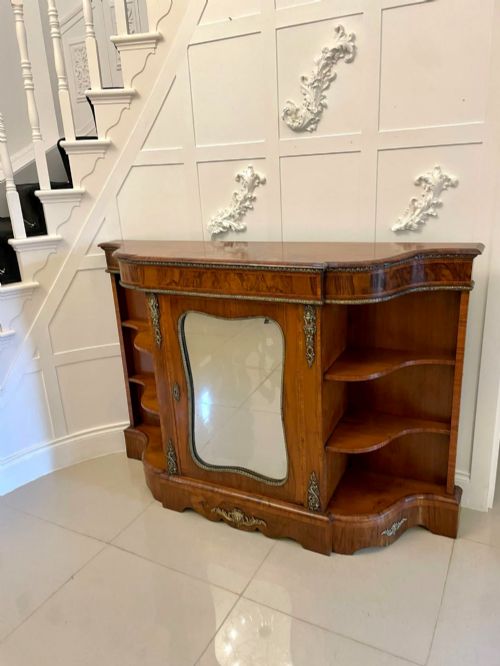
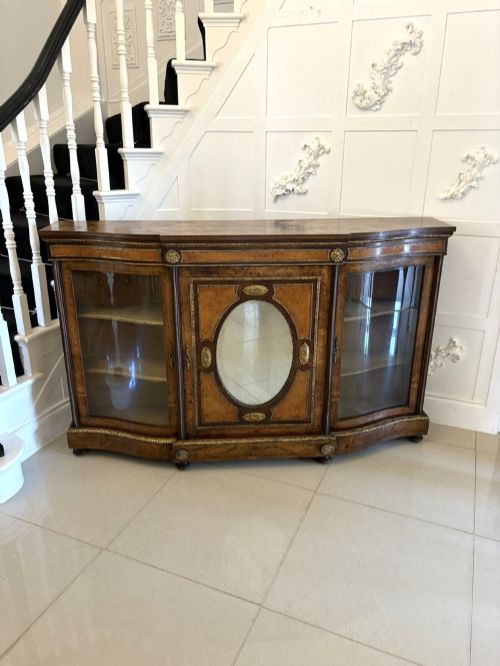
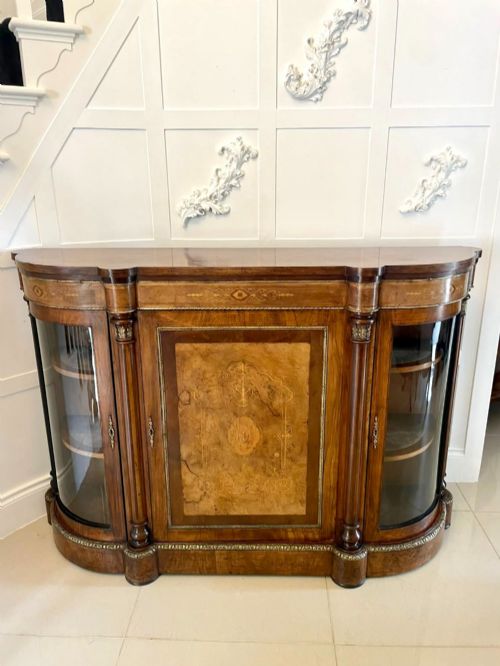


Curved Display Cabinet
A curved display cabinet draws the eye through polished glass and graceful lines, offering a refined way to present precious objects.
Curved Display Cabinet
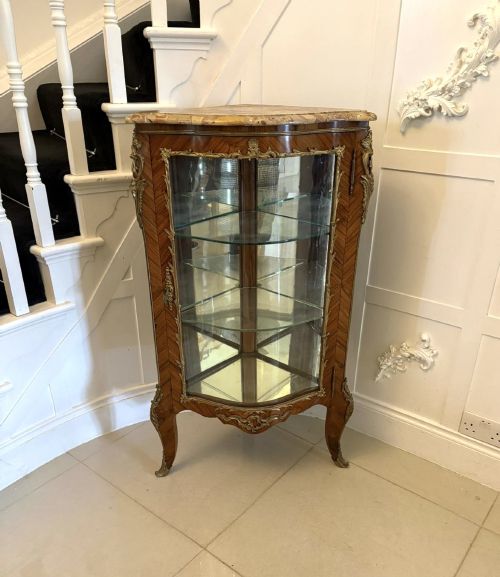
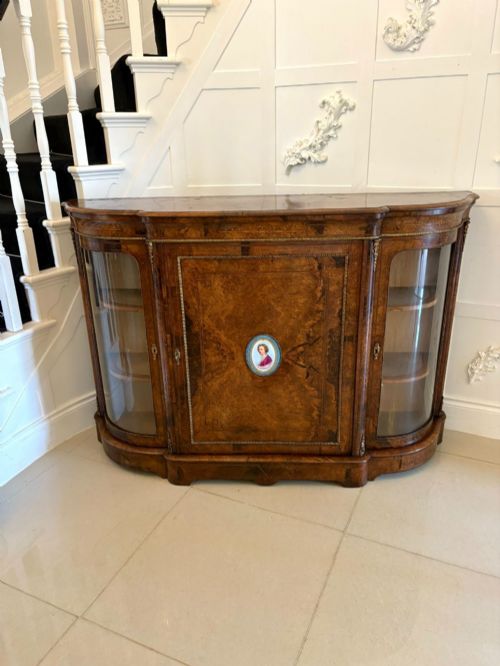
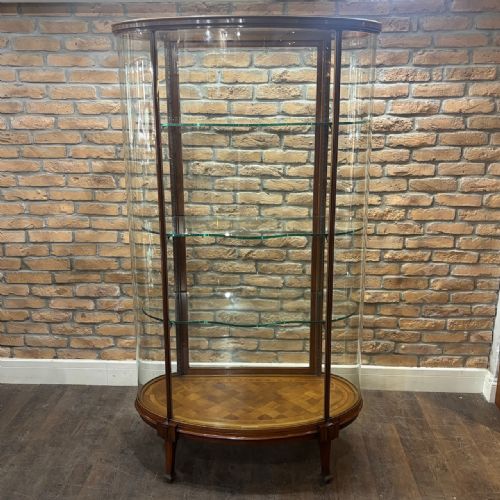
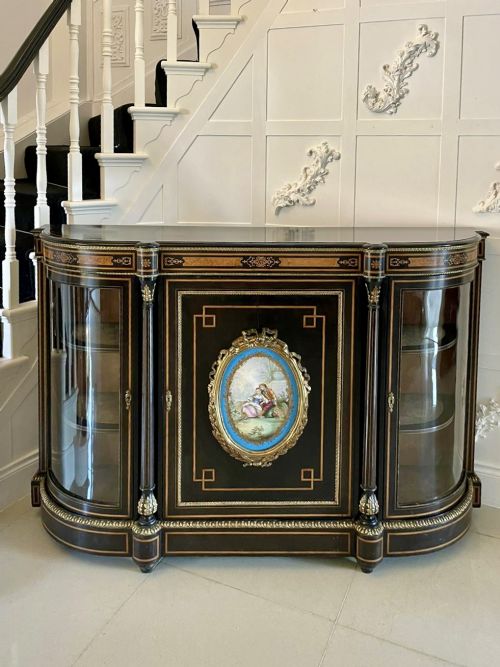
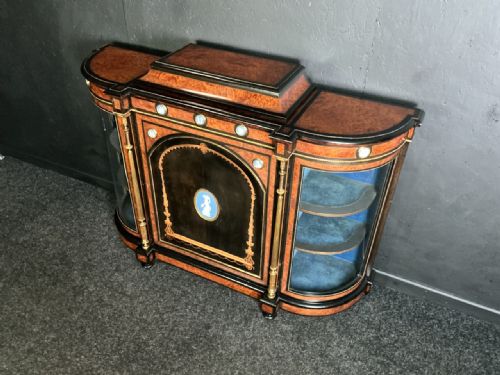
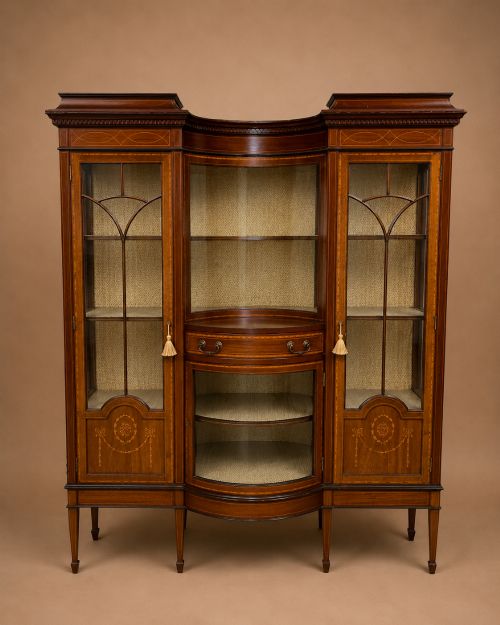
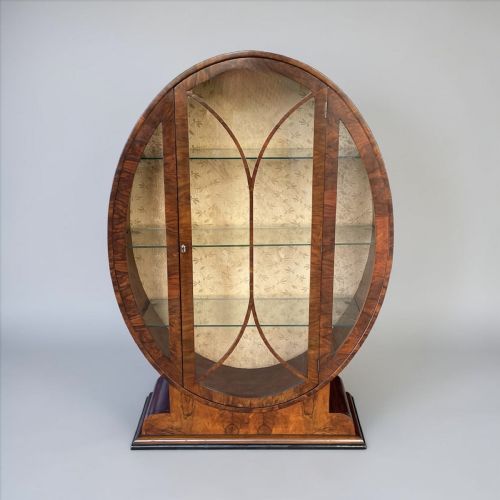
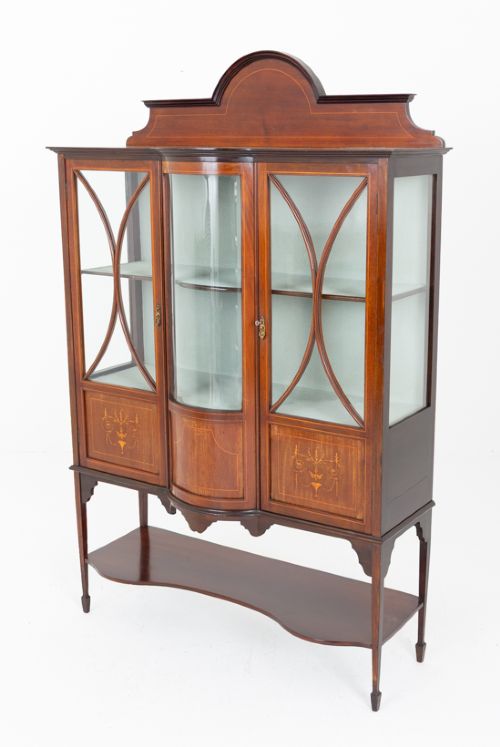
A curved display cabinet encompasses distinct forms designed to exhibit ceramics, glassware, and treasured items within domestic and commercial spaces. You will encounter nineteenth-century credenzas, corner cabinets, vitrines, and shop display cabinets shaped with curved glass panels.
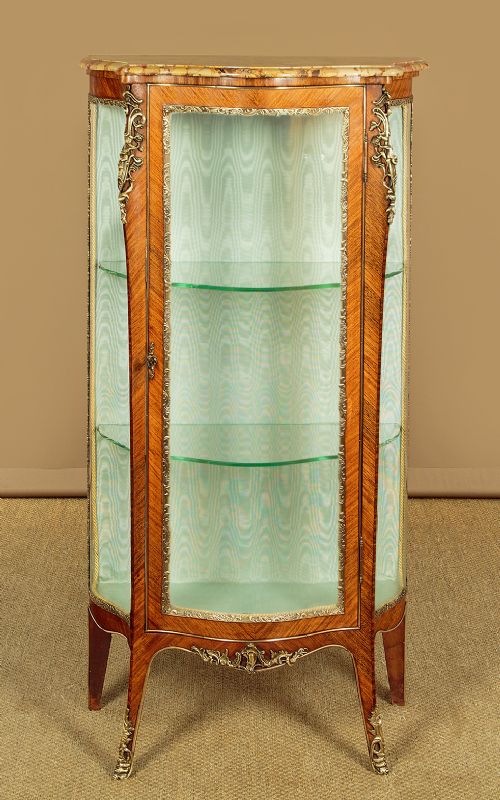
The pieces span periods from the Victorian era and Edwardian years through to Art Deco designs of 1930. French examples frequently feature serpentine fronts and marble tops, while English pieces utilise mahogany, walnut, and satinwood.
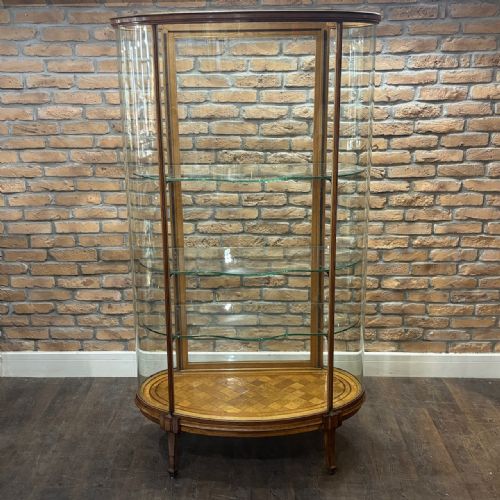
Credenzas and sideboards serve a dual function of surface display and enclosed storage, whereas vitrines focus entirely on transparent visibility. Shop display cabinets bring robust timber frames and large curved panes into the grouping.
Materials and Techniques
Cabinet makers constructed these pieces using solid timbers and decorative veneers such as burr walnut, kingwood, amboyna, and mahogany over carcases of oak or pine. Marquetry inlay, floral motifs, and painted satinwood enrich the exterior surfaces.
Metal ornamentation plays a major role, with ormulu mounts and brass details framing doors, corners, and pediments. Glass is bent or curved to fit serpentine and bow-ended door frames, paired occasionally with mirrored backs inside the display chamber.
Listings feature eighteenth-century influences through Sheraton Revival and Louis XV styles executed across Victorian and Edwardian periods.
Distinctions in Execution
Quality rests upon the precision of the timber selection, the crispness of the marquetry, and the integration of metal mounts. Superior cabinets display matched veneers with continuous grain patterns across curved doors and serpentine drawer fronts.
The execution of the ormolu mounts and the clarity of the curved glass distinguish standard production from exhibition pieces. Maker attribution, such as work by Edwards & Roberts or Maison Gagneau, elevates the standing of a piece.
F. Sage & Co·Edwards & Roberts·Maison Gagneau·James Hicks
The Curved Display Cabinet Glossary
- Credenza
- A low cabinet or sideboard designed for display and storage, often mounted with ormolu and featuring curved side cupboards.
- Vitrine
- A glass-fronted cabinet or display case specifically built for showing porcelain, curiosities, and fine objects.
- Ormolu
- Gilt bronze ornamentation applied to furniture mounts, popular in French and Victorian revival pieces.
- Marquetry
- Decorative veneer work forming intricate patterns or floral pictures using various coloured woods.
- Serpentine
- A shaped furniture front or top curving inward centrally and outward at the ends, creating a wave-like profile.
Curved Display Cabinet: Frequently Asked Questions
How do I style a curved display cabinet at home?
Position the cabinet where natural light catches the glass panels without exposing delicate timber veneers to direct, harsh sunlight. Leave adequate space around serpentine or bow-ended forms so the curved profile remains a focal point.
Group collections inside by height and material to maintain visual balance against mirrored or fabric-lined interiors. Curate the shelves sparingly to let the craftsmanship of the cabinet stand out alongside the objects within.
What is the difference between a vitrine and a credenza?
A vitrine functions primarily as a glass-enclosed display case intended for fragile objects, ceramics, and small curiosities. These pieces elevate visibility through glass on multiple sides.
A credenza combines enclosed lower storage with surface display space, sometimes incorporating curved side cabinets. While a credenza anchors a room as a sideboard, a vitrine acts strictly as an exhibition tower.
How do I identify Art Deco cabinets from Victorian pieces?
Art Deco cabinets from the 1930s favour streamlined geometry, smooth walnut veneers, and minimalist planes without historical revival ornamentation. Their curves tend toward bold, architectural sweeps rather than delicate floral marquetry.
Victorian and Edwardian pieces rely on ornate ormolu mounts, rich burr walnut, and intricate marquetry. They draw stylistic inspiration from French Rococo or Sheraton revivals rather than modern industrial aesthetics.
Were curved glass cabinets used in shops?
Merchants utilised large timber-framed cabinets with curved glass to showcase luxury goods, jewellery, and silverware securely. Makers like F. Sage & Co constructed these robust commercial fixtures for high-end retail environments.
Domestic versions share the curved glass aesthetic but feature lighter domestic timbers and refined interior linings. Shop display cabinets prioritize durability and maximum viewing angles over intimate residential ornamentation.