




Oval Glass Cabinet
An oval glass cabinet is a curved display piece that showcases small collections, and you want one for its elegant shape and clear visibility.
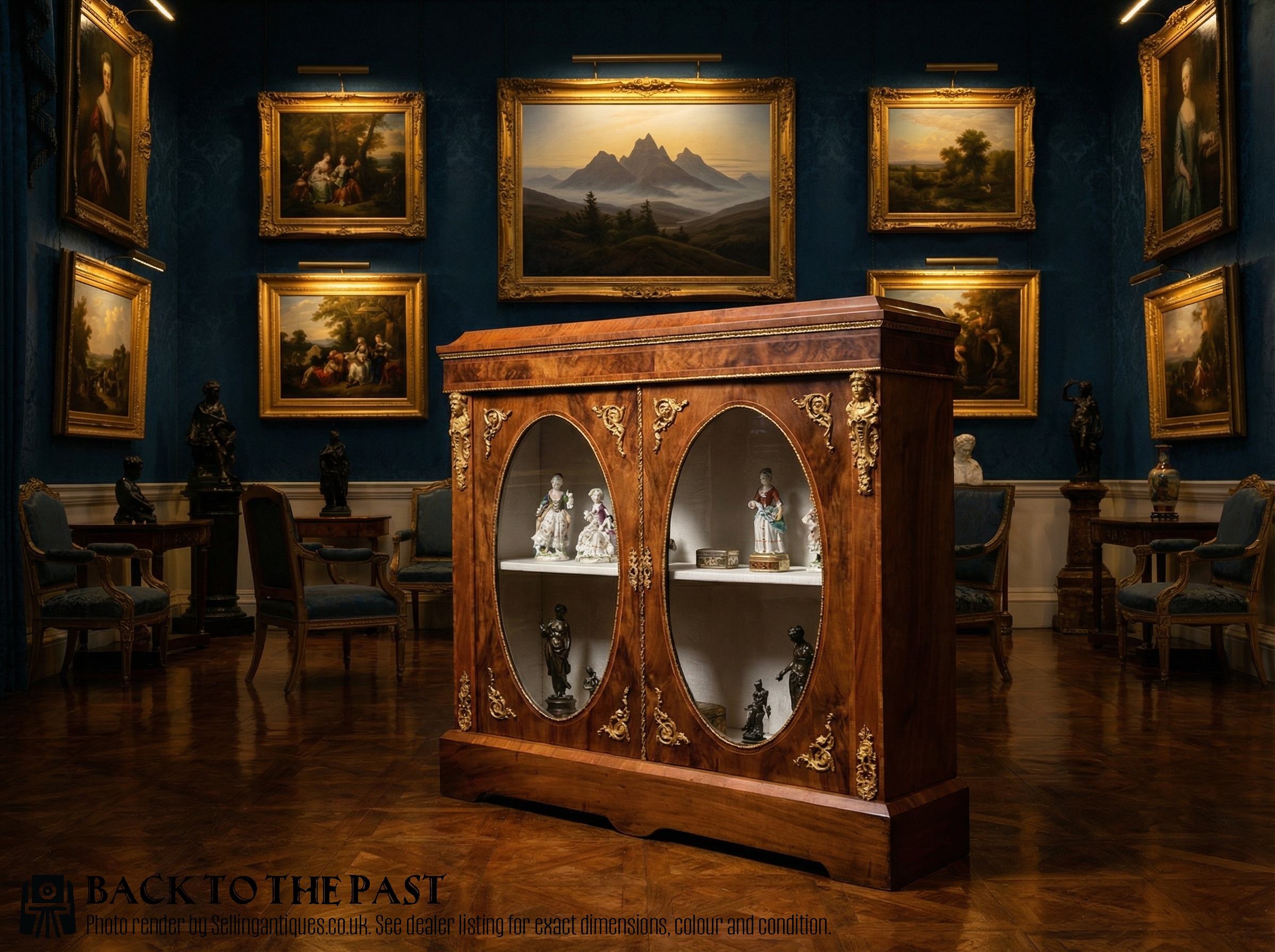
Oval Glass Cabinet
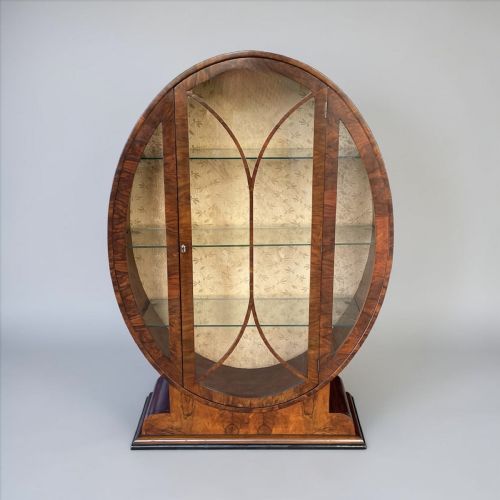
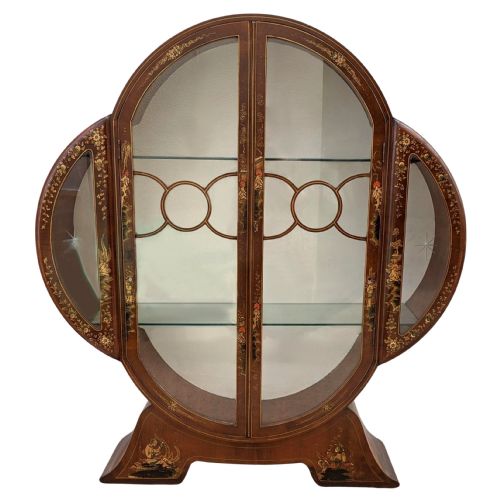
When you search for an oval glass cabinet, you encounter display cabinets, bijouterie tables, and vitrines spanning the Victorian, Edwardian, and Art Deco periods. These pieces serve to exhibit precious objects, jewellery, and curiosities through curved glass panels.
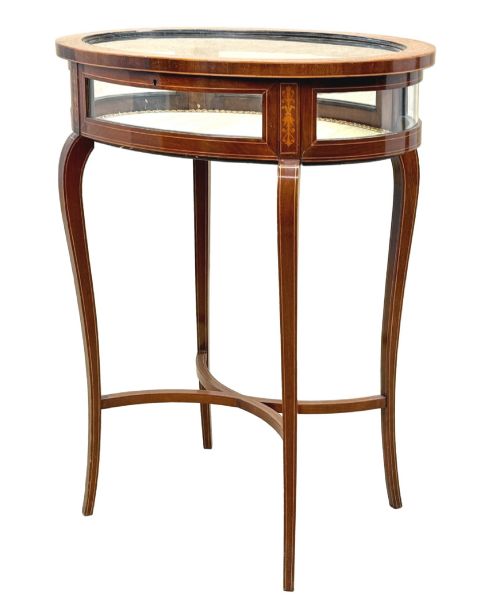
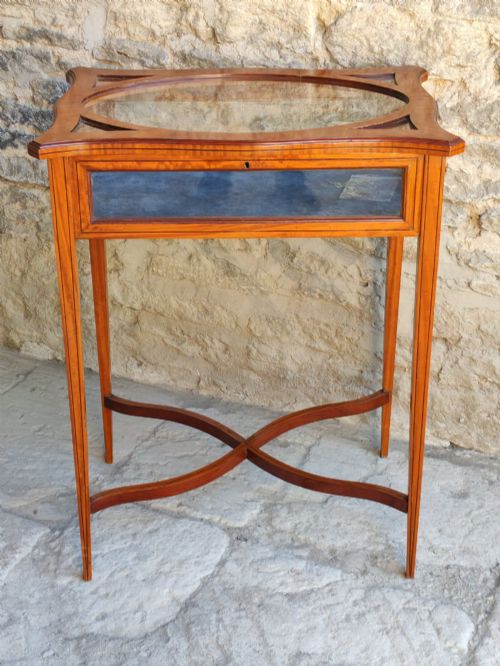
The most common forms on this page include mahogany and satinwood bijouterie tables from the late nineteenth and early twentieth centuries. These combine table heights with glass viewing compartments designed for seated inspection of collectibles.
Makers and designers from French Louis XVI style workshops alongside English cabinet makers shaped these items from walnut, mahogany, and satinwood. Alongside standard display cabinets, variations stretch to shop counters, pier cabinets, and dome cases.
How they were made
Craftsmen built the carcasses of these cabinets using solid and veneered timbers such as mahogany, walnut, and satinwood. Frames frequently incorporate intricate marquetry inlay and brass mounts.
Glazing involves curved glass panes fitted into wooden or bronze framing to give an unobstructed view of the interior. Many bijouterie sections feature velvet or fabric linings to cushion displayed items.
Ormolu mounts and bronze shelving provide structural enrichment on French and Art Deco examples. Joinery techniques reflect the period of manufacture, from late nineteenth-century cabinetmaking to nineteen-thirties modern production.
Cabinet forms on this page include bijouterie tables, display cabinets, pier units, and shop counters with curved glass.
What varies in quality
The refinement of the timber veneers and the precision of the marquetry inlay set individual pieces apart. Finer examples display carefully selected grain patterns and hand-cut botanical or geometric designs.
The execution of the metalwork, including cast ormolu mounts and bronze detailing, dictates the grade of the cabinet. Superior pieces feature crisp chasing and securely anchored decorative elements.
The integrity of the curved glass and the smoothness of hinged lids or doors define the standard of construction. Original fabric linings and well-fitted internal shelving elevate the finish of the piece.
The Oval Glass Cabinet Glossary
- Bijouterie table
- A glass-topped display table designed specifically for showcasing jewellery, medals, and small decorative items at viewing height.
- Vitrine
- A glass-fronted cabinet used for displaying fine porcelain, curiosities, or decorative arts.
- Ormolu
- Gilded bronze ornamentation applied to furniture, popular in French-influenced cabinet making.
- Marquetry
- Decorative veneer work arranged in detailed patterns or pictures using various coloured woods.
- Pier cabinet
- An upright display cabinet designed to fit against a wall space between windows.
Oval Glass Cabinet: Frequently Asked Questions
What fits inside an oval glass cabinet?
These cabinets suit small collections, jewellery, silverware, and curiosities that benefit from close inspection and protection from dust.
Table versions display items horizontally beneath glass tops, whilst upright cabinets use shelves for vertical viewing.
How do I date an oval glass cabinet?
Dating relies on timber choices, such as satinwood in Edwardian pieces or walnut in Victorian designs, alongside stylistic clues like Art Deco geometry.
Construction methods and hardware also indicate age, matching late nineteenth-century or nineteen-thirties manufacturing practices.
Where should I place a bijouterie table?
Bijouterie tables work well in drawing rooms or studies where natural light illuminates the glass top without direct solar damage to interior fabrics.
Sufficient clearance around the piece allows easy access to hinged glass lids and viewing compartments.
Are French and English cabinets different?
French cabinets often incorporate ormolu mounts, Vernis Martin finishes, and Louis XVI styling with lighter wood inlays.
English equivalents tend to focus on mahogany and walnut structures with understated marquetry and Edwardian elegance.