





Oval Cocktail Table
An oval cocktail table brings soft curves and generous proportions to a sitting room, offering a practical centrepiece that avoids harsh corners.
Oval Cocktail Table
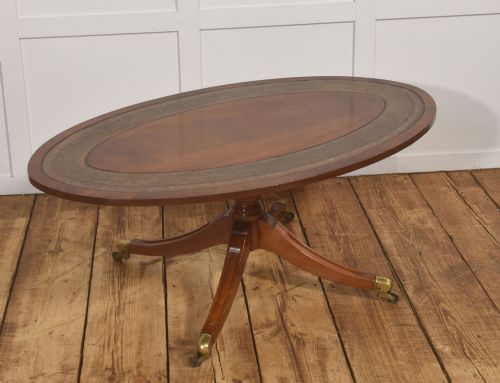
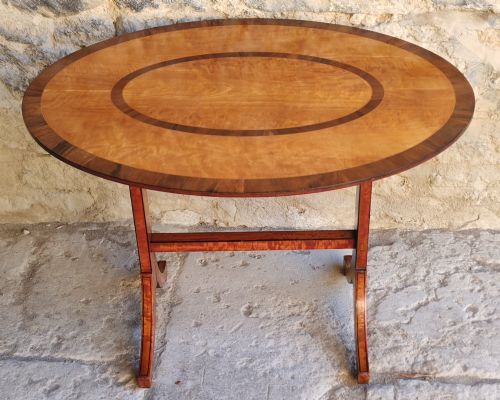
When you search for an oval cocktail table, you encounter low tables designed for hospitality, alongside butler's trays on stands and serving trays adapted for modern living. The selection spans Georgian and Victorian periods, reaching into the Art Deco and Interwar years with distinct regional variations.
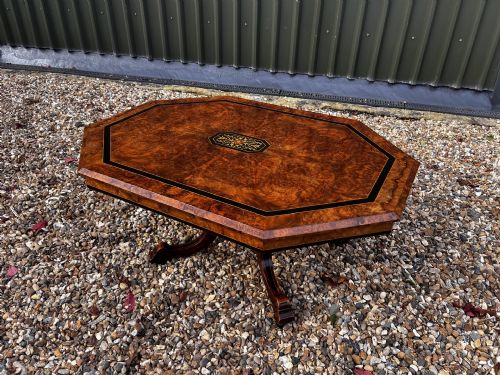
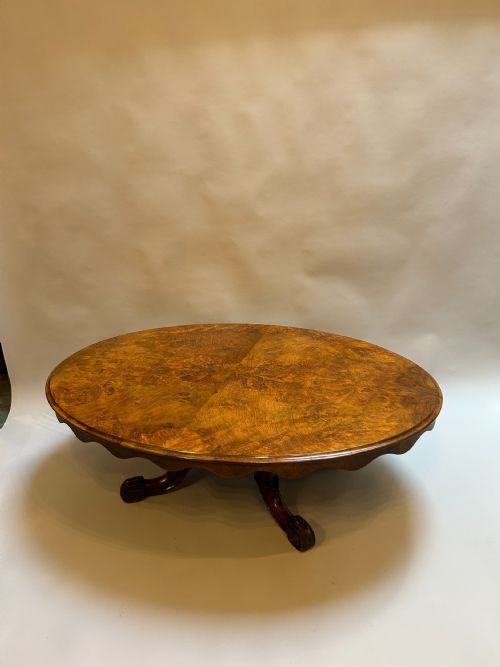
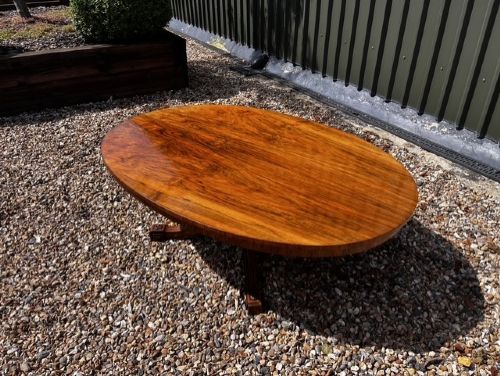
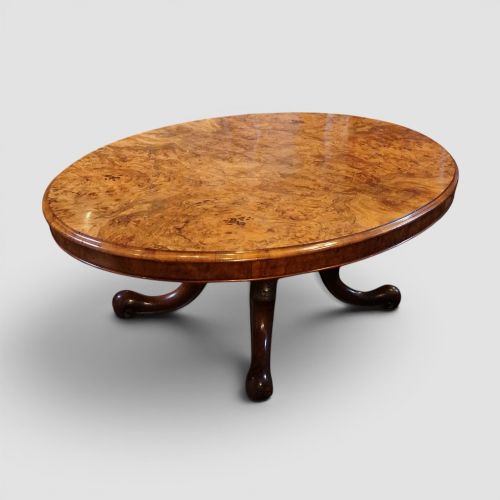
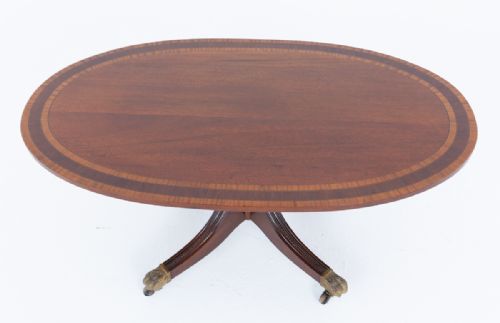
You are most likely to meet Victorian burr walnut examples featuring elaborate figuring and polished tops, alongside mahogany pieces from the Georgian era and later Sheraton Revival interpretations. Occasional French items and colonial walnut drinks cabinet display tables broaden the scope of available forms.
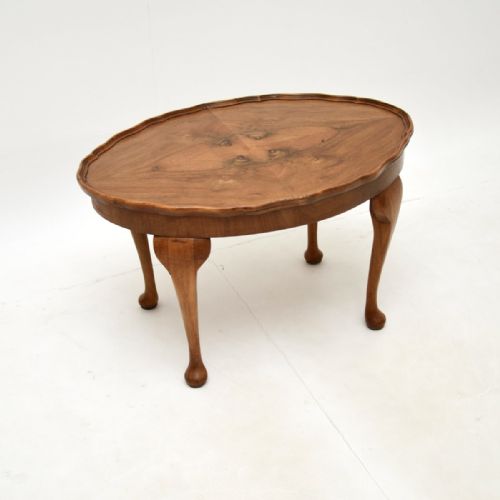
The objects serve diverse functions in a room, shifting from traditional tray tables designed for portability to fixed coffee tables supported by cabriole legs or cast iron tripod bases. Their shared characteristic remains the curved oval perimeter, which softens the geometry of a traditional seating arrangement.
Materials and construction methods
Cabinet makers utilised choice hardwoods such as mahogany, walnut, and burr walnut, often selecting figured veneers to create decorative patterns across the table tops. Satinwood, ebony, and macassar appear alongside these traditional timbers to achieve specific tonal contrasts and surface depths.
Joinery techniques ranged from traditional hand-cut framing for butler's trays to sturdy pedestal bases and tripod supports. Brass fittings, silver plating, and glass inserts were incorporated into serving trays and drinks cabinets to enhance both utility and visual appeal.
Oval Cocktail Table Retail Price Guide 2026
Typical asking prices for oval cocktail table among the pieces listed under this phrase on Sellingantiques today, from the lower quarter to the upper quarter. They describe what is for sale here now, not the wider market.
The listings feature walnut as the dominant timber, spanning Victorian, Georgian, and twentieth-century production.
Distinctions in craftsmanship and design
The calibre of a piece rests upon the selection of timber veneers and the precision of the grain matching across the oval surface. Superior examples display thoughtful composition in the pie crust edges, carved mouldings, and structural stability of the underlying stands.
Maker attribution and the integrity of the original construction elevate certain items above standard production. The harmony between the table top and its support base, whether period timber or later adapted stands, dictates the overall character.
Holland & Sons
The Oval Cocktail Table Glossary
- Burr walnut
- A prized timber harvested from the wart-like growths on walnut trees, yielding intricate, swirling grain patterns. It is frequently applied as a veneer on high-status Victorian furniture.
- Butler's tray
- A portable wooden tray with hinged or fixed sides, originally designed for carrying domestic items. It is commonly placed upon a folding or rigid wooden stand to function as a low table.
- Pie crust edge
- A carved, raised decorative rim resembling the fluted crust of a pastry pie. This detail is hand-shaped from solid timber around the perimeter of table tops.
- Sheraton Revival
- A late nineteenth and early twentieth century design movement drawing inspiration from the lightness and neoclassical motifs of Thomas Sheraton. Pieces from this time often feature refined mahogany construction and delicate inlay.
Oval Cocktail Table: Frequently Asked Questions
Are these tables sturdy enough for daily use?
Most examples are constructed from dense hardwoods like mahogany and walnut, making them robust for daily placement in a sitting room.
Care should be taken with veneered surfaces and hinged tray mechanisms to ensure long-term stability.
How do I identify a Victorian burr walnut table?
Victorian burr walnut pieces typically display rich, swirling wood grain patterns across the oval top and deep warm tones. They often rest on carved pillar supports or cabriole legs characteristic of the period.
Construction details and timber weight help distinguish these nineteenth-century items from later revivals.
Can butler's trays be removed from their stands?
Traditional butler's trays were designed to lift off their folding or fixed bases for ease of service and transport. Many surviving examples retain this dual functionality, allowing the top to separate from the stand.
It is advisable to check whether a specific piece has been secured permanently to its base.
What is the difference between a coffee table and a tray table?
A dedicated coffee table is built as a permanent low piece of furniture with a fixed top and legs. A tray table incorporates a removable or hinged tray surface resting upon a separate support stand.
Both forms fulfill similar roles in modern interiors while maintaining distinct historical roots.