
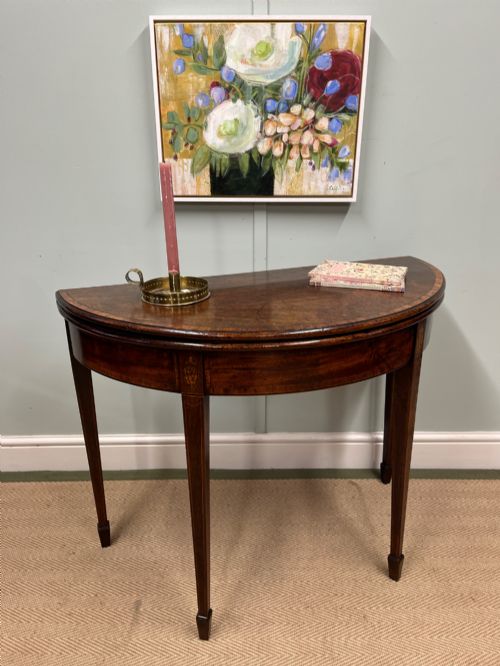


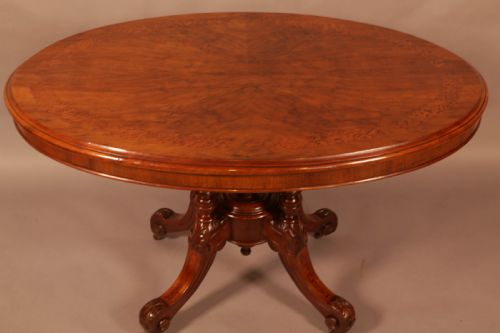


Oval Card Table
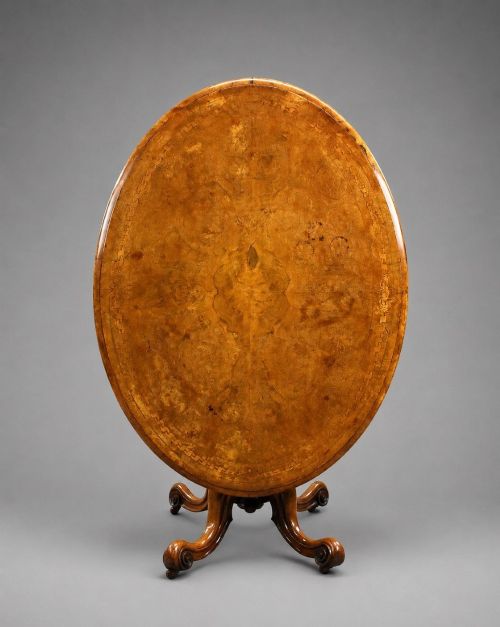
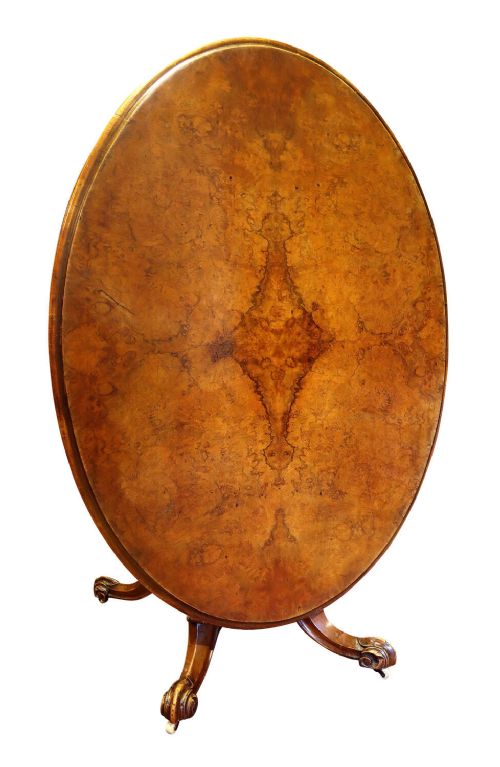
An oval card table brings sociable Victorian card games and refined walnut timber into a modern drawing room with quiet elegance.
Oval Card Table
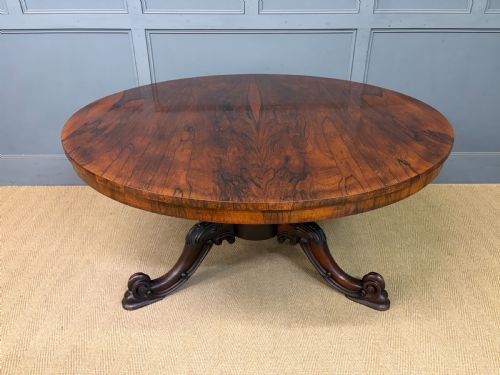
When you search for an oval card table, you encounter an array of Victorian walnut and rosewood gaming surfaces designed for nineteenth-century entertaining. These pieces principally span the Victorian period, drawing upon Georgian precedents for tea and games.
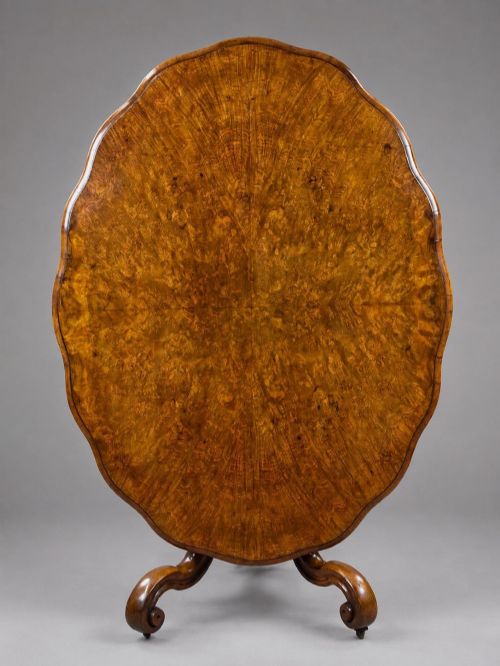
The pieces listed on this page appear predominantly as loo tables, gaming tables, and centre tables rather than folding card tables. Walnut dominates the selection, shaped into curved oval tops supported by carved pedestals.
Makers utilised rich burr veneers and boxwood inlay to give these tables visual depth. You find variations ranging from simple mid-nineteenth-century walnut forms to elaborately carved specimens bearing maker attributions.
How they were made
Cabinet makers constructed these tables using solid walnut and rosewood foundations overlaid with burr walnut veneer on the top surfaces. Boxwood inlay adds delicate contrasting detail to the borders of the timber.
Brass fittings appear in the internal mechanisms of folding gaming and card tables. Skilled artisans combined turned pedestals with carved wooden supports to bear the weight of the heavy oval tops.
Listings feature walnut, burr walnut veneer, rosewood, and brass, spanning the Georgian and Victorian eras.
What varies in quality
Quality rests upon the choice of timber, distinguishing plain walnut boards from highly figured burr walnut veneer with rich natural grain patterns. The crispness of the carved woodwork on the pedestal and base separates standard workshop production from finer cabinet work.
The sophistication of the inlay and the integrity of the folding or tilting mechanisms determine the overall standard of the piece. Tables bearing maker stamps or specific attributions carry distinct distinction compared to unrecorded examples.
Howard and Sons
The Oval Card Table Glossary
- Burr walnut
- A prized timber veneer taken from the wart-like growths on walnut trees, yielding intricate swirling grain patterns. It forms the primary decorative surface on many nineteenth-century tables.
- Loo table
- A Victorian round or oval card table designed for the popular nineteenth-century card game loo. These tables typically feature a tilting mechanism to save space when not in use.
- Demilune
- A half-moon shape used to describe tables with one flat side and a curved front. Some variations stretch this geometry into a slightly oval form.
- Boxwood inlay
- Narrow lines or decorative motifs of pale boxwood inserted into contrasting darker wood surfaces. This technique frames the edges of table tops.
- Centre table
- A freestanding table designed to be viewed from all sides in the middle of a room rather than pushed against a wall.
Oval Card Table: Frequently Asked Questions
How were these tables used?
Victorian households utilised these tables for card games, social gatherings, and serving tea. The tilt-top mechanism allowed families to store the table upright against a wall when floor space was needed.
Gaming variants often included folding leaves or specialised surfaces suited for evening entertainment.
How do I date a Victorian table?
Dating relies upon stylistic markers, timber choices, and construction methods recorded across the mid-nineteenth century. Burr walnut veneers and specific pedestal carvings frequently point towards the decades around eighteen seventy.
Maker signatures or stamps provide the most reliable evidence for precise chronology when present.
Where should I place one?
These pieces suit drawing rooms, studies, or large hallways as freestanding centre tables. Their finished oval tops look effective positioned away from walls where the grain can catch the light.
Ensure adequate clearance around the pedestal base if you select a tilting loo table version.