
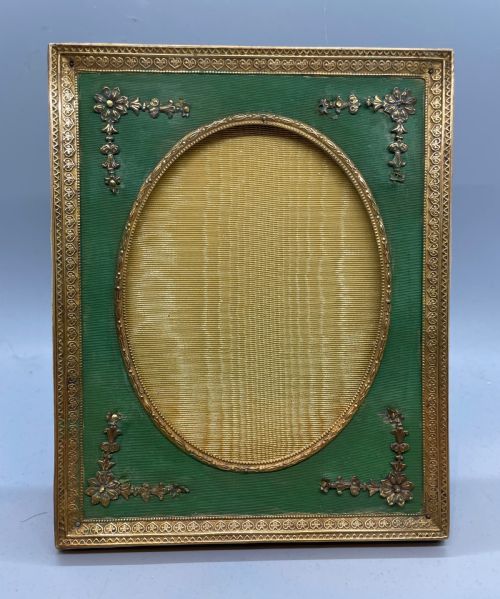
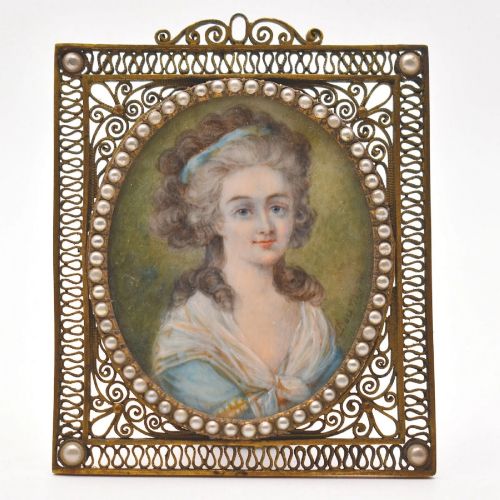


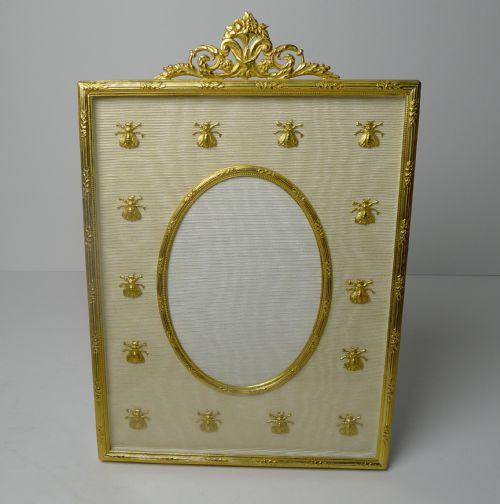

Oval Brass Picture Frame
These oval brass picture frame pieces combine polished metal and historic portraiture to bring intimate character to any wall.
Oval Brass Picture Frame
An oval brass picture frame brings together domestic display and historic portraiture, housing everything from silhouette cutouts to delicate miniature paintings on card and porcelain. These items span from the eighteenth century through the Edwardian period, drawing heavily on French Rococo, Regency, and Art Nouveau design aesthetics.
The objects on this page vary significantly in their intended purpose, ranging from easel-supported desk pieces and wall-hanging frames to double aperture photo holders. Buyers will frequently encounter frames paired with original contents such as painted miniatures, enamel plaques, and butterfly prints rather than empty apertures.
Materials and construction
The primary metalwork utilises cast and chased brass, ormolu, and gilt bronze, often shaped into elaborate floral scrolls, Napoleonic bees, and classical ribbon motifs. These metal housings frequently incorporate glass glazing to protect the delicate paper, card, porcelain, or fabric beneath.
Internal components display traditional craft methods, including ebonised wood backs, textile damask linings, and hand-painted watercolours secured by seed pearls or miniature stands.
Napoleon's industrious bees occasionally buzz around nineteenth-century French frames, reminding buyers that even portrait hardware could carry an imperial political stamp.
Factors of distinction
Quality rests heavily on the crispness of the cast metalwork, where deeply chased floral details and clean chased edges distinguish superior French ormolu and brass frames from simpler commercial castings. The integration of original backing materials, intact glass, and signed portraiture elevates the integrity of the piece.
The harmony between the frame and its enclosed artwork determines the overall success of the object, particularly where hand-painted porcelain plaques and miniature portraits were manufactured specifically for their mounts.
George Atkinson·Dumont
The Oval Brass Picture Frame Glossary
- Ormolu
- Gilded bronze produced by applying a mercury and gold amalgam to cast bronze, creating a rich golden surface found on many French frames. This technique was widely practiced in the eighteenth and nineteenth centuries.
- Miniature painting
- A detailed artwork executed on a small scale, frequently found inside oval frames as watercolour on card or enamel on copper. These often depict historical figures or private sitters.
- Ebonised wood
- Timber treated to imitate ebony, commonly used for the backing boards and surrounds of nineteenth-century frames. It provides a dark contrast to bright brass and gilt metal.
- Silhouette
- A portrait cut from black paper or painted in profile onto card, popular during the Georgian and Regency periods. These profiles are frequently set within small oval brass surrounds.
Oval Brass Picture Frame: Frequently Asked Questions
How do I date a brass frame?
Dating relies on stylistic clues such as the sweeping asymmetric scrolls of French Rococo or the organic whip lines of Art Nouveau. Construction details like the type of pin fixings and backing materials also help determine the period.
Earlier examples from the eighteenth and early nineteenth centuries often feature heavier cast brass and hand-finished chasing, whereas Edwardian pieces lean towards lighter stamped and pierced brass mounts.
Were these frames made for photos?
Many nineteenth-century examples were originally manufactured to house painted portrait miniatures, silhouettes, or porcelain plaques rather than photographic prints. Photography emerged later, leading to dedicated easel photo frames by the Victorian and Edwardian eras.
Frames designed for photographs often include hinged easel backs and internal glass liners to protect paper prints from moisture and handling over time.
How should I hang an oval frame?
Hanging an oval frame requires a secure wall hook positioned to support the weight of the cast metal, particularly for pieces fitted with heavy bronze or ormolu mounts. Many period frames include integrated top rings specifically designed for picture cord.
When positioning them on a wall, balance the curved geometry by grouping the frames with other vertical artworks or hanging them at eye level to appreciate the fine chasing.