
Antique Double Frame
When you search for an antique double frame, you encounter twin apertures designed to display photographs, paintings, or silhouettes side by side.
Antique Double Frame
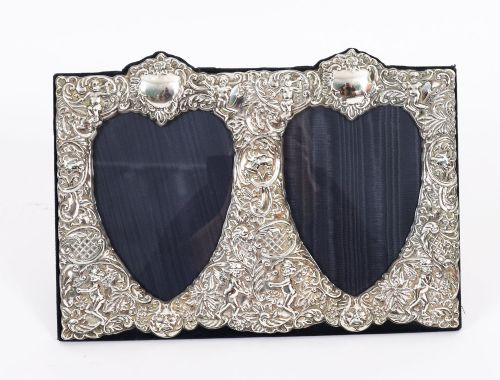
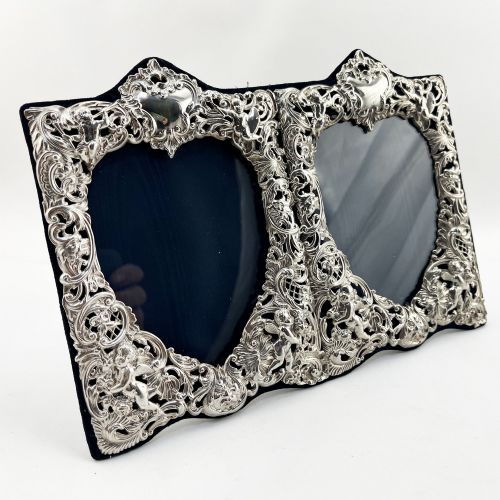
An antique double frame primarily comprises hinged or fixed folding silver photograph frames from the Victorian and Edwardian eras, alongside occasional brass and carved wooden picture slips designed to hold two portraits simultaneously.
The selections span domestic metalware and wooden frames from the late nineteenth and early twentieth centuries, reflecting the period fondness for dual family portraiture on desks and mantels.
How they were made
Silversmiths constructed sterling silver hinged mounts using techniques like repoussé and piercing, often incorporating silk velvet backings and wooden internal struts to support the dual apertures.
Wooden and cast brass variants utilise turned mouldings, applied gilding, or hand-carved details, showing the structural joinery typical of nineteenth-century workshop production.
Several Victorian silver frames still retain their original faded sepia photographs of stern-looking Victorian infants staring resolutely into the lens.
What varies in quality
The distinction between standard commercial output and superior craftsmanship rests on the crispness of hallmark stamping, the weight of the silver or cast metal, and the structural integrity of the central hinges.
Finely detailed ornamentation such as ribbon crests, embossed monograms, or fitted hardstone mounts elevates individual pieces above simpler, plain-edged production models.
Stanley Webb Davies·Synyer And Beddoes·Goldsmiths And Silversmiths·Vickery
The Antique Double Frame Glossary
- Hinged frame
- A construction featuring two or more sections joined by pins to allow the object to fold inwards or stand at an angle. This allows the frame to sit securely on a flat surface.
- Sterling silver
- An alloy consisting of 92.5 percent silver by mass, widely utilised by British makers for high-end photograph frames. Hallmarks stamped directly onto the metal indicate the assay office and date of production.
- Velvet backing
- A soft fabric lining applied to the reverse of portable frames, often secured with a wooden kickstand. It protects the rear of the photograph and provides a finished aesthetic.
- Aperture
- The open viewing window through which the portrait or photograph is displayed. In dual frames, two identical or matching apertures are arranged symmetrically.
Antique Double Frame: Frequently Asked Questions
How were double frames used?
Victorians and Edwardians placed these dual mounts on writing desks, sideboards, and drawing-room mantels to display companion portraits of relatives, married couples, or children.
The folding mechanism allowed families to adjust the angle of the apertures or pack the items away securely when travelling.
What metals are most common?
Sterling silver dominates the surviving portable examples, frequently bearing clear town marks and date letters from late nineteenth-century Birmingham and London assay offices.
Heavier domestic frames often combine cast brass, iron, and gilt bronze with decorative elements like mother-of-pearl or hardstone.
How do I date a silver frame?
Makers stamped official hallmarks directly onto the border or easel back, recording the standard mark, the assay office symbol, and a specific letter corresponding to the year of manufacture.
Stylistic cues such as ribbon bows, coronation crowns, and Art Nouveau floral whiplash lines also point to precise decades between eighteen-eighty and nineteen-twenty.
Can these frames hold modern photos?
Most antique apertures accommodate standard nineteenth-century photographic dimensions, which may require slight trimming of modern prints to fit within the internal rebate safely.
Original glass and backing boards should be handled carefully to preserve the structural integrity of the historic mount.