


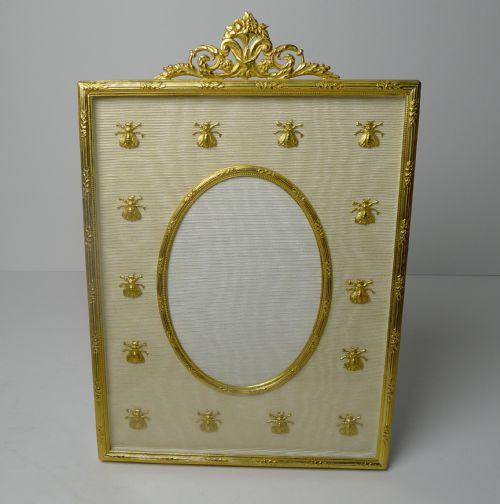

Oval Aperture Photo Frame
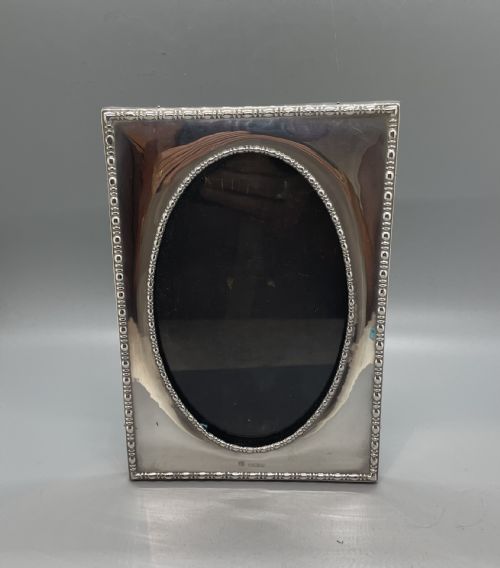
An oval aperture photo frame holds a treasured portrait within a curved boundary, bringing period character to any mantelpiece.
Oval Aperture Photo Frame
An oval aperture photo frame gives a distinctive curved setting to a portrait, moving away from standard rectangular shapes. When searching for an oval aperture photo frame, buyers encounter pieces spanning the eighteenth century through to the Edwardian era and the early twentieth century.
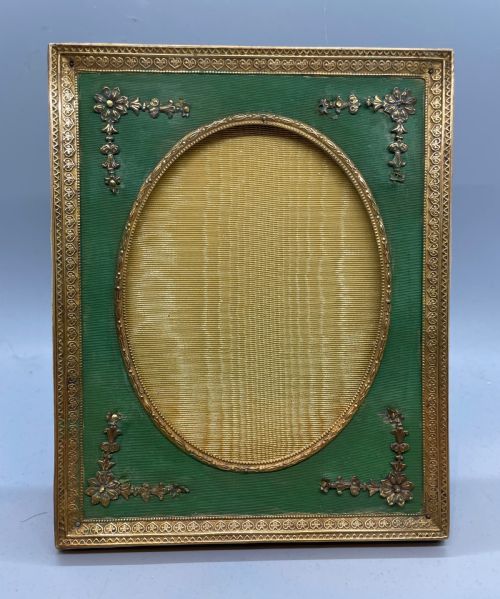
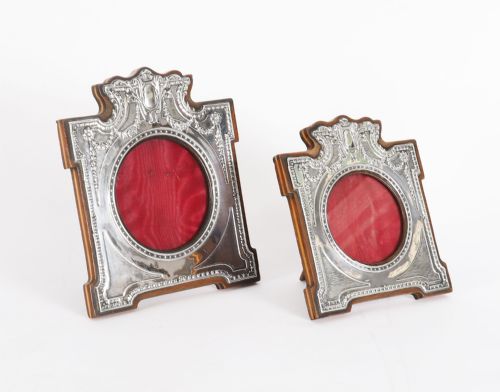
The selection on this page includes sterling silver, ormolu, and gilded bronze alongside wooden and fabric elements. These items take the form of picture frames and photo frames designed to display cherished likenesses.
Edwardian examples appear frequently alongside pieces influenced by Italian Baroque, Louis XVI Revival, Art Nouveau, and French Empire styles. Such frames bring distinct historical ornament into domestic spaces.
How they were made
Silversmiths shaped sterling silver into embossed designs or cast mounts, often incorporating hallmarks from assay offices like Sheffield. Makers utilised ormolu and gilded bronze to create metallic decorative borders featuring classical motifs.
Carved wooden structures, including oak, received gilt finishes to form deep relief patterns in the manner of Italian Baroque and French styles. Velvet and fabric backings or linings completed the interior presentation of these display objects.
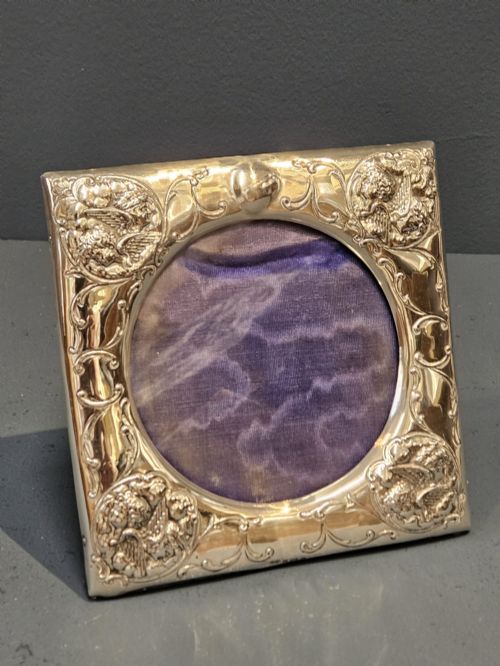
Reynolds Angels peer out from Edwardian silver borders, bringing a touch of eighteenth-century painting straight onto the desk.
What varies in quality
The refinement of the cast or embossed metalwork determines the visual impact of a frame, separating finely detailed chasing from simpler production. Crisp execution in ormolu mounts and clear definition in silver embossing indicate superior craftsmanship.
The integrity of the original backing materials, whether wood, velvet, or fabric, influences the overall preservation of the piece. Matching components and coherent stylistic harmony across the frame and its support structure elevate the standing of the object.
Mappin Bros
The Oval Aperture Photo Frame Glossary
- Aperture
- The open window in the frame through which the photograph or picture is viewed. This curved opening defines the visual boundary of the portrait.
- Ormolu
- Finely ground high-carat gold applied to a bronze base using a mercury-gilding technique. This process produces a rich metallic sheen common on French decorative frames.
- Hallmark
- An official mark stamped onto precious metals to indicate the standard of purity, the assay office, and the year of production. British silver frames often display these stamps near the outer edge.
- Embossing
- A technique where metal is raised from the reverse side using hammers and punches to create relief patterns. Edwardian silversmiths frequently utilised this method for floral and angelic motifs.
- Gilt
- A thin layer of gold applied to the surface of wood, bronze, or other base materials. This finish provides the appearance of solid gold while protecting the substrate beneath.
Oval Aperture Photo Frame: Frequently Asked Questions
How do I date a silver frame?
Examine the stamped hallmarks found along the border of the silver mount. These official marks typically reveal the assay office and the specific year of testing.
Style also provides a reliable guide, as Edwardian pieces often display distinct floral embossing compared to earlier Victorian or later geometric designs.
What is ormolu?
Ormolu refers to gilded bronze items created through a mercury amalgamation process popular in decorative arts. It gives metallic frames a warm, enduring golden surface.
This material appears frequently on French Empire and revival pieces designed for grand interiors.
How were these frames displayed?
These frames stood upon desks, tables, and mantelpieces supported by built-in struts at the rear. They served to display portraits of family members or notable figures in domestic rooms.
Their decorative backs often featured velvet or fabric coverings to protect the surfaces they rested upon.
Can I replace the glass?
Original glass in antique frames is often hand-blown and may contain minor bubbles or imperfections. Replacing it requires careful measurement of the oval aperture to ensure a secure fit within the rabbet.
Preserving original glass maintains the historical integrity of the piece whenever possible.