
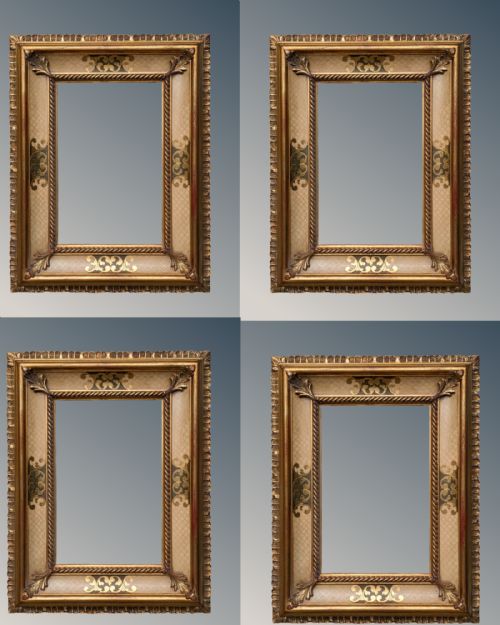
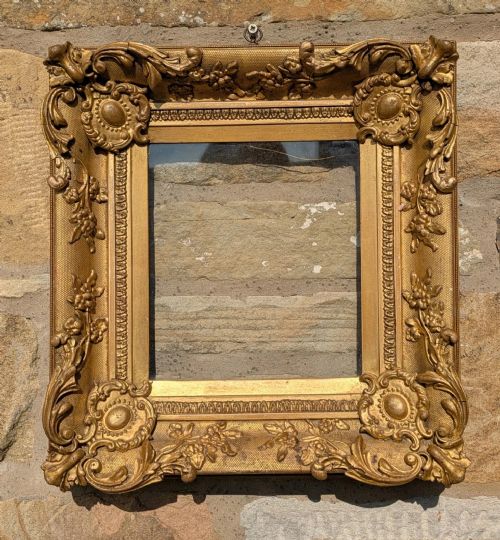
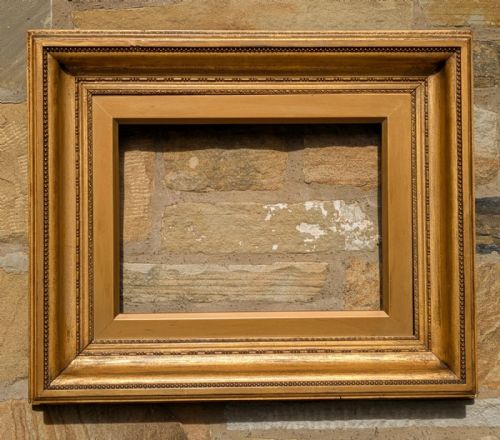


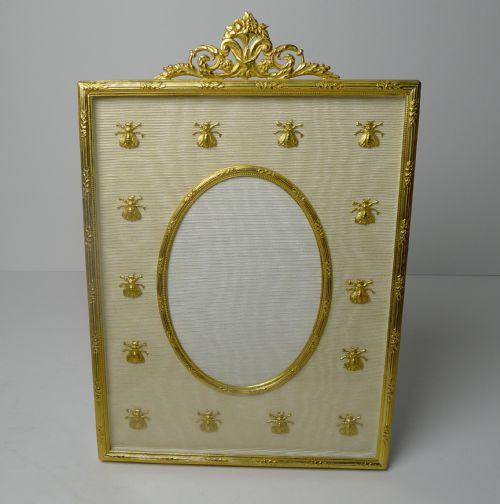
Ornate Gilded Photo Frame
These ornate gilded photo frame examples bring rich, metallic lustre and intricate historic moulding to your desk or wall.
Ornate Gilded Photo Frame
When you search for an ornate gilded photo frame, you encounter works ranging from compact tabletop pieces to deep wall-hanging surrounds. The examples available here span centuries of design, reflecting shifting tastes in interior display.
You are most likely to meet Victorian interpretations on this page, alongside Italian and French revival pieces. Forms vary from simple apertures to heavy, deeply moulded profiles designed to hold treasured portraits.
The materials and origins stretch from seventeenth-century timber work to nineteenth-century interpretations of Baroque and Rococo styles. Each piece carries the distinct sculptural language of its period, whether through swept gesso or carved wooden members.
Materials and construction
Makers built these frames using timber bases, applying layers of gesso to build up sculptural relief before laying gold leaf across the surface. This traditional method allowed artisans to carve crisp acanthus leaves, scrollwork and linear patterns.
Some configurations incorporate cast bronze or sterling silver alongside gilded elements, adding textural contrast and material weight. Velvet linings and glass panes complete the construction of the picture housings.
The inventory includes items from the seventeenth, eighteenth and nineteenth centuries, alongside specific pieces marked by Napoleonic bees.
Assessing quality in gilded frames
The distinction between standard work and superior examples lies in the crispness of the modelling within the gesso or carved wood. Sharp relief and careful burnishing of the gold leaf separate finer productions from simpler commercial outputs.
Depth of moulding and the integrity of the original gilt surface dictate the visual impact of the piece. Frames that retain their original layering and deep bevelling demonstrate superior workshop practice.
The Ornate Gilded Photo Frame Glossary
- Gesso
- A plaster mixture applied to wood frames as a base for gilding. It provides a smooth, workable surface for deep carving and moulding.
- Gold leaf
- Extremely thin sheets of beaten gold applied to surfaces. It creates the luminous metallic finish characteristic of these frames.
- Giltwood
- Timber that has been covered with gold leaf or a gold-coloured finish. This material forms the structural core of many antique surrounds.
- Rococo Revival
- A nineteenth-century design movement favouring asymmetrical scrollwork, naturalistic shell motifs and extravagant curves. It heavily influenced frame ornamentation during the Victorian era.
Ornate Gilded Photo Frame: Frequently Asked Questions
How do I date an antique frame?
Examine the timber behind the gilding and the construction joints of the corners. Tool marks and material thickness often reveal the period of manufacture.
Stiles and decorative motifs also align with specific design movements, such as Victorian Rococo Revival or Italian Baroque.
Can I hang these frames on drywall?
Many heavier nineteenth-century examples require secure wall anchors due to the density of the timber and gesso construction. Ensure the hanging wire and fixings match the weight of the piece.
Smaller tabletop versions use easel backs rather than wall fixings.
How should I clean a gilded surface?
Dust gently with a dry, soft brush to remove surface particles without disturbing the delicate gold leaf. Avoid moisture and chemical cleaning agents entirely.
Water or solvents can dissolve the underlying gesso and lift the metallic leaf.
What is the difference between gesso and carved wood?
Carved wood frames feature ornamentation cut directly into the timber substrate. Gesso frames use a built-up plaster layer moulded to achieve high relief.
Both methods frequently appear beneath the gold leaf finish.