



Crested Gilt Picture Frame
These crested gilt picture frame pieces bring rich metallic gleam and heraldic ornament to a room.
Crested Gilt Picture Frame
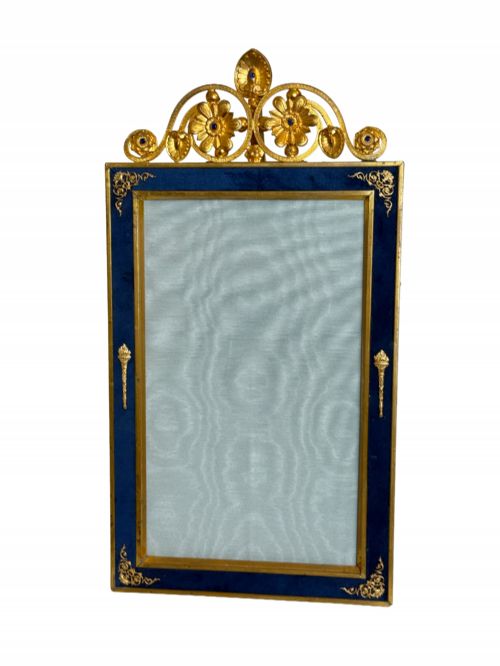
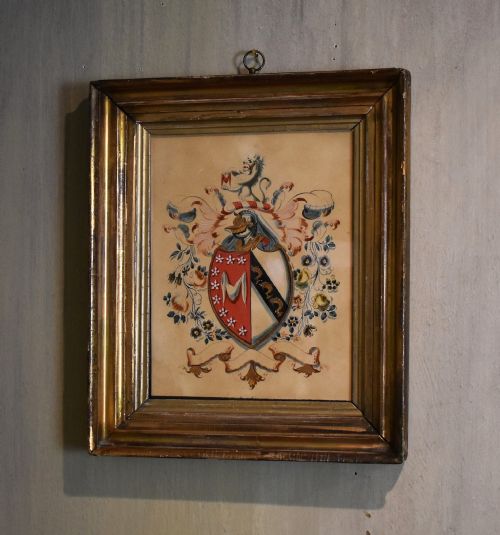
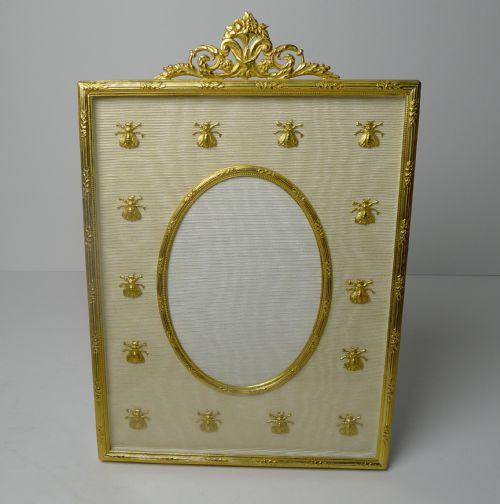
A crested gilt picture frame brings ornate metal and wood work to wall art, miniatures, and mirrors. When you search for a crested gilt picture frame, you encounter objects primarily from the nineteenth century, including pieces dated across the 1850s, 1860s, 1880s, 1890s, 1900s, and 1910s. These items range from French ormolu photo frames and glazed gilt bronze surrounds to gilt gesso wall mirrors decorated with lion heads.
The aesthetic leans heavily into continental revivals, specifically French Empire, Louis XVI Revival, Baroque Revival, and French Rococo Revival styles. Alongside standard picture frames, the selection embraces wall mirrors, miniature paintings, photo frames, and framed commemorative pieces incorporating silk, paper, watercolour, and glass.
Materials and construction
These items rely on cast metals and carved woods finished with bright metallic surfaces. Makers utilised gilt bronze, ormolu, gilt brass, and gilt metal alongside traditional giltwood and gilt gesso to achieve heavy surface reflection.
Glazing protects delicate contents such as watercolours, miniatures, and silk embroideries. Subsidiary materials like blue trim, paper backing, and textiles complete the interior presentations.
Listings feature items utilising gilt bronze, ormolu, gilt brass, gilt metal, giltwood, and gilt gesso across the nineteenth and early twentieth centuries.
Judgement of quality
Quality rests upon the crispness of the cast metal or carved gesso ornament and the depth of the gilding. Pieces featuring specific decorative motifs, such as Napoleonic bees or sculptural lion heads, show greater sculptural ambition than plain mouldings.
The integrity of the original glass, backing materials, and integrated crests distinguishes standard domestic pieces from finer decorative works associated with French workshops.
The Crested Gilt Picture Frame Glossary
- Ormolu
- Gilt bronze applied to decorative hardware and picture frames. This technique involves amalgamating gold onto a bronze base through fire gilding.
- Gesso
- A plaster mixture spread over wood and carved before gilding. It provides a smooth base for intricate surface ornamentation.
- Giltwood
- Timber coated with thin gold leaf or powder. It forms the structural core of many ornate wall mirrors and picture frames.
- Miniature painting
- A small-scale portrait or scene executed with fine detail. These works frequently sit inside glazed metal frames.
- French Rococo Revival
- A nineteenth-century design movement copying eighteenth-century asymmetrical scrollwork and natural motifs. It dominates many ornate picture frames.
Crested Gilt Picture Frame: Frequently Asked Questions
What periods do these frames represent?
The pieces span the nineteenth century and the very early twentieth century, with specific dates clustering around the 1850s, 1880s, 1890s, and 1900s.
Stylistic influences point heavily toward French Empire, Baroque Revival, and Louis XVI Revival aesthetics.
How were these frames originally used?
They served to display family portraits, commemorative silk embroideries, miniature watercolours, and small wall mirrors in formal reception rooms.
Many incorporated glazed compartments to protect delicate paper or fabric contents from dust and handling.
What metals appear in the frames?
Gilt bronze, ormolu, and gilt brass form the metallic components of the French photo frames and picture surrounds.
Wood and gesso serve as the base materials for larger wall mirrors decorated with carved crests and lion heads.
How do you style them today?
They hang upon walls or rest on mantelpieces and side tables to introduce metallic warmth and historic texture to modern interiors.
Pairing a small bronze photo frame with larger gilt gesso mirrors creates a balanced display of period craftsmanship.