



Outdoor Wall Lights
Outdoor wall lights illuminate entryways with character, combining durable metals and glass in styles from industrial to neo-classical.
Outdoor Wall Lights
Outdoor wall lights encompass functional exterior illumination fixtures such as wall lanterns, sconces, and porch lamps mounted directly onto buildings. Buyers seeking outdoor wall lights encounter various historical forms ranging from converted gas lamps to robust industrial fixtures.
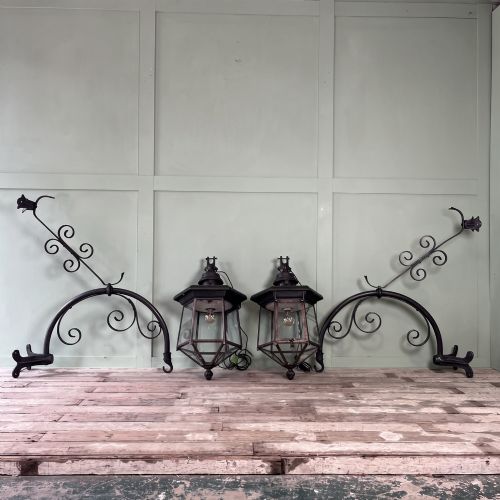
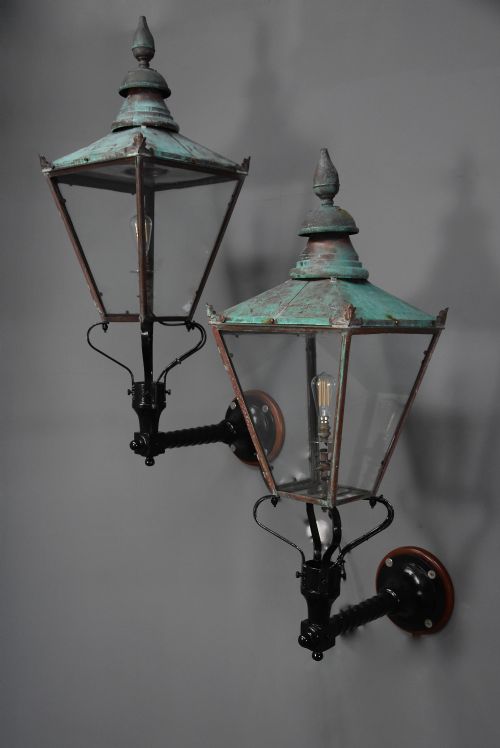
The selection includes matching pairs and substantial street lanterns mounted on brackets, originating from periods spanning the late nineteenth century through to the mid-twentieth century. Copper street lanterns and octagonal designs predominate among the architectural fittings available.
Origin styles vary widely, embracing French chateau influences, Arts and Crafts details, and Victorian gothic aesthetics. These pieces serve both practical boundary lighting and decorative architectural enhancement for exterior walls.
How they were made
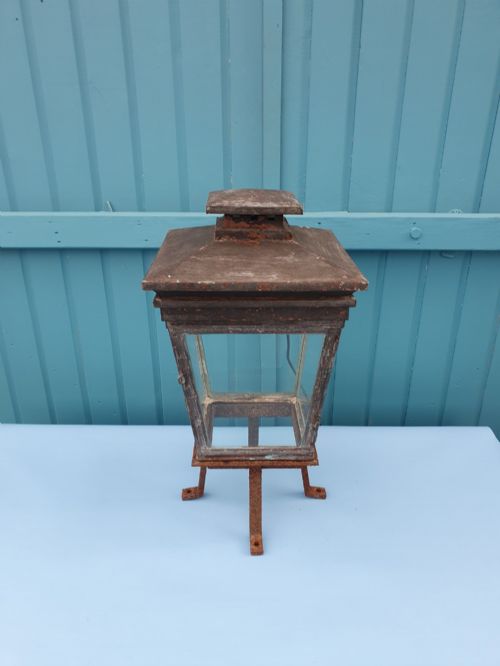
Construction relies heavily on durable metals like copper, brass, iron, and wrought iron to withstand exterior exposure, often paired with glass or frosted glass panes. Many examples feature verdigris patination acquired naturally or applied to copper surfaces over time.
Manufacturing methods combine sheet metal fabrication with structural casting, utilising brass and bronze for decorative elements and detailed brackets. Early specimens often incorporate adaptations from original gas fittings into electric configurations.
Support brackets demonstrate sophisticated smithing techniques, including spiral twists and swan neck iron profiles designed to project the lantern away from the masonry.
Listings feature pieces spanning from the 1880s through to the 1940s, utilising copper, iron, brass, and glass.
What varies in quality
Quality differentiates through the substance of the metalwork and the structural integrity of the frames and bracket supports. Heavier gauge copper and substantial cast iron or bronze elements indicate superior manufacturing standards compared to lighter assemblies.
The sophistication of decorative detailing, such as neo-classical motifs and complex bracket twisting, sets finer architectural pieces apart from utilitarian fittings. Original components and intact historical glass panes further distinguish premium examples.
REVO Leicester·Revo Tipton
The Outdoor Wall Lights Glossary
- Wall lantern
- An exterior light fixture enclosed in glass and metal, designed to mount flush or via a bracket to an outside wall. These pieces often derive their proportions from historical street lighting.
- Verdigris
- A green patina that forms naturally on copper, brass, or bronze through atmospheric oxidation over decades. This weathered surface layer is frequently prized for its aesthetic appearance.
- Sconce
- A wall-mounted light fixture that secures directly to a vertical surface, projecting illumination outwards. Exterior versions utilise weather-resistant materials to protect internal wiring.
- Swan neck
- A curved metal arm resembling a swan's neck, used to suspend a lamp or lantern away from a wall or post. This structural bracket provides both reach and decorative silhouette.
Outdoor Wall Lights: Frequently Asked Questions
How do I install antique outdoor wall lights?
Installation requires mounting the fixture securely to exterior masonry or timber using appropriate fixings for heavy metal brackets. Qualified electricians should handle the wiring connections to ensure weatherproofing and safe integration with modern power supplies.
Care must be taken to support the weight of substantial copper and iron lanterns properly during the mounting process. Waterproof seals protect internal electrical components from moisture infiltration.
Are these lights converted from gas?
Several period examples originate as gas-fueled street or porch lamps that have undergone conversion to electricity. This adaptation preserves the original metal housings while updating the interior functionality for modern domestic use.
Converted fixtures often retain historical burner assemblies or mounting modifications visible inside the lantern housing. These alterations document the changing utility of exterior lighting over time.
What metals are used in these lanterns?
Construction primarily utilises copper, brass, cast iron, and wrought iron, chosen for their durability against weather elements. Protective patinas like verdigris often develop on the copper components through prolonged exposure to the atmosphere.
Structural brackets frequently employ forged iron to support the weight of large glass and metal lanterns. Brass and bronze details provide decorative contrast on neo-classical and French style models.
How do I date an outdoor wall light?
Dating relies on stylistic indicators such as Victorian gothic motifs, Edwardian brass finishes, or mid-century industrial forms. Manufacturing techniques, metal types, and maker marks like those from Revo provide further chronological markers.
Architectural context and the presence of original glass or conversion evidence help narrow the period of origin. Comparative analysis with catalogued street furniture establishes the likely decade of production.