




Victorian Wall Lantern
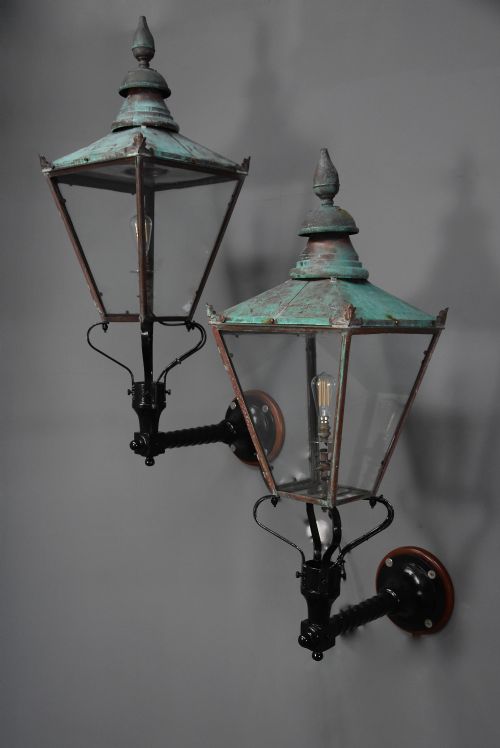
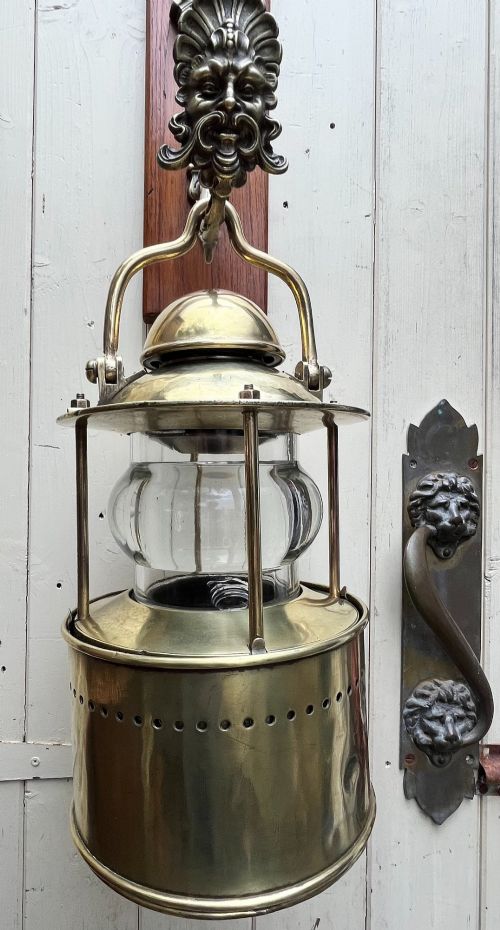
These victorian wall lantern pieces combine brass, copper and iron with glass to light exterior walls and carriage spaces.
Victorian Wall Lantern
A victorian wall lantern brings period lighting to exterior walls, porches and hallways using traditional metal and glass construction. The selection includes carriage lamps, street lanterns and coach-house designs from the nineteenth century onwards.
Buyers frequently encounter copper and brass variants alongside cast iron and wrought iron pieces mounted on brackets or swan necks. Forms range from domestic wall lights to railway carriage lamps and gas conversions.
Origins span the nineteenth century and early decades of the twentieth century, incorporating Victorian, Gothic Revival, Neo-Classical and Arts and Crafts styles.
Materials and construction
Makers utilised sheet copper and brass alongside heavy cast iron and wrought iron to build robust frames capable of withstanding outdoor exposure. Glass panels, often bevelled or curved, were glazed directly into the metal framework.
Surfaces display patination from age, including verdigris on copper and aged finishes on brass, while structural elements rely on traditional riveting and soldering.
Materials across these listings include copper, brass, cast iron, wrought iron, wood and nickel combined with glass.
Evaluating quality and proportion
Scale and weight dictate the presence of a victorian wall lantern, with larger street and castle lights demanding robust support brackets. The intricacy of metalwork, from spiral twist brackets to neo-classical mounts, separates standard utility lamps from decorative examples.
Material thickness in the copper and brass components determines durability, while the survival of original glass and fixings preserves the integrity of each piece.
The Victorian Wall Lantern Glossary
- Coach lamp
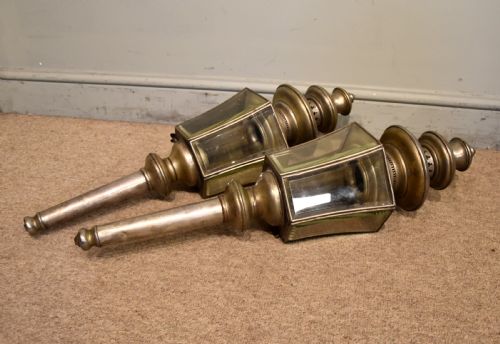
- A specialised lantern designed for mounting on horse-drawn carriages or coach-houses, featuring glass panels and a burner.
- Verdigris
- A green patina formed naturally on copper or brass surfaces through atmospheric oxidation over decades.
- Swan neck
- A curved metal mounting arm that positions a wall light outward from the surface.
- Gothic Revival
- An architectural and decorative style utilising pointed arches and heavy ironwork typical of the nineteenth century.
- Gas conversion
- A lighting fixture originally configured for gas that has been adapted to house modern electrical components.
Victorian Wall Lantern: Frequently Asked Questions
Can these lanterns be used outside?
Many of these pieces were originally designed for exterior use on carriages, coach-houses or street walls, utilising weather-resistant metals like copper and brass.
Buyers should consult individual listings regarding electrical wiring and weatherproofing status before outdoor installation.
How are gas lanterns adapted for electricity?
Original gas burners are typically removed or bypassed to allow the insertion of internal lamp holders and modern wiring.
This conversion process preserves the external copper or iron housing while enabling safe domestic lighting use.
What metals are most common?
Copper and brass appear frequently in the construction of domestic and street lanterns due to their resistance to rust.
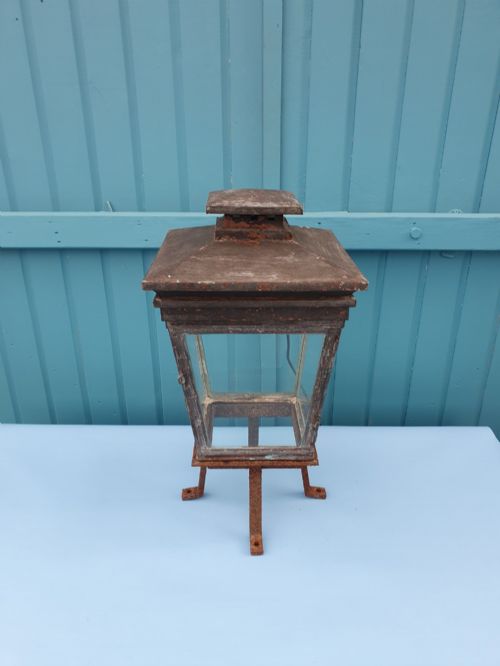
Iron, both cast and wrought, is also prevalent in heavier carriage lamps and castle wall lights.
How do I date a wall lantern?
Dating relies on stylistic clues such as Neo-Classical or Arts and Crafts decorative motifs combined with material construction methods.
Documented examples often span from the Victorian era into the early twentieth century.