
Outdoor Stone
Outdoor antique stone encompasses weatherworn garden ornaments, staddle stones, statues and urns designed to age gracefully in the open air.
Outdoor Stone
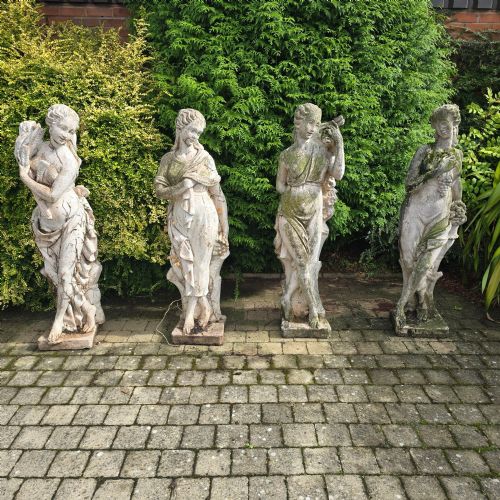
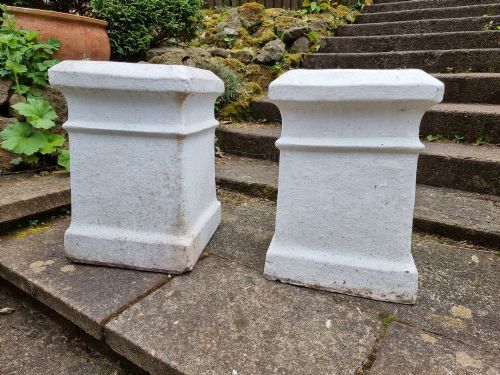
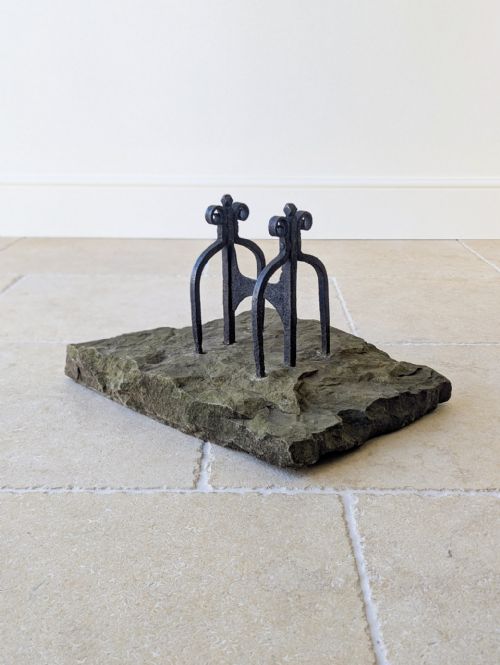
Outdoor antique stone brings historic character to gardens and terraces through centuries of weathering. When searching for outdoor antique stone, buyers encounter practical items like staddle stones and boot scrapers alongside decorative elements such as campana urns, bird baths and garden statues.
The pieces appearing most frequently span the Georgian, Victorian and early twentieth-century periods. These range from functional granite farm weights to neoclassical figures and cast stone finials that have spent decades outdoors.
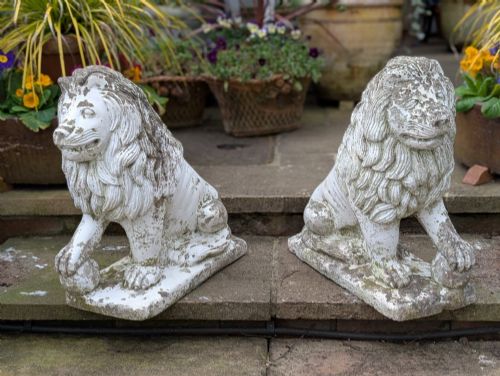
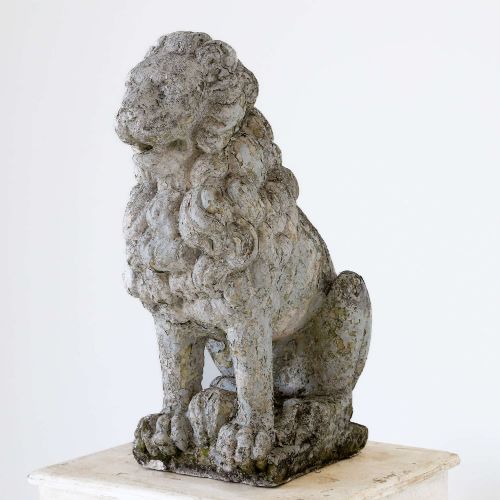
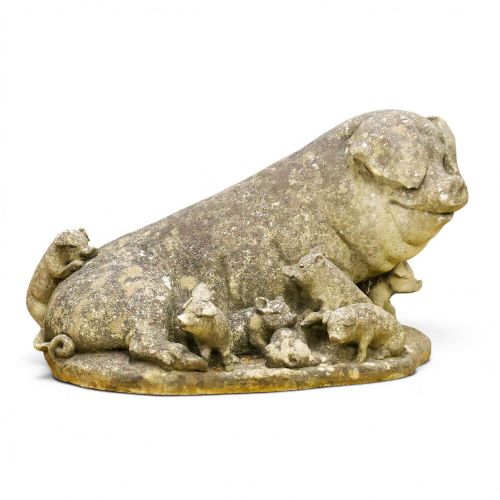
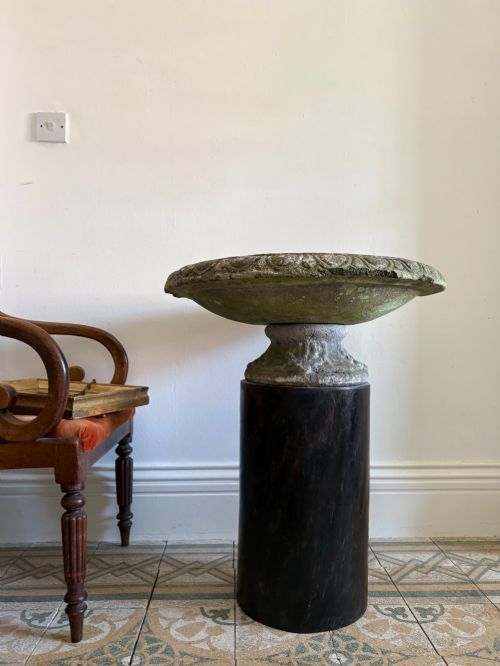
Forms vary widely from monumental lion guardians and Medici lions to simple planters and shell-shaped bird baths. Each object reflects the landscaping tastes of its era, whether classical revival or rustic country house.
Judging quality and character
Quality in outdoor antique stone rests upon the depth of the weathering and the crispness of the original carving or moulding. Natural stone items show the organic marks of the mason's chisel, while cast pieces demonstrate the precision of the master mould.
Surface patination separates superior examples from lesser items, with genuine exposure creating soft mossing, lichens and mineral staining that cannot be artificially replicated. The integrity of the material, whether durable granite or sturdy cast stone, ensures the survival of fine architectural details through decades of frost and rain.
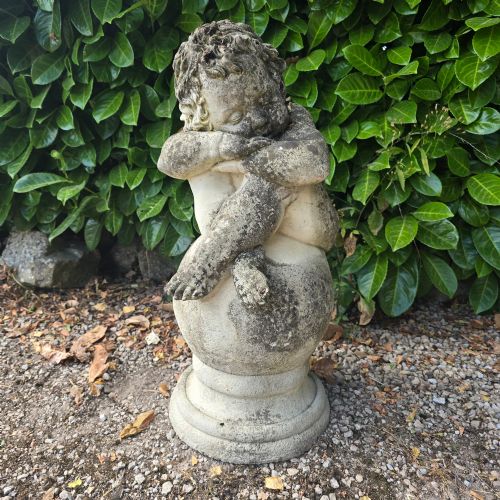
A sleeping cherub takes a permanent nap in the garden, having traded clouds for centuries of British weather.
Andrew Handyside
The Outdoor Stone Glossary
- Staddle stone
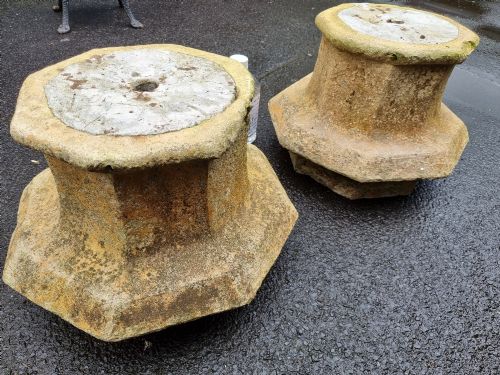
- A mushroom-shaped stone support originally used to elevate granaries above the damp ground and deter vermin. These now serve as striking architectural garden ornaments.
- Campana urn
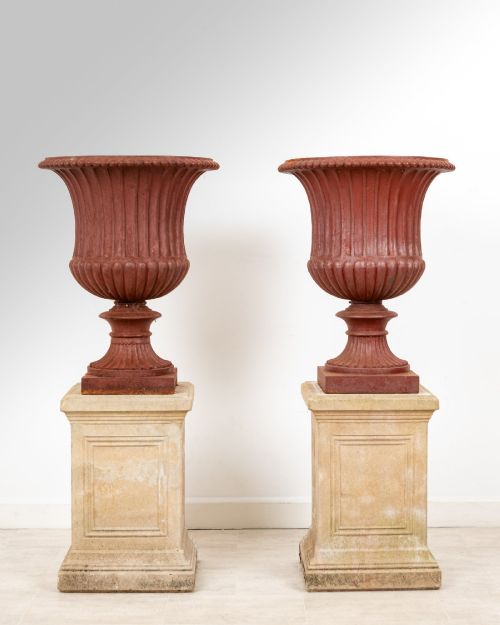
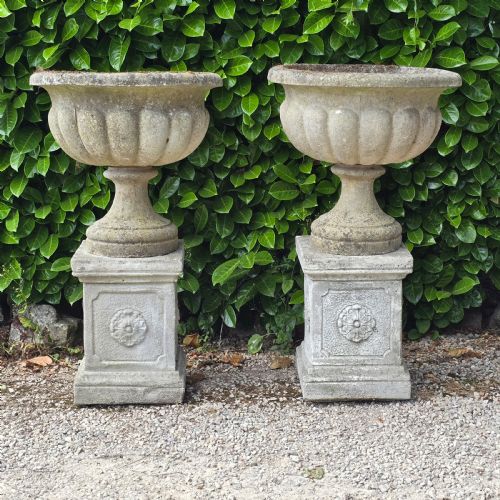
- A bell-shaped garden vessel originating in classical antiquity, mounted on a small stem and foot. Victorian and Edwardian examples in cast stone or terracotta are widely collected for terrace display.
- Faux bois
- A technique where concrete or stone is rendered to imitate natural timber bark and branches. Victorian garden seats and planters frequently employ this rustic style.
- Armillary sphere
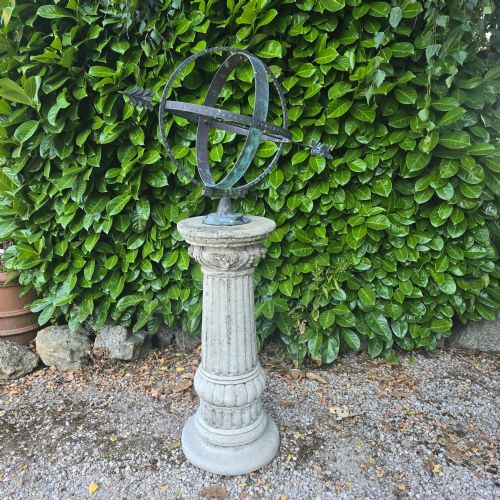
- An astronomical model consisting of interlocking metal rings centred on a globe, often mounted on a stone pedestal as a garden sundial.
- Pier finial
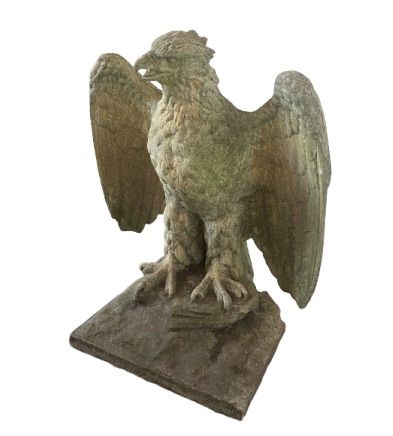
- A decorative architectural ornament placed on top of a gate pier or wall end, often taking the form of stone eagles, balls or urns.
Outdoor Stone: Frequently Asked Questions
How do I clean antique stone garden ornaments?
Gentle washing with clean water and a soft brush is usually sufficient to remove surface dirt without damaging the historic surface. Harsh chemical cleaners and pressure washers should be avoided as they strip away the desirable weathered patina.
Allowing natural mosses and lichens to remain often enhances the visual character of outdoor antique stone. Overzealous cleaning can expose raw new material and diminish the aged appearance of the piece.
Are staddle stones frost resistant?
Genuine antique staddle stones are carved from hard stones like granite or sandstone, making them naturally resilient to freezing winter temperatures. They require no special indoor protection during cold weather and can remain in the garden year-round.
Composited or cast stone items from the twentieth century are also generally robust, though it is wise to ensure water does not pool inside unlined hollow vessels.
How can I tell the age of a stone urn?
Dating relies on examining the manufacturing technique, tool marks, style and the depth of the surface weathering. Victorian and Georgian pieces often display hand-chiselled details or heavy mineral crusts accumulated over a century or more of exposure.
Later twentieth-century composite stone items show more uniform machine-cast textures and lighter patination. Comparing the stylistic motifs against documented periods helps confirm the era of production.
Can heavy stone statues stay outside in winter?
Most heavy stone statues and staddle stones tolerate winter weather effortlessly due to their substantial mass and durable composition. Placing them on gravel or stone pads rather than directly on damp soil prevents moisture from rising through the base.
For hollow planters or bird baths, turning them upside down or covering them during freezing months prevents trapped water from expanding and cracking the material.