


Oushak Medallion Rug
Oushak medallion rug pieces bring distinct Anatolian character to a room through traditional wool knots and muted Ottoman palettes.
Oushak Medallion Rug
An oushak medallion rug delivers traditional Ottoman and Anatolian character to a floor space through regional weaving methods. These textiles span periods from the late nineteenth century into the early twentieth century, showing distinct tribal and classical influences.
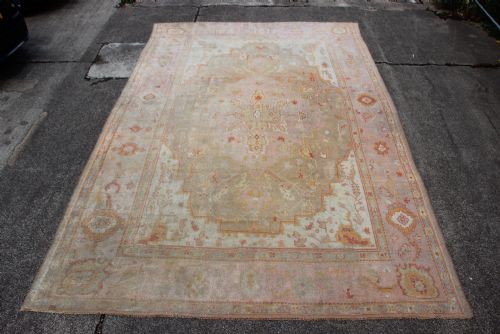
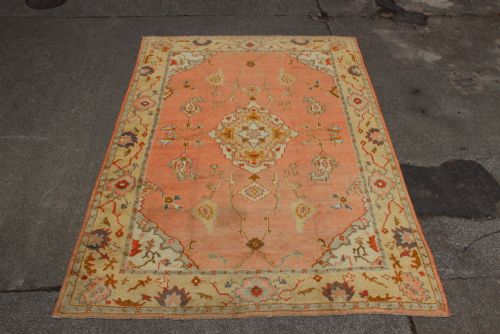
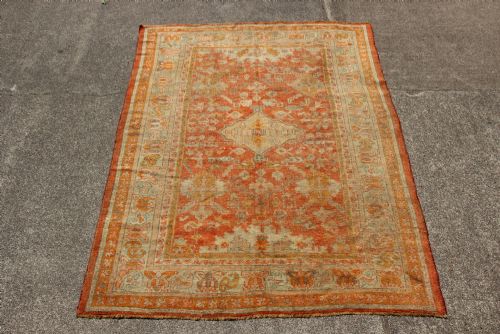
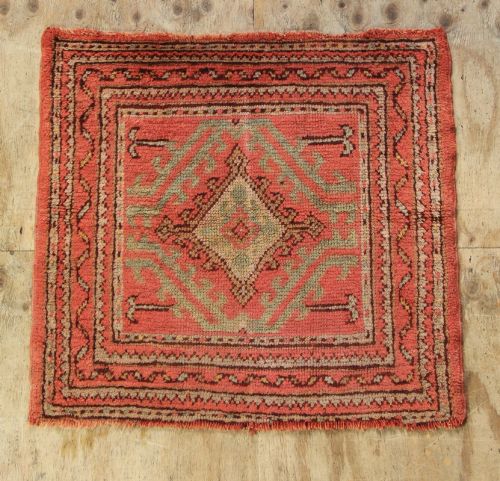
Buyers will encounter large carpets alongside smaller mats and kilims within this group. The most common version met on this page is the room-sized antique carpet featuring a central medallion on a pale, beige, ivory, or green field.
Materials and construction
Makers utilised wool and cotton for these floor coverings, frequently incorporating soft angora wool for a particularly lustrous pile. Natural fibres form both the foundation and the surface knots.
The construction relies on hand-knotted techniques executed across Anatolia. These methods produce durable textiles with varying pile depths designed for domestic use.
The selection spans production dates from 1870 through 1920, utilising wool, cotton, and angora wool across various Anatolian styles.
Assessing quality
Quality rests in the handling of the wool and the clarity of the regional design. Softer angora wool handles dye with a gentle absorption that elevates the visual depth of the field.
The success of a piece depends on the balance between the central medallion and the surrounding ground. Faded palettes and scarce green or ivory fields demonstrate particular design merit within this tradition.
Maples Ushak
The Oushak Medallion Rug Glossary
- Oushak
- A traditional style of rug originating from the town of Ushak in western Turkey. These pieces are known for larger-scale floral motifs and softer pastel or muted colour palettes.
- Medallion
- A central decorative ornamental motif set in the middle of the rug field. This focal design element anchors the geometric or floral composition.
- Kilim
- A flatweave textile produced without a pile. These pieces offer a lighter alternative to knotted carpets.
- Ghiordes
- A regional designation often associated with specific weaving traditions in Anatolia. It links certain carpets to historic production centres in Turkey.
- Angora wool
- A fine, soft fibre utilised in select antique carpets. This material provides a distinctive tactile quality and surface sheen.
Oushak Medallion Rug: Frequently Asked Questions
How do I date an oushak medallion rug?
Dating relies on recorded production periods spanning from the late nineteenth century to the early twentieth century. Structural characteristics and dye usage help narrow down the decade of manufacture.
Examination of the wool and the specific Anatolian style markers further assist in placing the carpet within its historical window.
Where were these rugs made?
These textiles originate from Turkey, specifically associated with the historic weaving traditions of Anatolia and the town of Ushak. Regional workshops produced these pieces for both local use and export.
Design elements reflect Ottoman aesthetics adapted through local craftsmanship.
Are these rugs suitable for high-traffic areas?
Hand-knotted wool and cotton construction provides natural durability for everyday domestic placement. Regular placement in moderate-traffic rooms suits their robust fibre content.
Protective underlays help preserve the antique pile against excessive wear.
What maintenance do antique rugs require?
Gentle vacuuming without a beater bar removes surface dust safely. Professional cleaning is recommended for deeper maintenance to protect delicate wool fibres.
Avoiding direct, harsh sunlight prevents premature fading of natural dyes.