
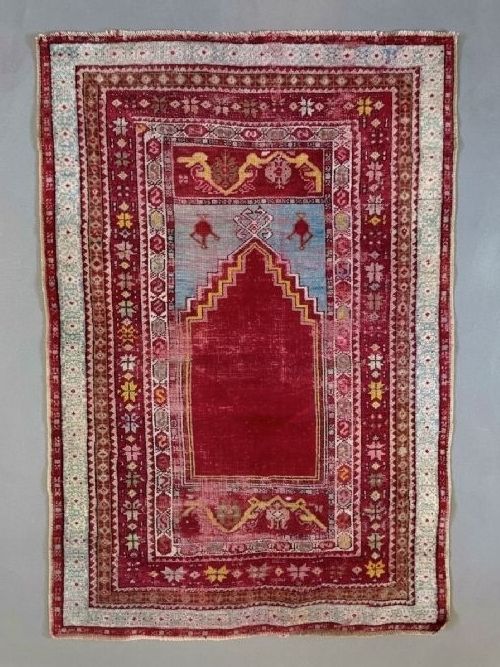


Ottoman Wool Carpet
An ottoman wool carpet brings centuries of Anatolian weaving tradition and rich natural dyes directly into a room.
Ottoman Wool Carpet
An ottoman wool carpet encompasses woven floor coverings and prayer rugs originating from Turkey and the broader Anatolian region. Pieces listed here span from the eighteenth century through to the early twentieth century, reflecting enduring regional weaving traditions.
Buyers will most frequently encounter nineteenth century examples, including large decorative Ushak carpets and smaller village prayer rugs. These items feature traditional formats such as central medallions, mihrab prayer arches, and banded designs.
The selection includes specific regional types like Ghiordes, Ladik, Konya, Milas, and Panderma rugs. Each piece demonstrates the distinct aesthetic vocabulary of its specific weaving centre.
How they were made
The primary construction relies on wool, hand-spun wool, and angora wool, combined with cotton foundations in many examples. Weavers utilised natural dyes to achieve rich, enduring palettes that mellow gracefully over time.
Village and town workshops employed traditional hand-knotting and flatweaving techniques passed down through generations. These labour-intensive methods produced dense pile carpets and flatwoven kilims designed for both daily use and ceremonial display.
Listings feature wool, cotton, and hand-spun wool dyed with natural dyes across nineteenth and early twentieth-century periods.
What varies in quality
Quality in these carpets rests upon knot density, the precision of the drawing, and the complexity of the design. Finer examples display intricate rendering of classical motifs and architectural prayer niches.
The vibrancy and depth of the natural dyes significantly influence the visual impact of a piece. Superior textiles retain harmonious colour balances and well-proportioned borders that frame the composition effectively.
The Ottoman Wool Carpet Glossary
- Prayer rug
- A small carpet featuring a mihrab or niche design, historically used for individual Islamic prayer. These rugs often incorporate architectural columns and hanging lamps within their design.
- Oushak
- A type of carpet originating from the town of Ushak in western Anatolia, known for large-scale floral designs and soft, luminous wool. They frequently employ muted pastel palettes.
- Kilim
- A flatwoven textile produced without a pile, utilised as a floor covering or wall hanging. They are characterised by sharp geometric patterns formed by interlocking weft threads.
- Mihrab
- The arched niche found on prayer rugs that indicates the direction of Mecca. Its shape and ornamentation vary significantly by region and weaving tradition.
- Natural dyes
- Colourants derived from plants, insects, and minerals rather than synthetic compounds. These dyes create nuanced shades that develop a pleasing patina with age.
Ottoman Wool Carpet: Frequently Asked Questions
How do I care for an antique wool rug?
Vacuum gently without a rotating brush bar to protect the pile and foundation fibres. Rotate the rug periodically to ensure even wear across high-traffic areas.
Professional cleaning by specialists in antique textiles is essential every few years. Avoid harsh chemical cleaners and direct, prolonged exposure to strong sunlight.
Where were these carpets originally made?
The pieces originate across Turkey and the historical Ottoman Empire, including major weaving centres like Ushak, Ghiordes, Ladik, and Konya. Each town developed distinct motifs and colour combinations.
Village workshops and nomadic groups in regions such as Anatolia also produced notable rugs. These often feature bolder geometric designs compared to city-woven pieces.
How can I tell different regional types apart?
Regional attribution relies on examining the border arrangements, colour palette, and specific motif geometry. For instance, prayer rugs from Ghiordes often feature stepped arches and distinct floral borders.
Familiarity with materials like hand-spun wool and cotton foundations also aids identification. Comparing pieces against documented regional examples clarifies their origin.
Can I use an antique carpet on the floor?
Most antique wool carpets are durable enough for floor use in moderate traffic areas. Using a quality underlay provides cushioning and prevents slipping.
For exceptionally delicate or fine prayer rugs, wall display is often preferred to preserve the textile. Assessing the pile depth and foundation condition guides this decision.