

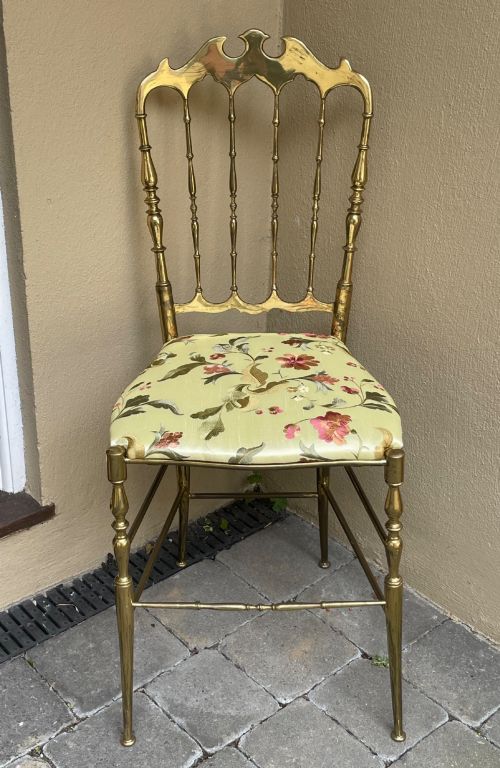
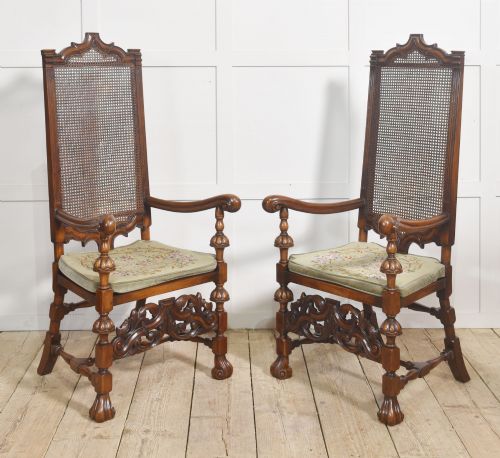


Ornate Upholstered Chair
These ornate upholstered chair selections bring sculptural frames and rich textiles together across Victorian, Rococo Revival, and French Chateau styles.
Ornate Upholstered Chair
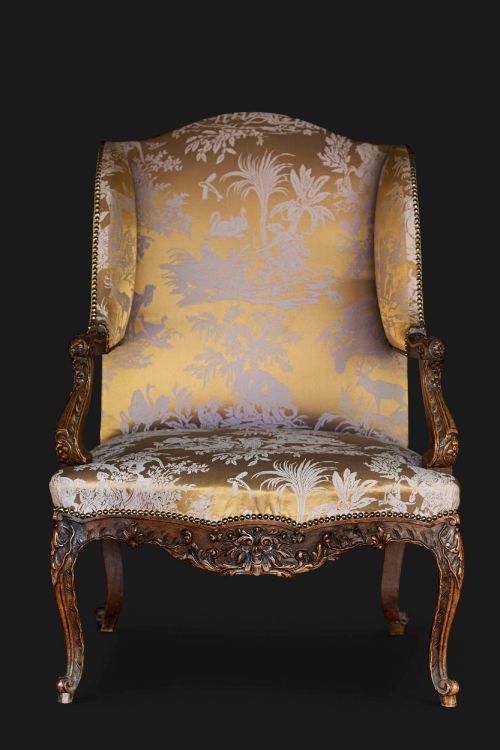
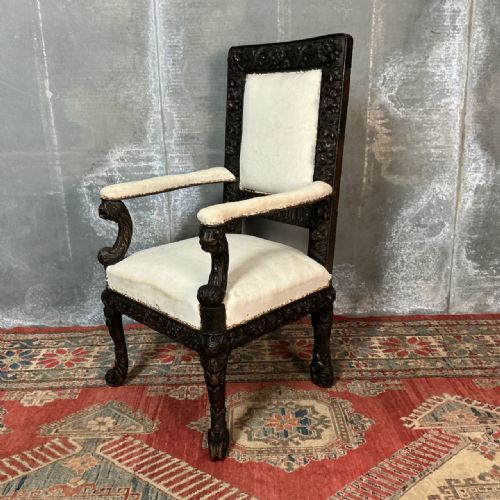
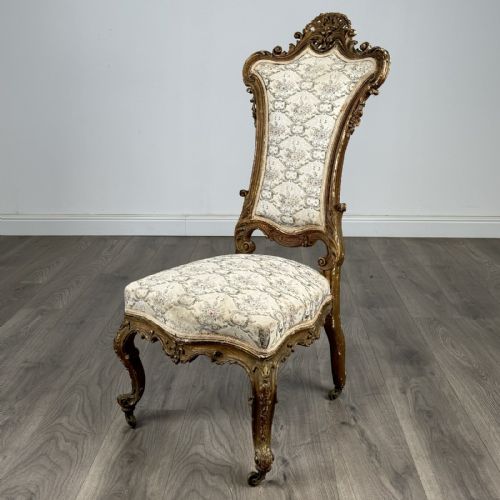
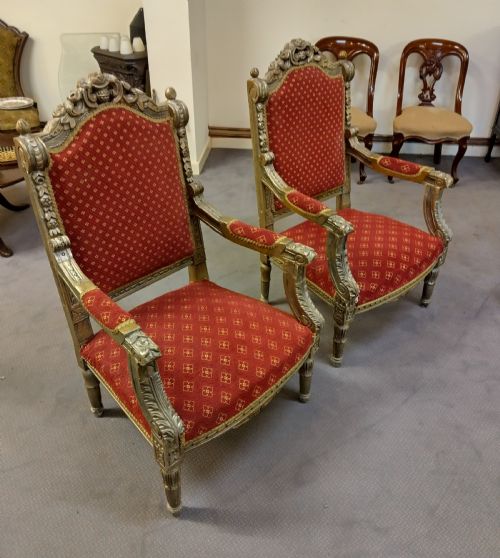
An ornate upholstered chair brings together carved wooden framing and padded seating in forms ranging from compact side chairs and salon chairs to grand open armchairs and wingbacks. When exploring this phrase, buyers encounter pieces spanning the nineteenth century through the early twentieth century, with Victorian and Continental European origins appearing frequently.
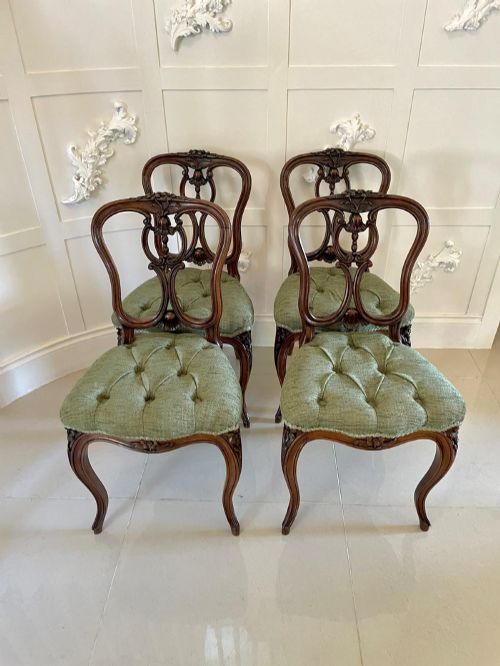
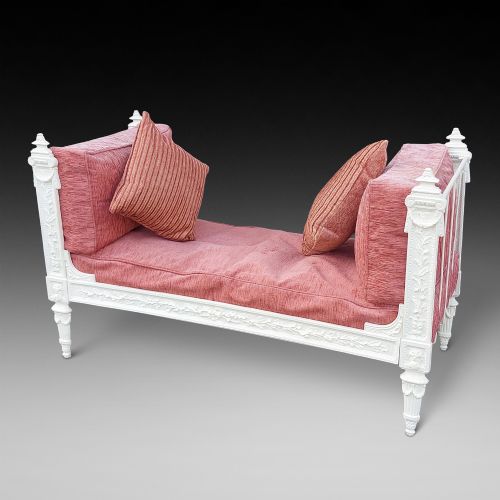
The selection encompasses diverse seating types including hall chairs, dining chairs, and boudoir chairs alongside larger items like daybeds and sofas. Walnut, oak, and mahogany provide the structural timber foundations, while giltwood finishes and painted surfaces dominate the decorative presentation.
Materials and construction
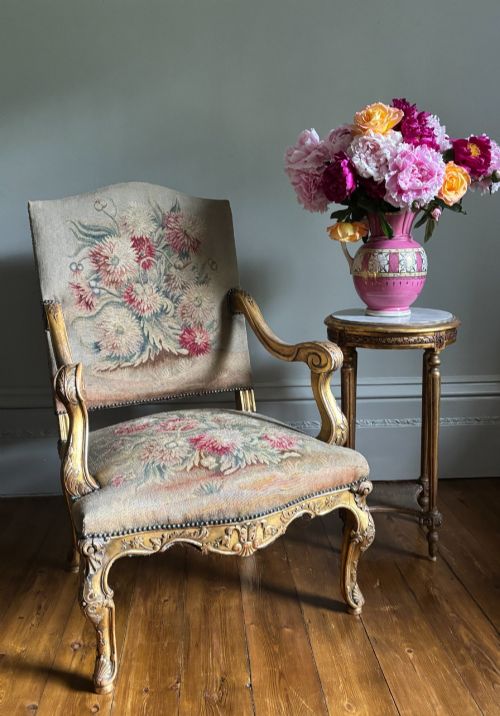
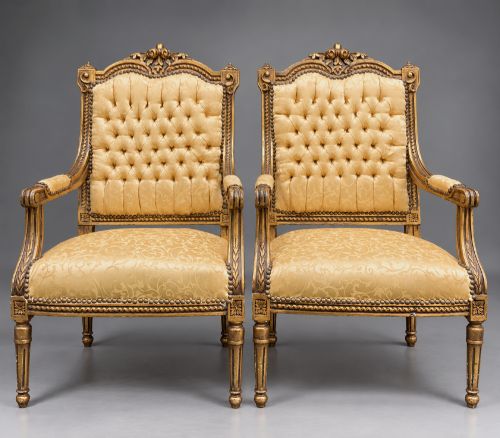
Makers shaped these frames from solid hardwoods including walnut, oak, mahogany, and beech, applying hand-carved detailing directly into the timber. Gilding, brass elements, and gilt finishes layer reflective surfaces over the wood, while exposed carved woodwork defines the structural borders.
Textiles complete the seating areas through the use of damask fabric, silk, and general upholstery materials. Traditional joinery secures the carved components, supporting the padded seats and backs fitted within the decorative frames.
Ornate Upholstered Chair Retail Price Guide 2026
Typical asking prices for ornate upholstered chair among the pieces listed under this phrase on Sellingantiques today, from the lower quarter to the upper quarter. They describe what is for sale here now, not the wider market.
Listings feature eighteenth-century pieces alongside nineteenth-century Victorian works, utilising walnut, oak, mahogany, and giltwood finishes.
Distinctions in quality
The depth and crispness of the hand-carved details separate standard examples from finer pieces, where foliage, scrollwork, and figurative motifs retain sharp definition. Solid timber selection in the primary frame, such as figured walnut or dense mahogany, dictates the structural integrity and weight of the seating.
The application of the giltwood finish or paintwork influences the overall visual impact, with layered burnished gold leaf differing from simpler painted surfaces. Original or sympathetic textile choices, including patterned silk and damask, complement the period integrity of the carved framework.
The Ornate Upholstered Chair Glossary
- Giltwood
- Wood that has been coated with a thin layer of gold leaf or gold paint. This technique creates a luminous, reflective surface popular on decorative frames.
- Cabriole leg
- A furniture leg that curves outward and then tapers inward toward a pad or scroll foot. It mimics the shape of an animal's leg.
- Damask
- A reversible figured fabric woven on a loom with patterns visible on both sides. It provides a textured surface for traditional upholstery.
- Wingback armchair
- An upholstered chair with high back and flanking side panels designed to shield the sitter from drafts. These pieces often feature exposed carved wooden legs and arms.
- Salon chair
- A smaller, decorative chair intended for formal reception rooms rather than heavy daily use. These seats frequently showcase elaborate carved frames and delicate upholstery.
Ornate Upholstered Chair: Frequently Asked Questions
How do I care for giltwood frames?
Dust giltwood surfaces gently with a soft, dry cloth to prevent abrasion to the delicate gold leaf layer. Avoid liquid cleaners and direct sunlight, which can cause the finish to flake or fade over time.
Keep the seating away from heat sources and fluctuating humidity levels to protect both the wooden substrate and the applied finish.
Where should I place an ornate chair?
These decorative chairs suit low-traffic areas such as bedrooms, reading corners, or formal drawing rooms where their carved frames remain visible. Pairing an armchair with a plain backdrop allows the intricate woodwork and textile design to stand out.
Ensure the piece sits clear of heavy foot traffic to protect fragile silk or damask upholstery from excessive wear.
Are these chairs comfortable for daily use?
Most antique salon and side chairs were built for formal posture rather than lounging, featuring upright backs and firm padding. Open armchairs and wingbacks generally offer more relaxed support depending on the internal stuffing used.
Consider the seat height and depth relative to your living space when selecting a chair for regular seating purposes.
How do I identify a Victorian chair?
Victorian seating often displays deep button tufting, heavy carved mahogany or walnut frames, and stylistic revivals of Rococo or Gothic forms. Makers of this era utilised machine assistance alongside hand carving, resulting in varied levels of ornamentation.
Look at the underside construction, wood patina, and fastener types to help distinguish mid-to-late nineteenth-century manufacturing methods.