



Ornate Ormolu Clock
An ornate ormolu clock brings intricate French style and gleaming gilded metalwork into a room, offering both decorative presence and mechanical precision.
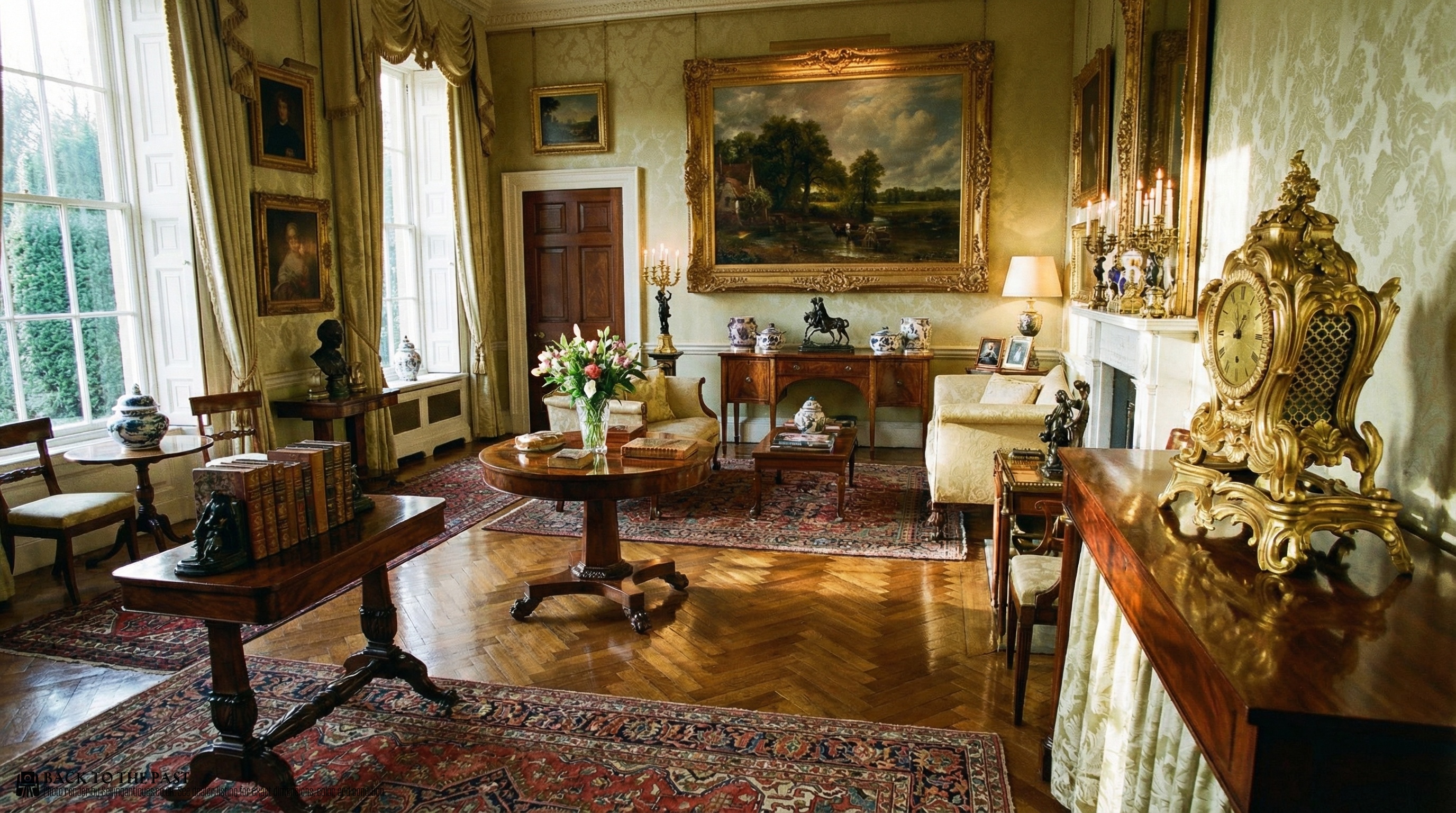
Ornate Ormolu Clock
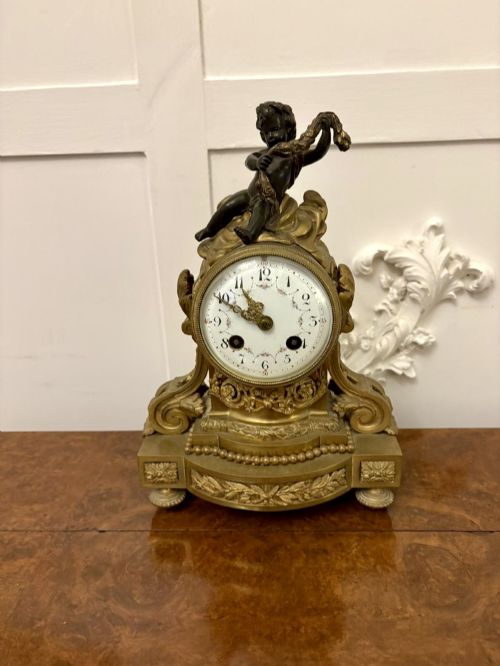
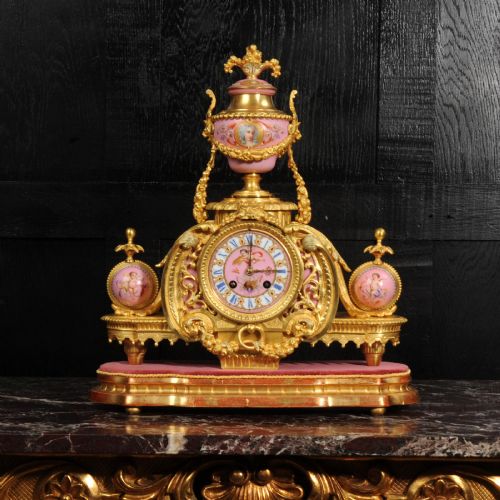
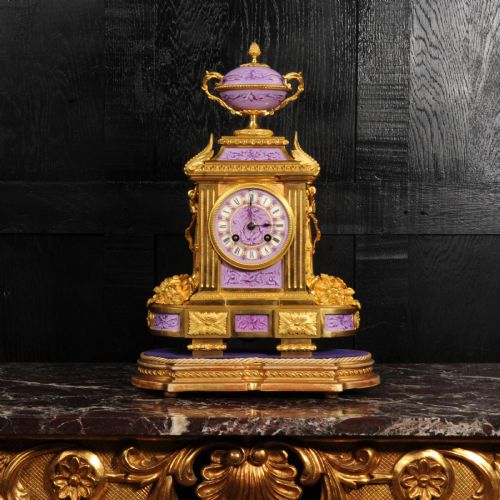
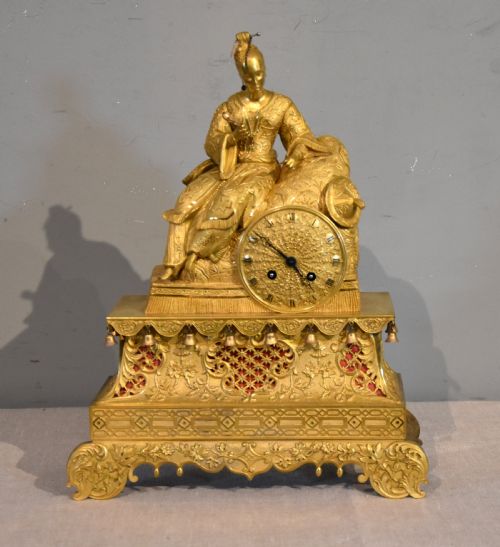
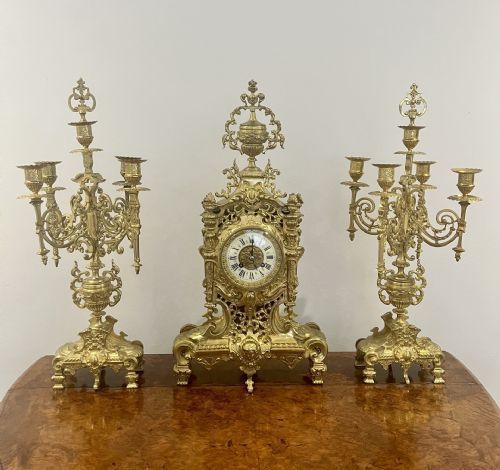
When you search for an ornate ormolu clock, you encounter pieces originating primarily from nineteenth century France, spanning periods from the eighteen fifties to nineteen hundred. The selections on this page concentrate heavily on mantel clocks and clock garnitures, often accompanied by matching side pieces or wall brackets.
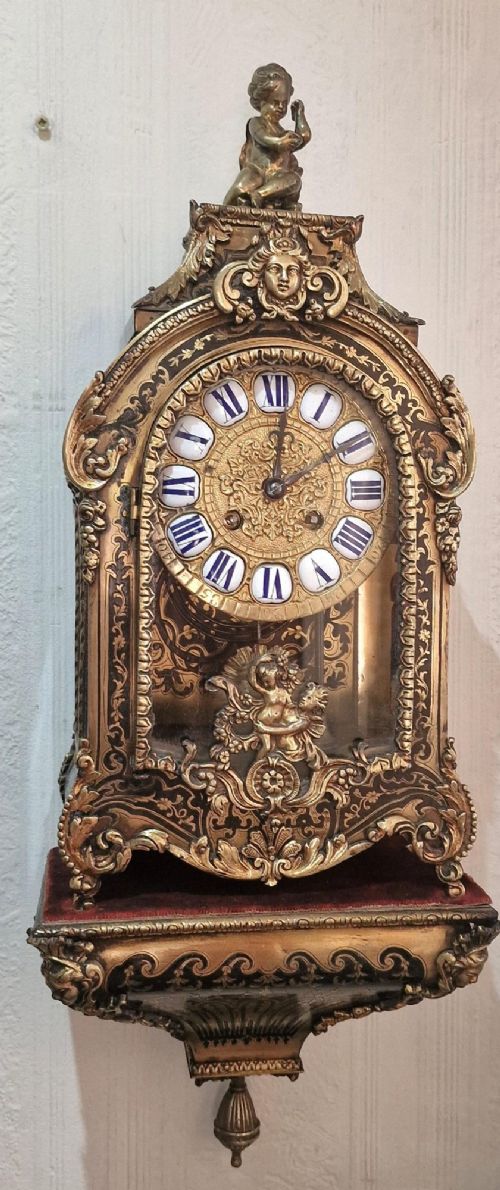
Makers and designers channel historical aesthetics through styles such as French Rococo Revival, Louis XVI, and Napoleon III. Alongside standard mantel clocks, you find four glass sided bracket clocks, longcase clocks, and table clocks utilising similar decorative vocabularies.
Materials and construction
The primary visual impact relies on ormolu and gilt bronze, providing the golden surface sheen characteristic of these pieces. Brass, copper, and gilt metal also form the foundational structures for many of the recorded housings.
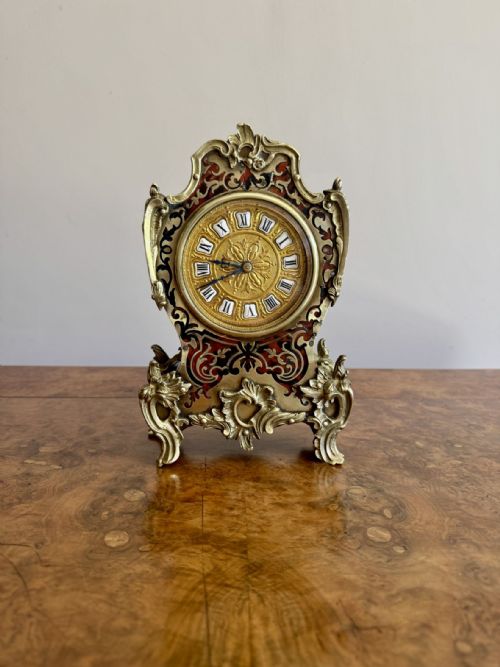
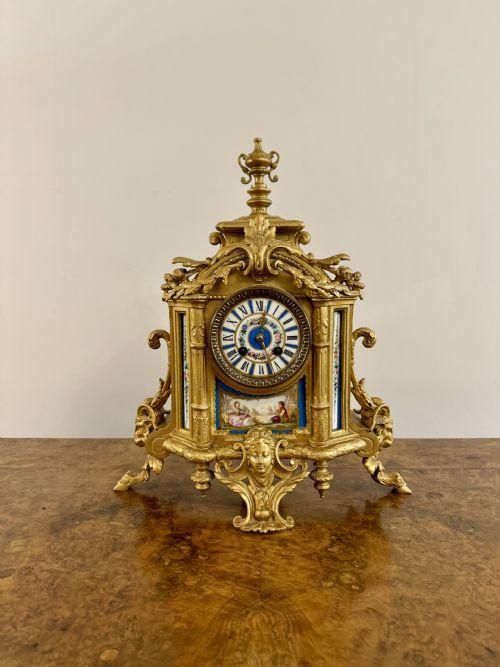
Craftsmen integrated contrasting elements such as Sèvres porcelain panels, white and red marble, tortoiseshell in Boulle work, enamel dials, and glass panels. Movement mechanisms within these housings were produced by notable horological firms using precision gear trains.
Materials recorded on this page include porcelain, tortoiseshell, marble, glass, enamel, and brass alongside ormolu and gilt bronze.
Factors of execution
The distinction between tiers rests in the crispness of the gilt bronze chasing and the complexity of the cast ornamentation. Superior examples display deeply sculpted foliage, figures, and scrollwork that hold their definition sharply across every surface.
Integration of secondary materials dictates overall refinement, where hand painted Sèvres porcelain or precisely inlaid tortoiseshell elevate the object. Furthermore, the presence of signed movements from established makers separates standard production items from masterworks.
Achille Brocot·Japy Freres·Samuel Marti·A D Mougin·John Barwise
The Ornate Ormolu Clock Glossary
- Ormolu
- A technique of applying finely ground high-carat gold to a bronze base object. This creates the characteristic bright metallic finish seen on French decorative pieces.
- Gilt Bronze
- Metal cast in bronze and subsequently covered with a layer of gold leaf or gold paint. It provides durability alongside a rich, reflective surface.
- Boulle
- A style of marquetry using brass and tortoiseshell inlaid in intricate patterns. Named after French cabinetmaker André-Charles Boulle, it frequently decorates nineteenth-century clock cases.
- Garniture
- A set consisting of a central clock flanked by matching decorative objects such as urns or candelabra. These sets were designed to sit harmoniously on a mantelpiece.
- Champlevé
- An enamelwork technique where troughs are dug into a metal surface and filled with vitreous paste before firing. This adds vibrant colour and pattern to the clock housing.
Ornate Ormolu Clock: Frequently Asked Questions
What is an ormolu clock?
An ormolu clock is a timepiece housed in a bronze frame treated with a gold-mercury amalgam or gold finish, creating a bright metallic appearance.
These pieces typically date from the nineteenth century and incorporate elaborate sculptural details influenced by French design periods.
How do I wind the clock?
Winding requires inserting a matching key into the winding arbours on the enamel dial and turning gently until resistance is felt.
Care must be taken not to overwind the mainspring, ensuring the mechanical movement continues to keep accurate time.
Where should I place a clock garniture?
A clock garniture is designed as a cohesive set meant for display on a wide mantelpiece, sideboard, or console table.
The central clock sits flanked by its matching side ornaments to create a balanced decorative arrangement in a room.
How do I identify the style?
Style identification relies on examining the decorative motifs, such as asymmetrical scrollwork for Rococo or formal symmetry and urns for Louis XVI.
Comparing the cast metal ornaments and secondary materials like marble or porcelain helps pinpoint the exact nineteenth-century aesthetic.