



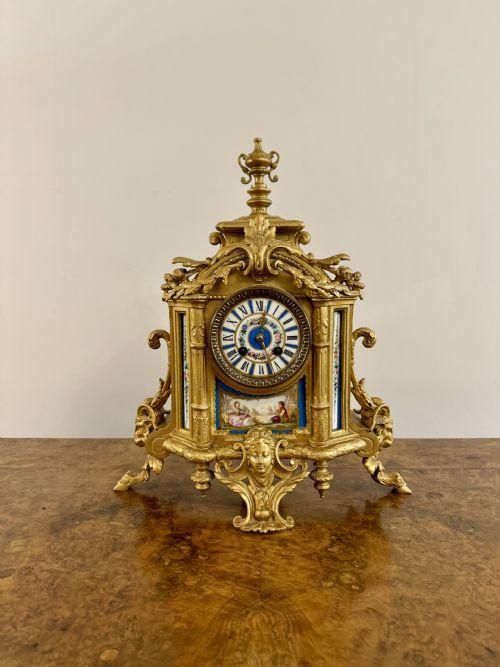


Decorative Gilt Clock
A decorative gilt clock brings warmth and golden reflection to a room, drawing the eye with polished bronze, ormolu, and intricate metalwork.
Decorative Gilt Clock
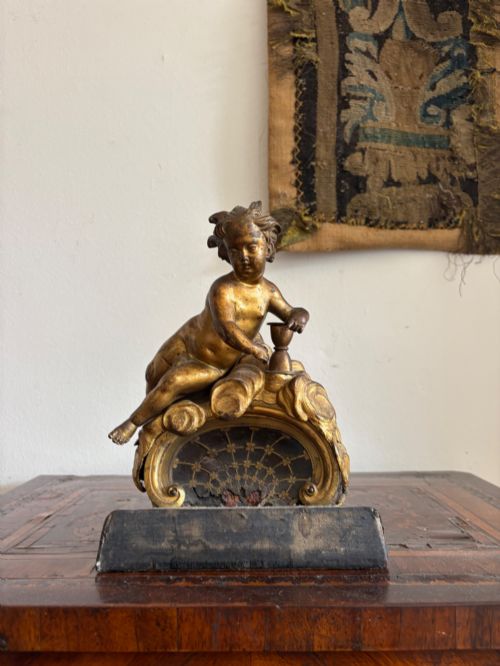
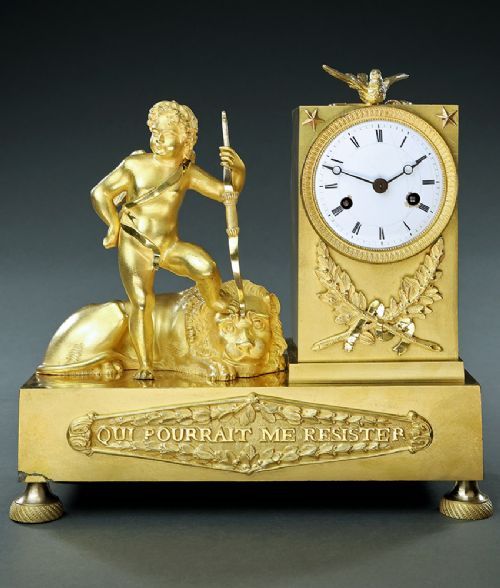
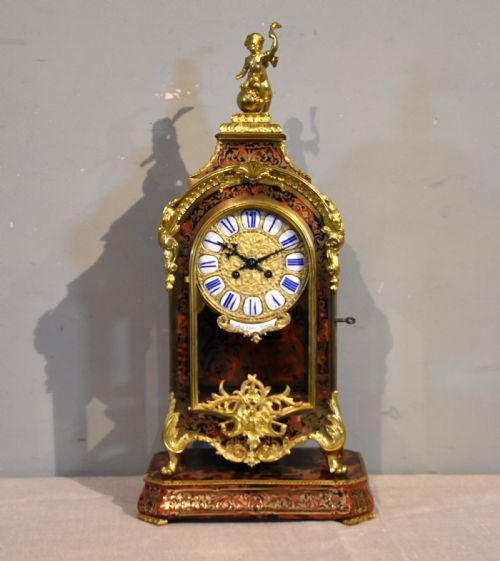
A decorative gilt clock encompasses a variety of timepieces designed primarily to ornament a mantelpiece, desk, or wall. Buyers seeking these items will most frequently encounter nineteenth-century French mantel clocks finished in gleaming ormolu and gilt bronze.
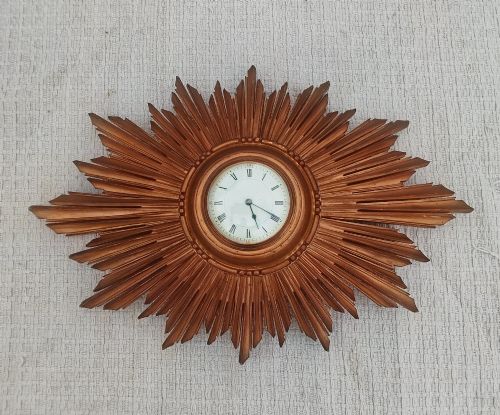
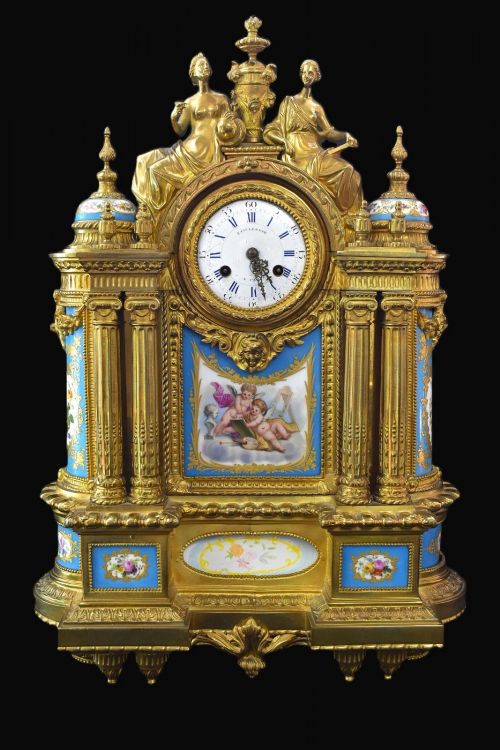
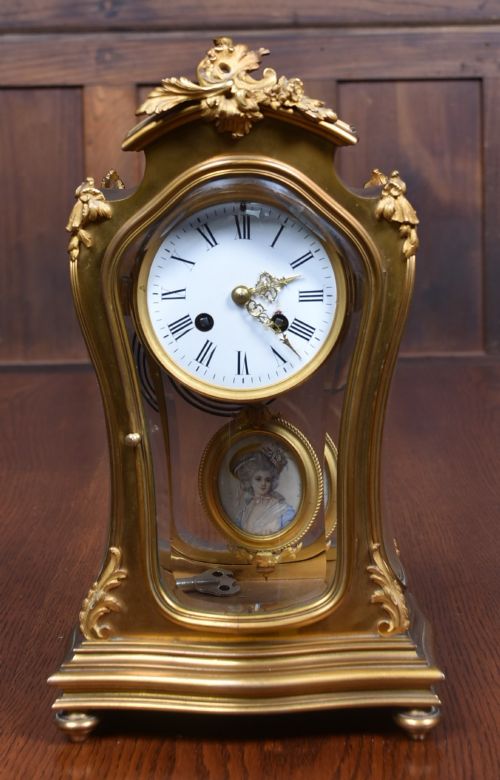
The selection extends from substantial architectural and figural mantel pieces incorporating porcelain and marble to delicate carriage clocks designed for travel or bedside use. Wall-hanging cartel clocks and giltwood star burst designs also appear within the selection.
Many examples draw upon historical design vocabulary, displaying French Rococo, Empire, and Louis XIV styles characterised by scrolls, putti, and elaborate mounts. These objects bridge the gap between functional timekeeping and sculptural interior decoration.
Materials and Construction
Craftsmen shaped these timepieces using base metals such as brass and bronze, which were subsequently fire-gilded to produce a durable ormolu finish. Ormolu provides a soft, warm lustre that distinguishes high-grade nineteenth-century metalwork from simpler modern platings.
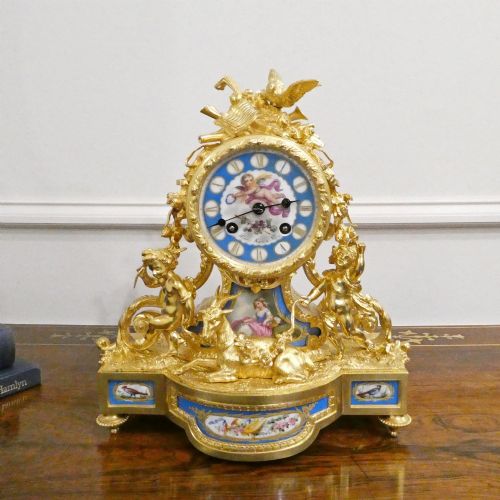
Clockmakers integrated diverse decorative elements, including hand-painted porcelain panels from factories like Sevres and Meissen, alongside champlevé enamel dials and glass panels. Marble bases and intricately carved giltwood frames frequently provided structural support and visual contrast.
Mechanical movements were housed within these ornate bronze or wooden cases, often featuring precision escapements and striking mechanisms. Artisans decorated the visible components with engraved details, miniature paintings, and cast ornamental mounts.
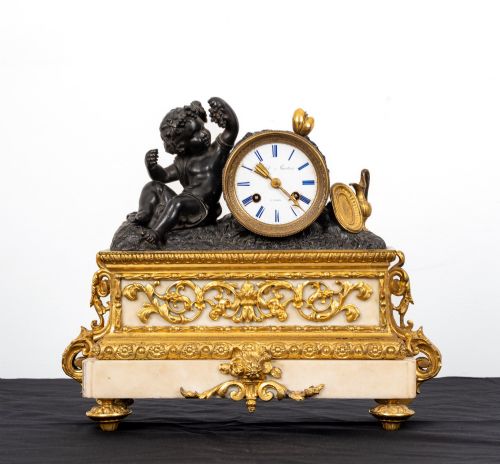
The listings show nineteenth-century French mantel clocks combining gilt bronze, marble, and hand-painted porcelain.
Quality Variations
The standard of a decorative gilt clock rests heavily on the crispness of the bronze casting and the depth of the original mercury gilding. Superior pieces display sharply chiselled details in the foliage and figures, whereas lesser examples show softer edges from worn or secondary moulds.
The integration of materials dictates value, particularly where hand-painted porcelain panels, champlevé enamel, or signed miniature dials are present. The reputation of the maker or retailer inscribed on the movement or dial further elevates the standing of an individual clock.
Henry Marc·Siffel and Cartier·Etienne Lenoir·Wetterstrands·PH Mourey
The Decorative Gilt Clock Glossary
- Ormolu
- Finely ground high-carat gold amalgamated with mercury and applied to bronze through heat gilding. This historical technique creates a rich, matte golden surface that resists tarnishing over centuries.
- Champlevé
- An enamelling technique where troughs or cells are hollowed out of the metal surface and filled with coloured glass paste before firing. It creates vibrant, patterned ornamentation across dials and bezels.
- Cartel clock
- A wall-mounted clock housed in an asymmetrical, highly ornate frame made of giltwood or metal. These pieces emerged during the Rococo period to function as decorative wall sculpture.
- Carriage clock
- A small, portable spring-driven timepiece equipped with a carrying handle and glass panels. They were originally designed for officers on the move during the nineteenth century.
- Putto
- A representation of a chubby male infant, often winged, derived from classical art. Sculptural putti frequently adorn the crests and bases of nineteenth-century French mantel clocks.
Decorative Gilt Clock: Frequently Asked Questions
Where should I place a decorative gilt clock?
These timepieces suit prominent locations where their reflective metalwork catches natural light, such as a mantelpiece, a sideboard, or a console table. Avoid placing them in direct sunlight or damp environments to protect the fragile gilding and enamel dials.
Ensure the surface is stable and level to keep the mechanical movement beating accurately. Wall-mounted variations require secure fixings into solid masonry or studwork to support their substantial metal and wood weight.
How do I wind a mechanical gilt clock?
Use the appropriate key to wind the springs gently until you feel resistance, taking care not to overwind the mechanism. Most nineteenth-century models run for eight days before requiring another turn.
Move the minute hand slowly when setting the time, and avoid turning hands backwards unless the specific movement design explicitly permits it. Regular gentle care preserves the vintage gears and escapement.
What is a garniture set?
A garniture set pairs a central mantel clock with matching side ornaments, such as decorative vases, candelabra, or urns. These matched groupings were designed to create a balanced, symmetrical arrangement across a fireplace mantel.
Items within a garniture typically share identical materials, such as ormolu bronze combined with porcelain or marble. Finding a complete set remains a desirable outcome for collectors of nineteenth-century interiors.
How do I identify French Revival styles?
French Rococo Revival clocks feature asymmetrical scrolls, naturalistic leaf motifs, and playful figures like putti. They draw inspiration from the mid-eighteenth century but date to the Victorian era.
Empire and Louis XVI styles exhibit stricter symmetry, classical architectural columns, urns, and military trophies. Examining the cast mounts and overall silhouette usually reveals which historical period inspired the nineteenth-century maker.