



Ornate Mantelpiece Clock
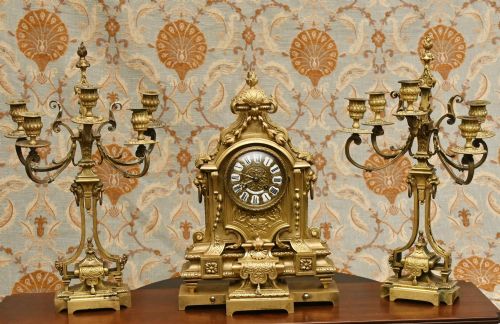
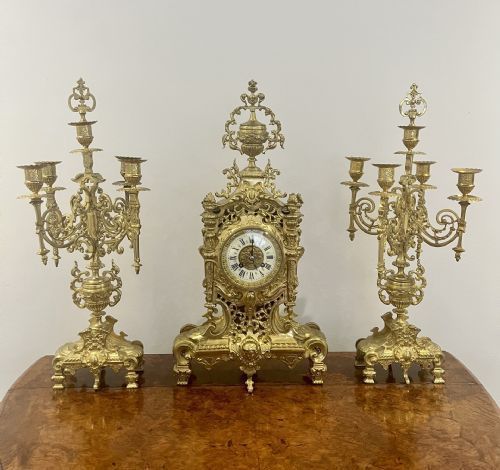
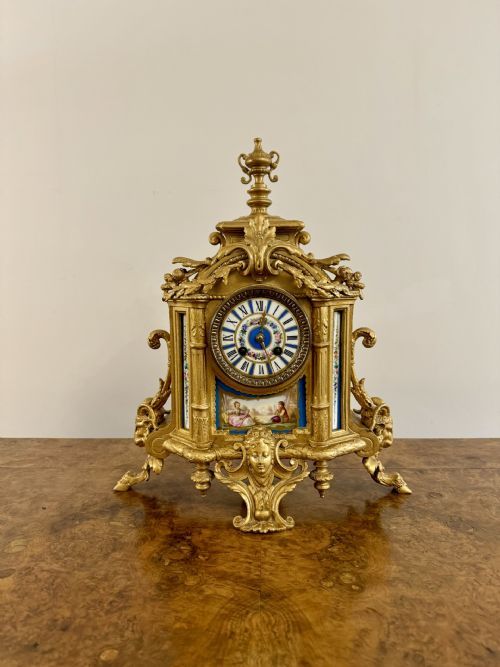
When you choose an ornate mantelpiece clock, you select a substantial Victorian timekeeper that brings brass, ormolu, and porcelain into the room.

Ornate Mantelpiece Clock
An ornate mantelpiece clock acts as the focal point of a fireplace, bringing nineteenth-century presence into a room. These pieces appear as mantel clocks, desk clocks, and carriage clocks, often accompanied by matching garniture sets.
The domestic interior gains a dense decorative layer from these objects, which combine heavy metals with ceramic panels. Victorian and late nineteenth-century examples dominate the selection, showing French revival styles alongside British domestic production.
Buyers encounter substantial architectural forms constructed from marble, gilt bronze, and solid brass. These heavy timekeepers reflect the Victorian taste for complex, decorative surface treatments and status in the home.
Materials and construction
Maker workshops utilised cast brass, ormolu, and gilt bronze to form the heavy structural cases of these timekeepers. Metal components received intricate chasing and engraving, creating textured surfaces that catch the light from all sides.
Porcelain panels, frequently painted in the Sevres style or decorated with enamel, were inset into the metal frameworks. These ceramic elements introduced painted scenes and rich colours to the front and sides of the clock body.
Ornate Mantelpiece Clock Retail Price Guide 2026
Typical asking prices for ornate mantelpiece clock among the pieces listed under this phrase on Sellingantiques today, from the lower quarter to the upper quarter. They describe what is for sale here now, not the wider market.
Current listings feature French and British pieces spanning the Victorian era, utilising marble, porcelain, and ormolu.
Assessing quality in design
Quality rests in the crispness of the metalwork, where deep chasing and heavy gilding distinguish superior castings from flat, mass-produced alternatives. The weight of the bronze or brass case and the precision of the engraved details separate standard production from workshop masterpieces.
The integration of porcelain panels and enamel dials marks another distinction across the range. Hand-painted ceramic elements with clear firing and fine brushwork elevate the overall object far above plain brass housings.
Japy Freres·Leroy & Fils·Howell James Co·Francois Moreau·Hay London
The Ornate Mantelpiece Clock Glossary
- Ormolu
- A technique of applying finely ground high-carat gold to a bronze object using mercury. This creates a rich golden finish that resists tarnishing over decades.
- Garniture set
- A matching set of ornamental pieces comprising a central clock flanked by matching urns or candelabra. These groups create a symmetrical arrangement on a fireplace mantel.
- Champleve
- An enamelling technique where troughs are dug into the metal surface and filled with vitreous enamel before firing. The resulting pattern shows coloured glass designs flush with the metal.
- Fusee
- A conical pulley used in clock movements to maintain even driving force as the mainspring unwinds. This mechanism improves the timekeeping accuracy of the movement.
- Boulle
- A form of marquetry using brass and tortoiseshell inlaid into wooden furniture and clock cases. Named after the French cabinetmaker, it produces a tortoiseshell and golden metallic pattern.
Ornate Mantelpiece Clock: Frequently Asked Questions
How do I wind an antique clock?
Use the appropriate key on the winding arbors, turning gently until resistance increases. Avoid over-winding to protect the tension of the mainspring.
Most nineteenth-century movements require a weekly wind to maintain accurate timekeeping across the eight-day duration.
Where should I place my clock?
Position the piece on a stable, level surface away from direct heat sources and open windows. A firm mantelpiece or sideboard prevents vibrations that can disrupt the pendulum swing.
Ensure the room humidity remains moderate to protect the brass, ormolu, and porcelain panels from environmental stress.
How do I tell French styles apart?
French Rococo revival pieces display asymmetrical curves, leaf scrolls, and naturalistic motifs in cast bronze. Louis XVI style objects rely on strict symmetry, neoclassical urns, and architectural columns.
Examining the casting detail on the case helps identify the specific design period of the workshop.
What is a clock garniture?
A garniture consists of a central timekeeper accompanied by two matching side ornaments such as urns or vases. These matched sets were designed to sit together across a mantelpiece.
The matching pieces share the same materials, whether marble, gilt bronze, or porcelain panels.