







French Spelter Clock
A french spelter clock combines figurative sculpture and timekeeping, offering a glimpse into continental domestic interiors from the nineteenth and early twentieth centuries.

French Spelter Clock
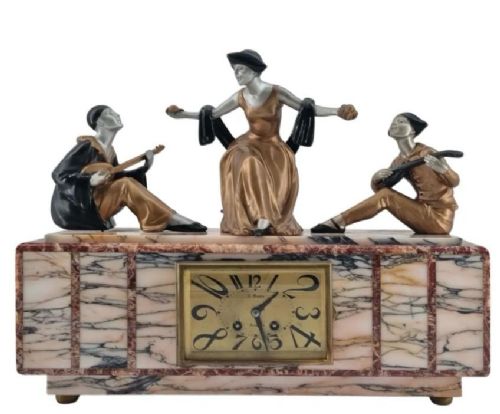
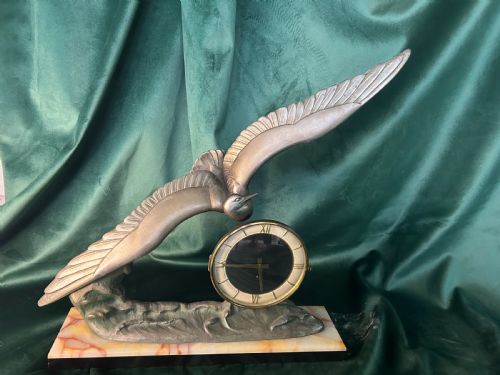
When you search for a french spelter clock, you are looking at mantel timepieces and garniture sets featuring cast metal figures mounted on marble, onyx, or wood bases. These objects merge decorative sculpture with working clock movements, often depicting mythological figures, historical subjects, labourers, or theatrical characters like Pierrot and Columbine.
The pieces on this page span from the mid nineteenth century through the Art Deco period of the 1930s. You will frequently encounter figural mantel clocks and three-piece garniture sets that include matching side vases or ornaments, reflecting changing interior tastes from Rococo Revival and French Realism to Art Nouveau and geometric modernity.
What varies in quality
The choice of supporting materials also dictates the standing of the piece, with dense natural marble and onyx housings elevating the work above simpler wooden or mixed metal bodies. Additionally, the presence of an intact matching garniture set alters the integrity and scope of the ensemble.
French Spelter Clock Retail Price Guide 2026
Typical asking prices for french spelter clock among the pieces listed under this phrase on Sellingantiques today, from the lower quarter to the upper quarter. They describe what is for sale here now, not the wider market.
Johannes Gutenberg traded his printing press for a mantelpiece role, immortalised in heavy metal alongside nineteenth-century farm labourers and frolicking cherubs.
F.Milliot·Sega·Auguste Moreau·Phillipe H. Mourey·Francois Moreau
The French Spelter Clock Glossary
- Spelter
- A zinc alloy commonly utilised as a cost-effective alternative to bronze for nineteenth-century decorative figures. It accepts metallic paints and chemical patinations readily.
- Garniture
- A set of matching decorative ornaments, typically comprising a central clock flanked by two matching sidepieces or vases. These suites were designed to display symmetrically on a mantelpiece.
- Enamel
- A glassy substance fused to the surface of the clock dial numbers and face through high-temperature firing. It provides a smooth, wipe-clean surface for painted numerals.
- Bezel
- The metal ring that holds the glass door protecting the clock face. It often swings open on a tiny hinge to allow access for winding and hand-setting.
- Rococo Revival
- A nineteenth-century design style drawing on eighteenth-century French motifs, characterised by C-scrolls, asymmetric ornamentation, and naturalistic shell forms.
French Spelter Clock: Frequently Asked Questions
What is a french spelter clock?
A french spelter clock is a mantel timepiece featuring a cast zinc-alloy sculptural figure mounted alongside a clock movement. These objects range from nineteenth-century Victorian and Rococo Revival designs to sleek Art Deco pieces.
They combine timekeeping with figurative art, often depicting literary, historical, or mythological subjects. Many survive as part of three-piece garniture sets accompanied by matching side ornaments.
How do I identify the period?
You can determine the period by examining the sculptural style and the surrounding materials. Mid nineteenth-century pieces often display ornate Rococo Revival or French Realism characteristics with marble bases, while 1930s examples favour geometric Art Deco lines.
Signatures inscribed on the metal figures or names painted on the enamel dials can also point toward specific decades or active sculptors.
What are garniture sets?
Garniture sets consist of a central mantel clock paired with two matching sidepieces, such as urns or secondary figural ornaments. Designed for symmetry, they were placed together on a mantelpiece or sideboard.
Finding a complete set matching in material, such as onyx and spelter, preserves the original decorative intent of the arrangement.
How should I clean my clock?
Dust your clock gently with a soft, dry cloth to protect the delicate metallic finish on the spelter figure. Avoid chemical cleaners and polishes, which can strip away the original bronzing or gilding.
Keep the stone bases and glass bezels clean using appropriate non-abrasive methods, ensuring the movement itself is handled by a professional horologist.