



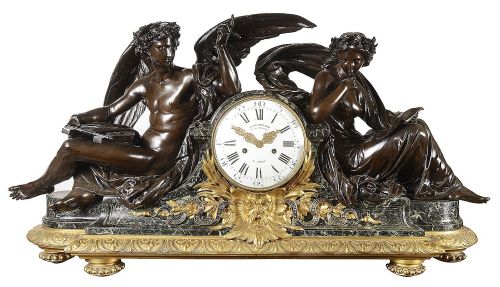


Sculpture Timepiece
These sculpture timepiece pieces combine functional horology with fine sculptural metalwork and carving, offering both precise timekeeping and striking decorative presence for any mantel.

Sculpture Timepiece
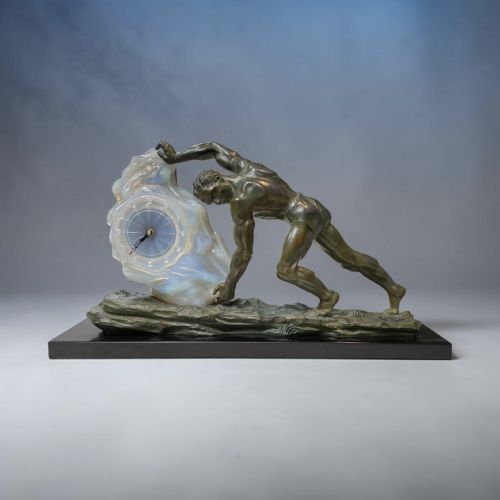
A sculpture timepiece integrates a mechanical clock movement directly into a figurative or architectural sculptural composition, merging practical timekeeping with decorative art. When you search for sculpture timepiece, you encounter works that range from animalier studies and mythological figures to industrial machinery and classical architectural revivals.
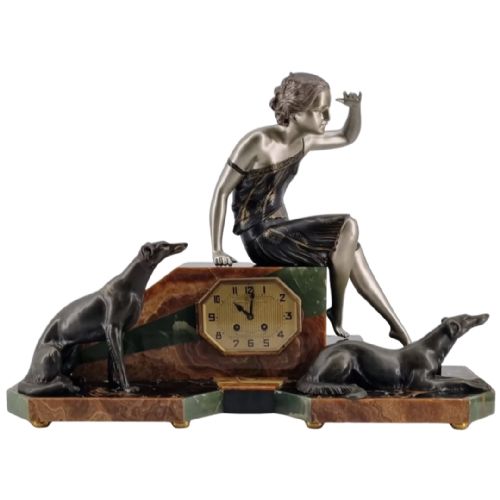
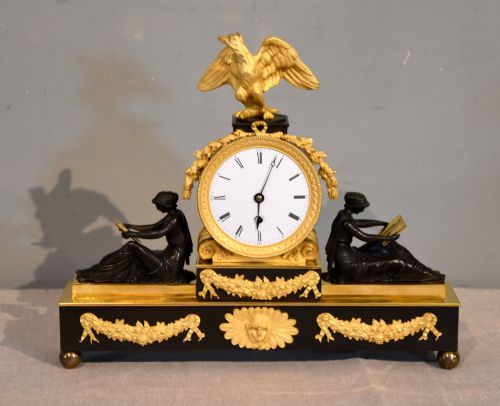
The pieces available on this page span the nineteenth century into the nineteen-twenties, incorporating Regency, Rococo Revival, Louis XVI, French Empire, and Art Deco design vocabularies. Common manifestations include mantel clocks flanked by garnitures, automaton beam engines, and figures cast in bronze or carved from marble and alabaster.
Makers and sculptors represented in these designs include R Varnier, Baetens London, Leon Message, Jollet et Cie, Michel Decoux, Andre Guilmet, Victor Paillard, and Francois Moreau. Each maker brings distinct sculptural proficiency and movement engineering to their respective pieces, reflecting the prevailing aesthetic tastes of their era.
Materials and construction methods
The primary structural and decorative materials include cast bronze, gilt bronze, ormolu, brass, and silver-plated bronze, frequently paired with white marble, onyx, or carved Italian alabaster bases. Metal elements utilise lost-wax or sand casting techniques, followed by meticulous chasing, hand-chiselling, and chemical or fire gilding to achieve varied surface textures.
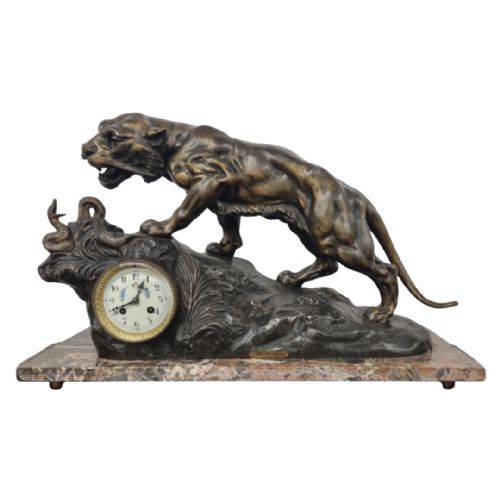
Clock movements are typically housed within or adjacent to the main sculptural body, often protected beneath blown glass domes or framed by enamel dials. Figures such as the German Shepherd by Michel Decoux or the tiger and serpent by R Varnier demonstrate advanced metalworking skills developed during the nineteenth and early twentieth centuries.
Sculpture Timepiece Retail Price Guide 2026
Typical asking prices for sculpture timepiece among the pieces listed under this phrase on Sellingantiques today, from the lower quarter to the upper quarter. They describe what is for sale here now, not the wider market.
Some nineteenth-century French engineers could not resist making time tick inside a working steam engine.
Determinants of quality
Quality rests upon the crispness of the sculptural casting and the depth of the subsequent hand-chasing, where sharper feather, fur, and architectural details distinguish superior works from softer, commercial castings. The quality of the gilding - whether fire-applied or electroplated - and the preservation of original patination significantly influence the visual integrity of the metalwork.
R Varnier·Baetens London·Leon Message·Jollet et Cie·Michel Decoux·Andre Guilmet·Victor Paillard·Francois Moreau
The Sculpture Timepiece Glossary
- Ormolu
- Finely ground high-carat gold applied to a bronze base using a mercury amalgamation technique. This historic process produces a warm, durable golden finish characteristic of French decorative arts.
- Animalier
- A nineteenth-century sculptural style focusing on the realistic depiction of animals, particularly predators and domestic dogs. Artists in this tradition paid close attention to anatomical accuracy and natural movement.
- Garniture
- A set of decorative matching objects designed to be displayed together on a mantelpiece, typically comprising a central clock flanked by matching urns, vases, or companion figures.
- Automaton
- A self-operating mechanical device designed to mimic human or animal actions or mechanical processes. In horology, these often take the form of working industrial machinery driven by the clock movement.
- Alabaster
- A fine-grained, translucent stone used for carving decorative objects and clock bases. It is softer than marble and allows light to penetrate slightly beneath the surface.
Sculpture Timepiece: Frequently Asked Questions
What is a sculpture timepiece?
A sculpture timepiece is a decorative clock where the sculptural element forms the primary artistic focus, integrating the dial and movement into a figurative or architectural subject.
These pieces function as both reliable timekeeping instruments and significant works of art, often drawing inspiration from mythology, wildlife, and industrial innovation.
How do I care for my clock?
Keep the clock away from direct sunlight, excessive moisture, and fluctuating temperatures to protect sensitive materials like enamel dials, marble, and gilt surfaces.
Professional servicing of the mechanical movement every few years ensures the gears and springs remain clean and operational.
How do I identify the period?
Period identification relies upon stylistic cues, such as the symmetrical restraint of Louis XVI revival designs versus the geometric abstraction and clean lines of Art Deco.
Signatures, maker stamps, and the type of materials used - such as nineteenth-century ormolu versus early twentieth-century patinated bronze - also clarify the date.
Where should I display it?
These clocks look best placed centrally on a mantelpiece, sideboard, or sturdy console table where their sculptural details can be appreciated from multiple angles.
Ensure the surface is completely level so the pendulum and escapement mechanism can operate without interference.