





Sculptural Desk Clock
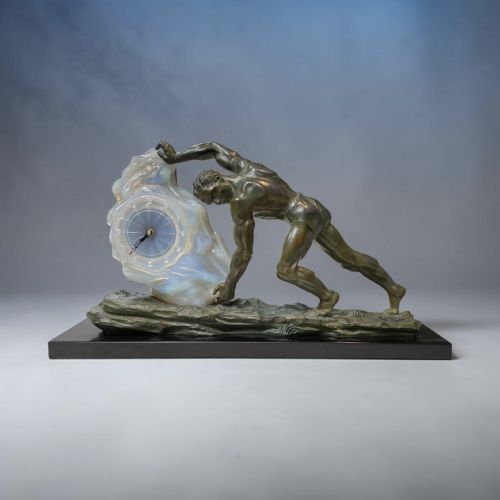
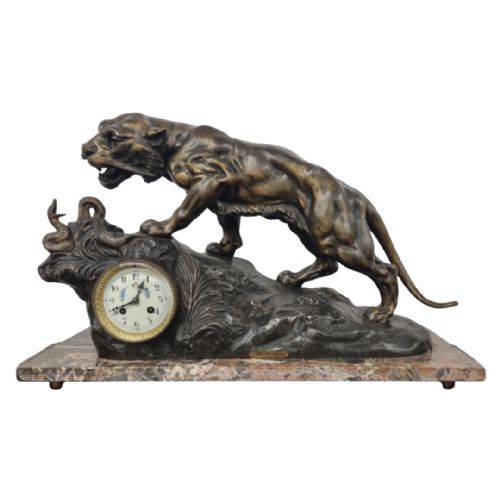
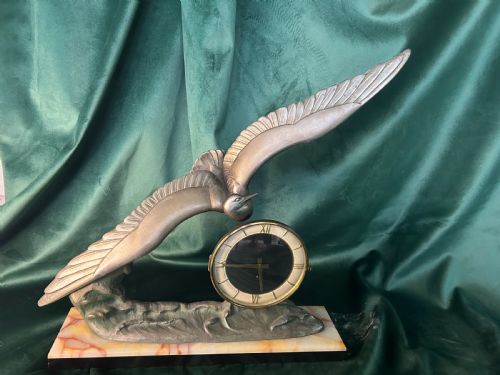
These sculptural desk clock pieces combine timekeeping with cast bronze, marble, and gilt metal figures.

Sculptural Desk Clock
A sculptural desk clock merges a timepiece with figurative or architectural metalwork, often taking the form of a mantel clock or clock garniture set.
The selection ranges from nineteenth century French revival designs featuring putti, tigers, serpents, and cherubs to early twentieth century Art Deco figures.
Makers and sculptors integrated dials directly into cast bronze, spelter, or variegated marble stands, creating heavy decorative centrepieces.
How they were made
Foundries utilised cast bronze, gilt bronze, ormolu, and spelter to shape elaborate animalier and neoclassical motifs, paired with polished marble bases.
Enamel dials and glass bezels protected the clock faces, while bronze casters collaborated with sculptors to sign the finished metalwork.
Sculptural Desk Clock Retail Price Guide 2026
Typical asking prices for sculptural desk clock among the pieces listed under this phrase on Sellingantiques today, from the lower quarter to the upper quarter. They describe what is for sale here now, not the wider market.
Materials recur across brass, enamel, marble, bronze, spelter, glass, ormolu, and gilt bronze.
What varies in quality
The distinction rests on the crispness of the cast figures, such as the feather detail on a cherub or the musculature of an animal, and the depth of the gilding.
Substantial variegated marble stands and signed signatures by known bronze casters elevate the physical presence and mechanical integration of the piece.
R Varnier·Lemerle Charpentier·Ferdinand Priess·Francois Moreau
The Sculptural Desk Clock Glossary
- Ormolu
- Gilt bronze, where a finely ground gold-mercury amalgam is applied to a bronze base and heated to leave a gold coating.
- Spelter
- A zinc alloy used as a cheaper alternative to bronze for casting figures, often painted to resemble metal.
- Garniture
- A set of matching decorative objects, typically a central clock flanked by two matching vases or urns.
- Animalier
- Nineteenth-century art focusing on the realistic portrayal of animals, frequently seen on French clock bases.
- Drum head clock
- A timepiece shaped like a circular drum mounted upon a larger sculptural or architectural stand.
Sculptural Desk Clock: Frequently Asked Questions
What is a sculptural desk clock?
A sculptural desk clock is a timepiece housed within or mounted beside cast metal figures, animals, or architectural motifs. These objects function as both working clocks and prominent decorative sculptures.
They appear primarily in nineteenth-century French styles, incorporating materials like bronze, marble, and ormolu to frame the enamel dial.
How do I identify Art Deco pieces?
Art Deco pieces from the early twentieth century utilise stylised geometric forms and cleaner lines compared to earlier ornate revival styles. They often feature figures integrated directly into the clock architecture.
Look for simplified drapery, streamlined stands, and materials typical of the 1920s period.
What materials were used?
The primary materials include cast bronze, gilt bronze, ormolu, and spelter for the figurative elements. Enamel provides the white background for the clock face numbers, protected by small glass bezels.
Bases are frequently fashioned from heavy variegated marble or gilt metal to anchor the weight of the sculpture.
What is a clock garniture?
A clock garniture is a matched set consisting of a central sculptural clock accompanied by side pieces such as urns or matching ornaments. These sets were designed to display symmetrically on a mantelpiece or large desk.
They share the same material palette and sculptural theme, such as putti or neoclassical motifs.
How do I spot signed pieces?
Signatures of sculptors or bronze founders are typically stamped or engraved directly into the metal base near the feet of the figures. Names like Francois Moreau or Ferdinand Priess appear on the cast body rather than the enamel dial.
Checking the lower edges of the bronze casting reveals these signatures.