





Ornate Headboard Bed
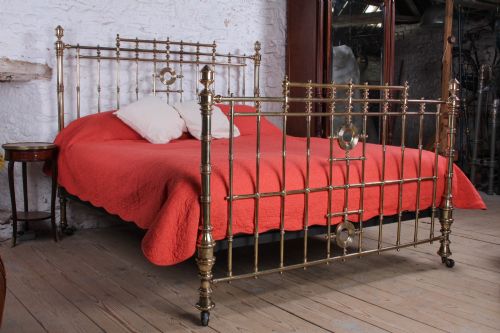
An ornate headboard bed brings historical presence into a bedroom through cast metal work, polished brass, and carved timbers.
Ornate Headboard Bed
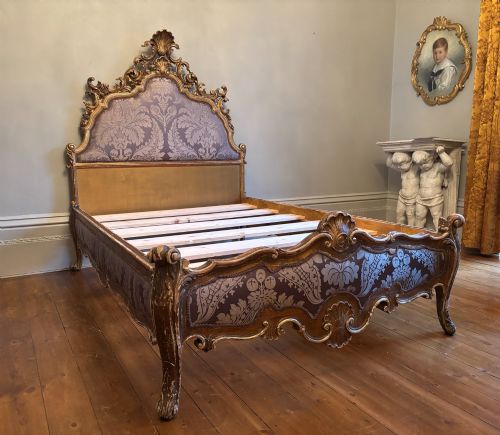
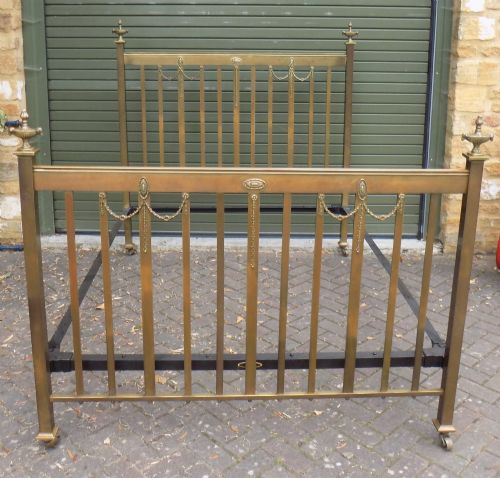
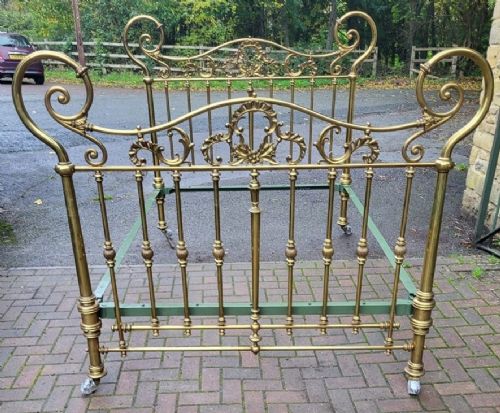
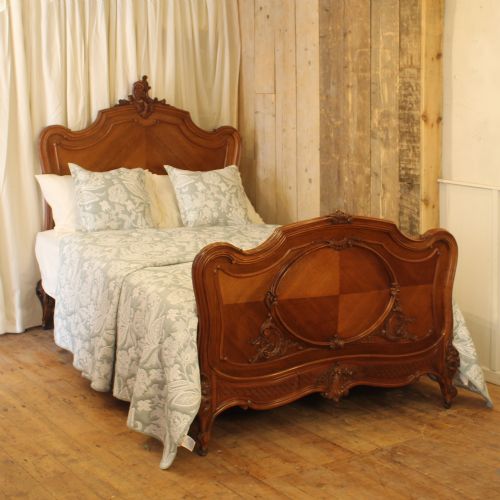
An ornate headboard bed centres on elaborate metalwork or carved timber framing, creating a dramatic focal point in a bedroom. The pieces found here span the Victorian era, the nineteenth century, and the early twentieth century, taking the form of double, king, super king, and single bedsteads.
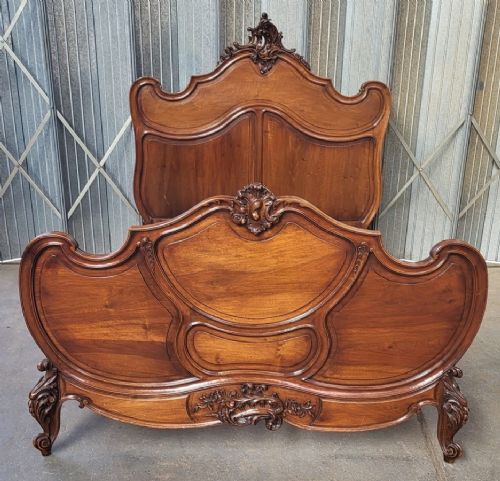
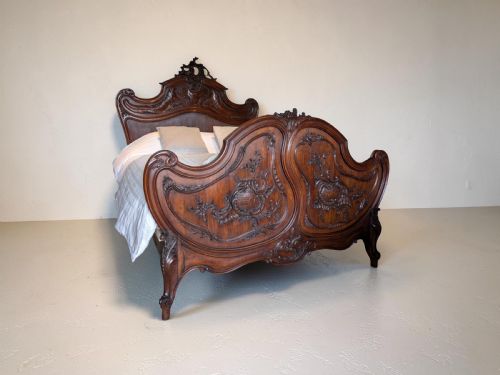
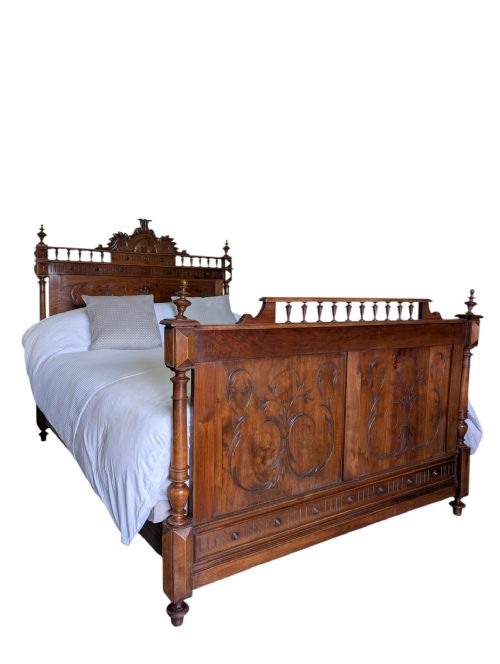
The styles range widely across European traditions, featuring French Rococo, Italian Rococo Revival, French Louis XV, French Neoclassical, Victorian Aesthetic Movement, and Portuguese Regional designs. Buyers encounter everything from robust cast and wrought iron frames to walnut, oak, mahogany, fruitwood, and maple structures.
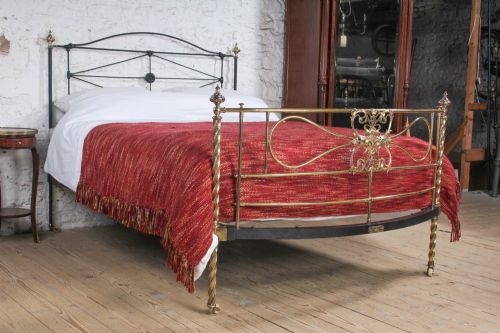
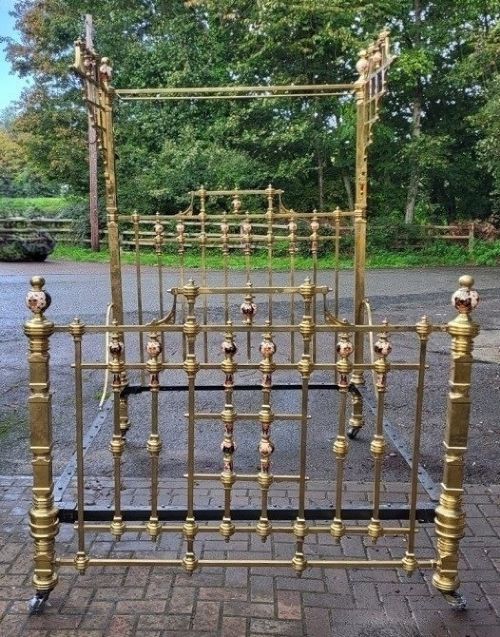
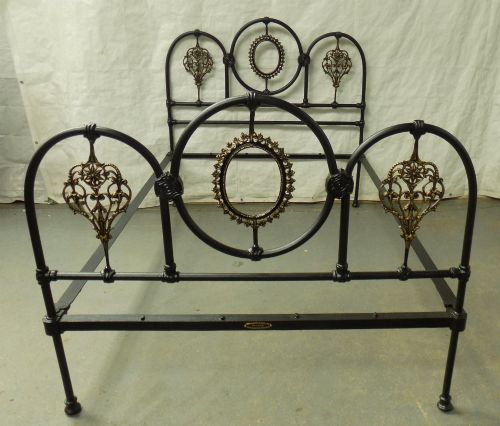
Many examples combine materials, pairing iron and brass or incorporating giltwood and tole ware details. Some listings present matched pairs that join together, while others offer half tester or four poster configurations.
Materials and construction methods
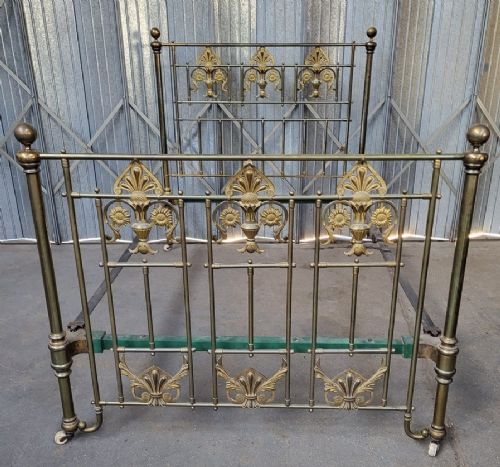
Makers utilised structural metals including cast iron, wrought iron, and brass to build robust bed frames capable of supporting substantial weight. Metal components were cast, forged, and joined with mechanical fasteners, often accented with polished finishes or painted surfaces.
Timber frames relied on hardwoods such as walnut, oak, mahogany, fruitwood, and maple, shaped through traditional joinery and hand carving. Wood was smoothed, polished, or painted to accentuate the natural grain and deep relief of the ornamentation.
Ornate Headboard Bed Retail Price Guide 2026
Typical asking prices for ornate headboard bed among the pieces listed under this phrase on Sellingantiques today, from the lower quarter to the upper quarter. They describe what is for sale here now, not the wider market.
One exceptional brass four poster bed here was built for the Prince of the Ottoman Empire during the early nineteenth century.
Assessing quality in ornate beds
The standard of carving and metal detailing distinguishes finer pieces from simpler domestic furniture. Deeply undercut timber reliefs and crisp, well-defined metal castings reflect higher workshop skill.
The integrity of the original joints, frames, and surface finishes determines the structural preservation of the bedstead. Maker attribution, such as work originating from established firms, adds notable provenance to specific brass and iron frames.
Maple and Co·R W Winfield
The Ornate Headboard Bed Glossary
- Half tester bed
- A bedstead featuring a partial canopy that extends only a short distance over the head of the bed, supported by the headboard or wall.
- Tole ware
- Enamelled and painted metalware that introduces colourful decorative elements to nineteenth-century frames.
- Rococo Revival
- A nineteenth-century design style drawing on eighteenth-century French motifs, characterised by asymmetrical scrolls, C-scrolls, and naturalistic floral carvings.
- Aesthetic Movement
- A late nineteenth-century design current that emphasised visual beauty and decorative refinement over strict historical revivalism.
- Winfield
- A notable nineteenth-century metalworking manufacturer associated with high-quality brass and iron bedstead production.
Ornate Headboard Bed: Frequently Asked Questions
What periods do these beds come from?
The listings encompass items produced during the nineteenth century and the early decades of the twentieth century. Specific dates span from the eighteen-fifties through to nineteen-ten.
Victorian examples sit alongside continental pieces from French, Italian, and Portuguese workshops, reflecting diverse regional tastes of those eras.
How do I identify different styles?
French Rococo and Louis XV styles typically display flowing, asymmetrical scrollwork and elaborate wooden carvings. Victorian Aesthetic Movement pieces often feature cleaner lines with refined brass detailing.
Italian and Portuguese regional variants introduce distinct local motifs, curvilinear profiles, and specific regional timber selections.
How were these beds constructed?
Makers built these frames using a combination of heavy structural metals and solid hardwoods. Cast iron and brass components were assembled with mechanical joints, while wooden beds relied on hand-carved solid timbers like walnut, oak, and mahogany.
Many designs incorporate removable components and bolting systems to facilitate transport and assembly.