
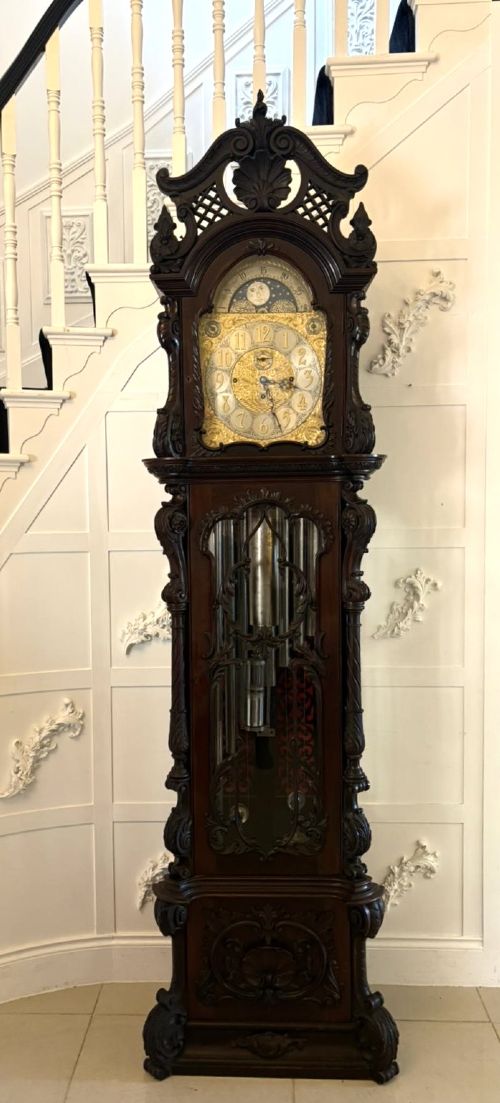
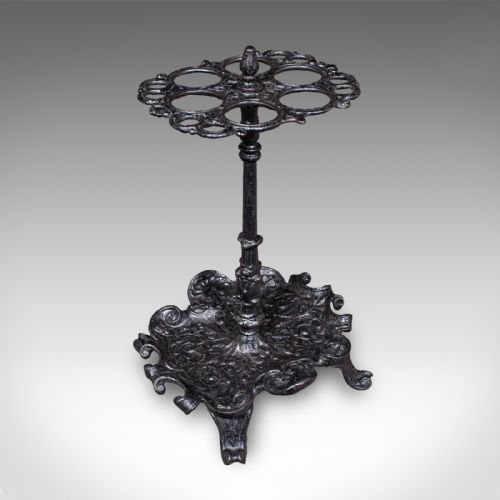
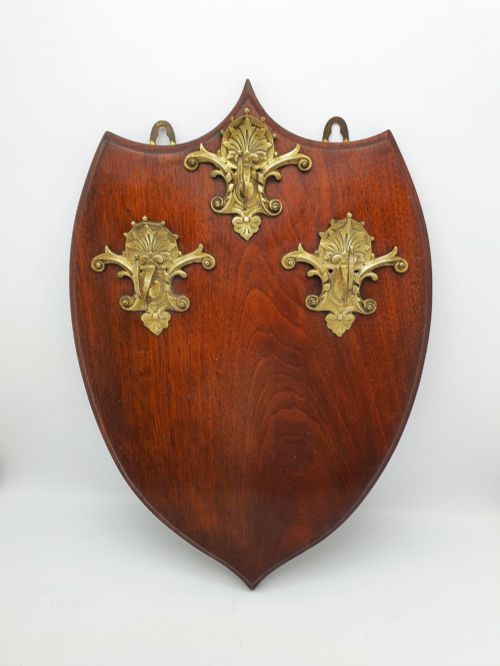
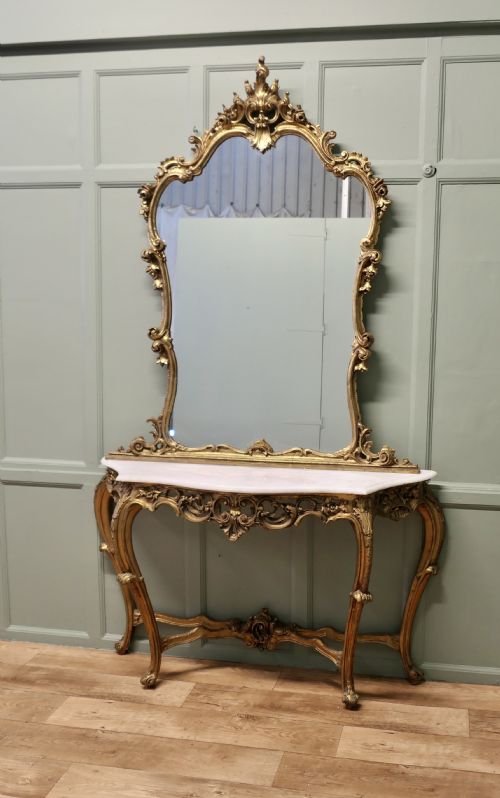



Ornate Hall Stand
An ornate hall stand greets visitors with intricate metalwork or carved timber, offering a practical place for coats, hats, and umbrellas as soon as you step inside.
Ornate Hall Stand
An ornate hall stand provides a dedicated station for outerwear and accessories upon entering a home. These pieces combine utility with decorative ambition, shaping the first impression of an interior space.
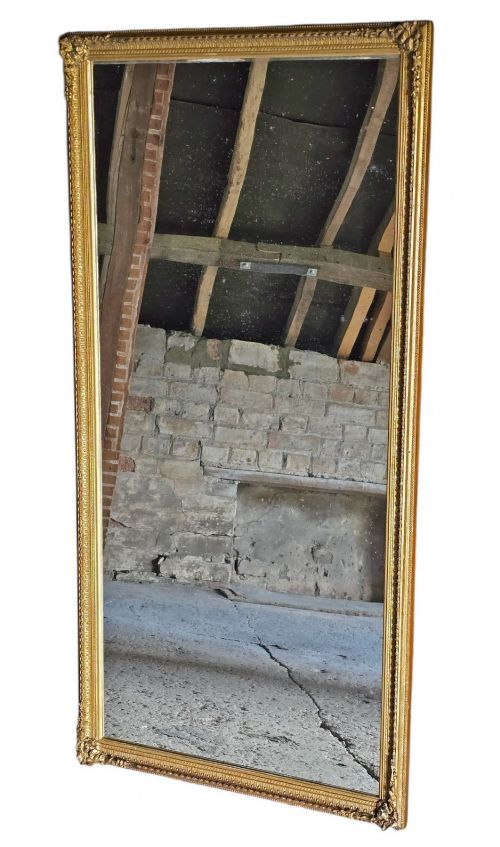
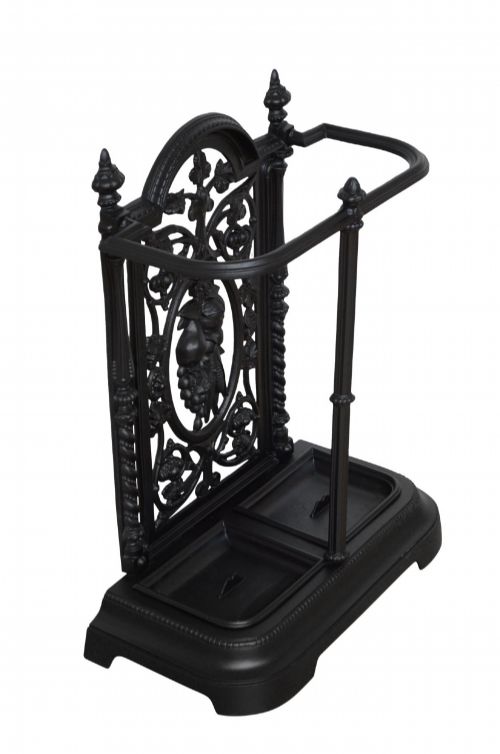
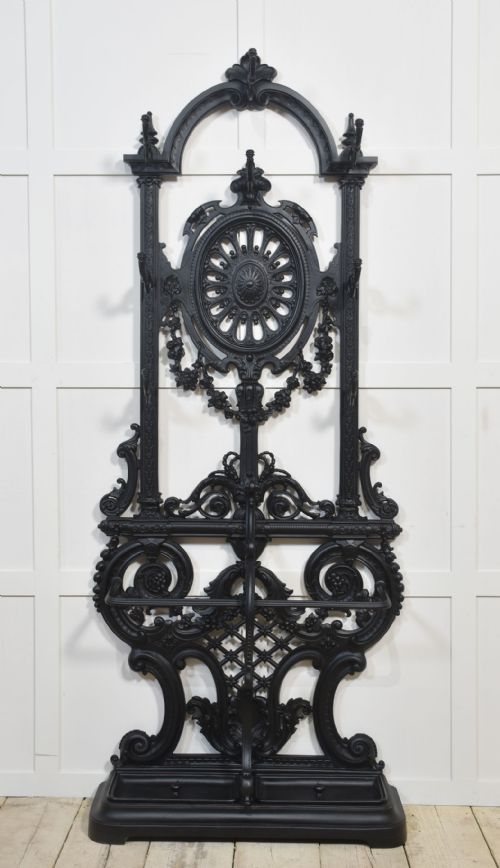
The selections here span the nineteenth and early twentieth centuries, encompassing the Victorian and Edwardian eras. Pieces range from cast iron stick stands to substantial carved oak frameworks and console mirror sets.
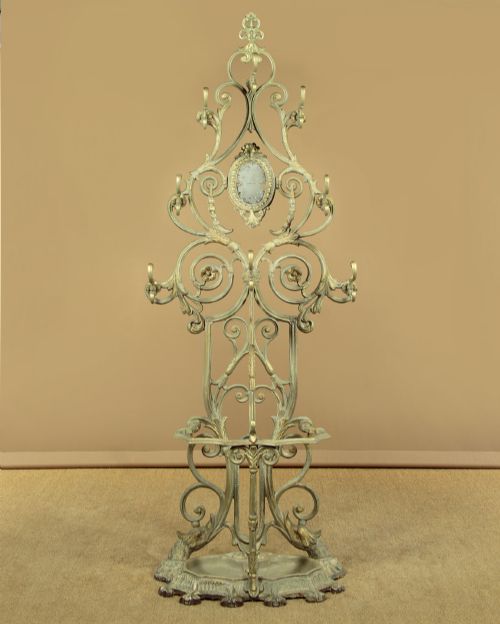
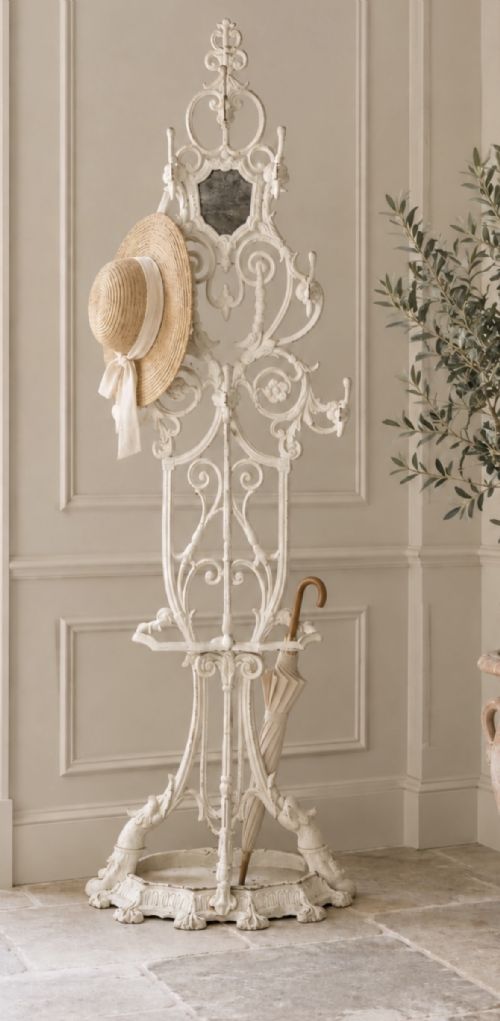
Forms vary from heavy umbrella and coat stands to wall plaques with brass hooks, alongside console tables paired with mirrors. French, English, and Italian influences emerge across Rococo Revival, Gothic, and Jacobean tastes.
How they were made
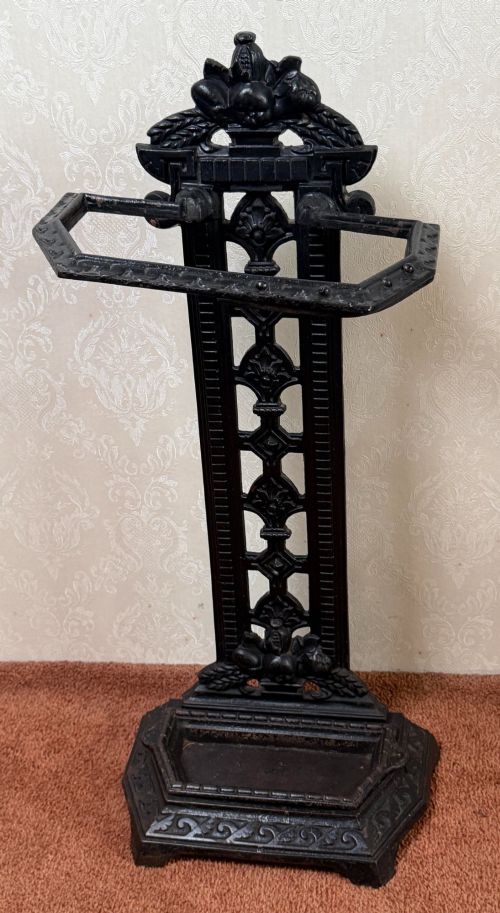
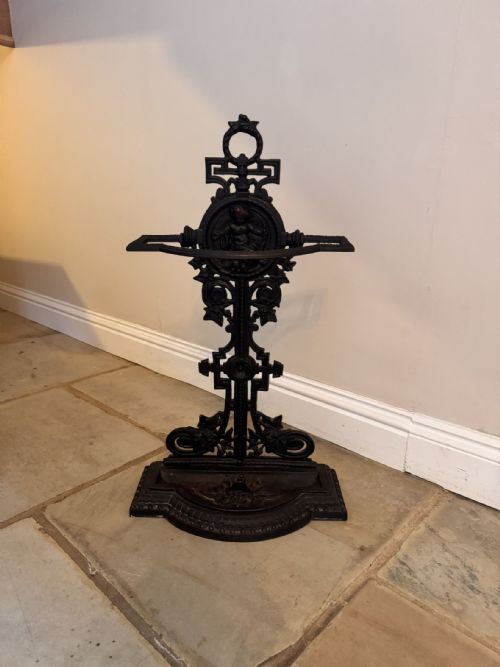
Makers utilised cast iron for durable stick and umbrella stands, often producing openwork patterns suited to damp weather. Wood such as mahogany and oak provided the structural body for larger hall furniture and carved mirrors.
Surface decoration involved gesso, gilding, silvering, and paint finishes. Marble tops appeared on console tables, while brass supplied hooks and umbrella loops for daily use.
The listings span from the 1870s through the Edwardian period, incorporating materials like marble, giltwood, and cast iron in various Revival styles.
What varies in quality
Quality shows in the depth and crispness of the carving or casting. Pieces produced in the manner of established foundries display sharper relief and more considered proportions than simpler iterations.
The choice of materials dictates the standard of the piece, from thick marble slabs to substantial cast iron frames. Intricate giltwood and carved wood elements demand skilled handwork, distinguishing finer workshop output from standard production.
The Ornate Hall Stand Glossary
- Cast iron
- A strong, heavy alloy poured into moulds to create intricate patterns. It formed the primary material for Victorian stick and umbrella stands.
- Giltwood
- Timber treated with gold leaf or a gold-coloured finish. This technique enhanced carved mirrors and console tables with reflective brilliance.
- Gesso
- A plaster-like mixture applied to wood surfaces as a base for gilding or painting. It allowed artisans to model raised ornamental details.
- Console table
- A table designed to be fixed against a wall, frequently accompanied by a matching mirror. These pieces anchored hallway schemes in grander interiors.
- Stick stand
- A compact piece designed specifically to hold walking canes and umbrellas. They feature integrated loops and drip trays to manage moisture.
Ornate Hall Stand: Frequently Asked Questions
Where should I place an ornate hall stand?
Position your hall stand in an entrance hall or porch where it can be seen immediately upon entry. Ensure there is adequate clearance around the piece for guests to reach coats and umbrellas without restriction.
Keep these items away from direct heat sources and damp external walls to protect timber frames, gilding, and ironwork from environmental damage over time.
How do I care for cast iron stands?
Dust cast iron surfaces regularly with a soft cloth to prevent grime accumulation in the recessed patterns. Inspect drip trays periodically and empty any collected water to avoid rust formation.
Apply a light, appropriate protective wax if the finish appears dry, but avoid harsh chemical cleaners that might strip original paint or blackened surfaces.
What is the difference between Victorian and Edwardian pieces?
Victorian stands tend to feature heavier, more ornate decoration, often embracing Gothic Revival or exuberant Rococo styles in dark woods and robust cast iron. These pieces emphasise dramatic presence and utility.
Edwardian examples often display lighter proportions and brighter finishes, drawing on simpler lines while maintaining decorative brass hooks and mirrors suited to more modest hallway spaces.
How do console table and mirror sets function?
A console table and mirror set creates a coordinated focal point in an entranceway. The table offers a surface for correspondence or keys, while the wall-mounted mirror reflects light to brighten darker hallways.
These combined sets originated in formal reception rooms and transition well into modern entrance spaces requiring both decorative impact and functional drop zones.