

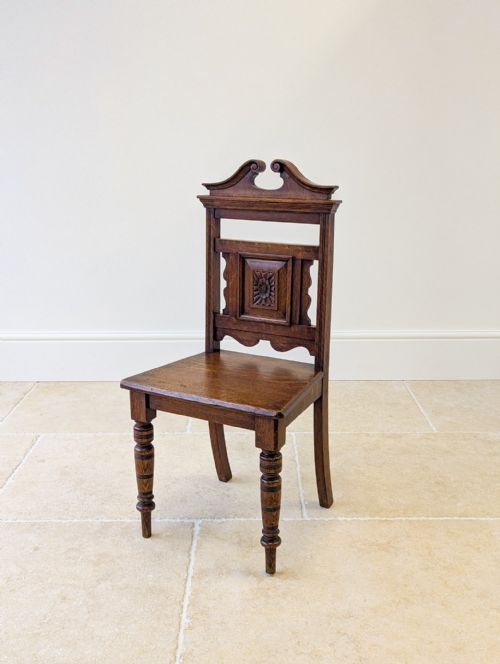
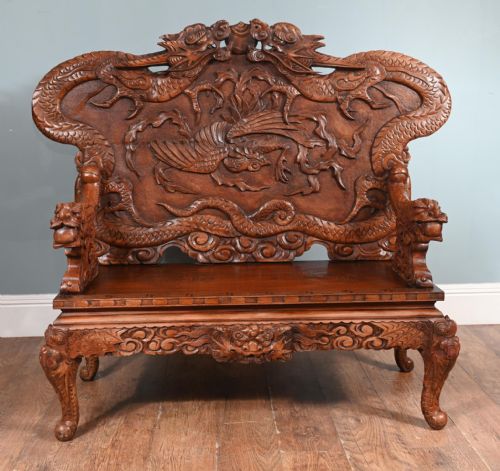


Ornate Hall Chair
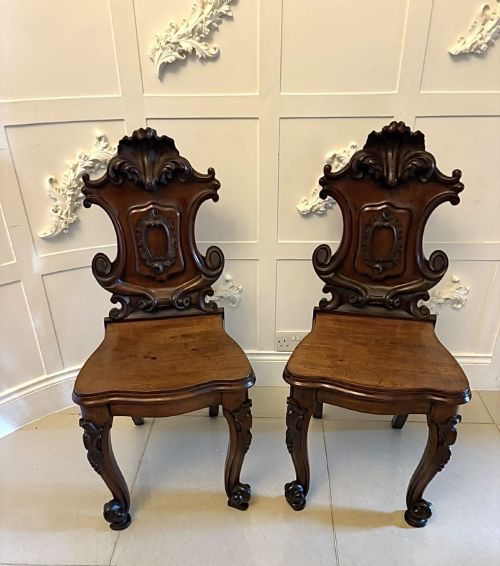
An ornate hall chair makes a striking focal point in an entrance, offering high-relief carving and presence.
Ornate Hall Chair
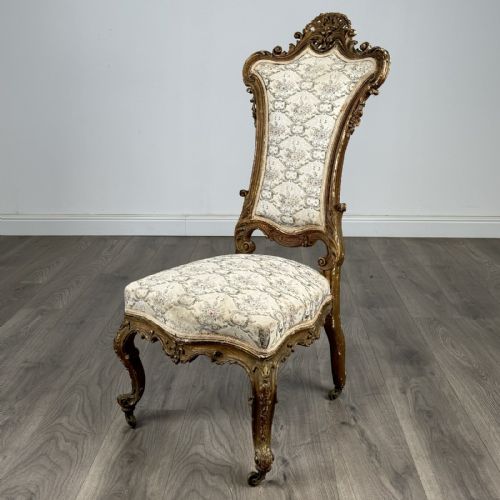
An ornate hall chair serves as a functional and decorative statement piece for an entryway or hallway. The pieces gathered under this phrase span the nineteenth century and the Victorian era, alongside earlier eighteenth-century examples.
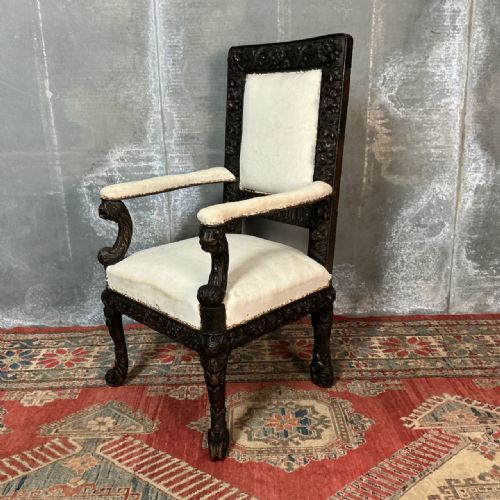
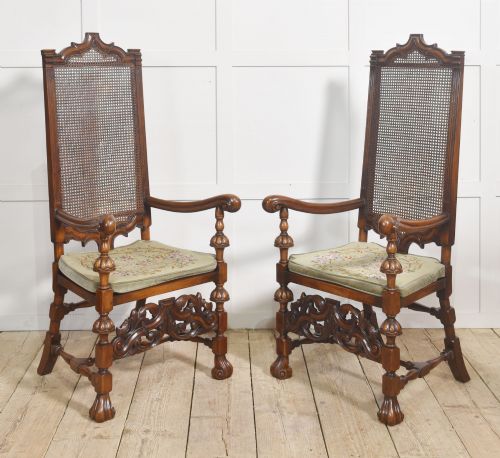
Forms range from upright side chairs to high-backed thrones and low sgabello seats. Walnut and oak dominate the construction, often paired with elaborate sculptural carvings.
Materials and Construction
Cabinetmakers utilised dense timbers such as oak, walnut, mahogany, and teak to support deep sculptural carving. These woods were turned, joined, and polished by hand to accentuate the natural grain beneath surface decoration.
Decorative detailing relies on specialised techniques including bone inlay, marquetry, and surface gilding. Upholstery, where present, incorporates velvet, leather, and woven textiles secured with brass tacks.
Ornate Hall Chair Retail Price Guide 2026
Typical asking prices for ornate hall chair among the pieces listed under this phrase on Sellingantiques today, from the lower quarter to the upper quarter. They describe what is for sale here now, not the wider market.
Evaluating Craftsmanship
Depth and clarity of the hand-carving dictate the distinction between standard production and master craftsmanship. Sharp undercuts and crisp relief details reveal a carver of superior skill.
The choice of timber and the integrity of the joinery determine structural longevity. Dense heartwoods and precise joints separate robust antique seating from decorative novelties.
The Ornate Hall Chair Glossary
- Marquetry
- The art of applying pieces of veneer to a structure to form decorative patterns. Craftsmen use contrasting woods to create pictorial designs.
- Giltwood
- Timber treated with gold leaf or gold paint to produce a brilliant metallic finish. This technique highlights carved ornament on formal seating.
- Revival
- A style of architecture and interior design that consciously mimics the forms of a past era. Nineteenth-century makers frequently turned to Baroque and Gothic precedents.
- Carolean
- A style of English furniture dating to the reign of Charles II, characterised by rich carving and cane panels. Later Victorian makers revived these bold motifs.
Ornate Hall Chair: Frequently Asked Questions
Where should I place an ornate hall chair?
These pieces suit entrance halls, landings, and wide corridors where their decorative backs can be admired. They function primarily as architectural statements rather than lounging seats.
Because original hall seating is relatively upright and firm, they work best where people sit briefly rather than for long periods.
Are these chairs comfortable for daily use?
Most antique hall chairs feature rigid wooden seats and straight, carved backs designed for posture rather than lounging. Upholstered variants provide a slightly softer sit.
Their primary historical purpose was aesthetic display and welcoming visitors in a grand entranceway.
What woods were used in these antiques?
Walnut and oak form the vast majority of European examples, prized for their strength and suitability for deep carving. Mahogany and exotic hardwoods appear in later or colonial pieces.
Surface treatments range from waxed natural grain to applied gilt and elaborate marquetry inlay.