


Ornate Gold Hall Table
An ornate gold hall table brings high drama to an entranceway, combining gilded carving and marble tops in the grand manner of the eighteenth and nineteenth centuries.
Ornate Gold Hall Table
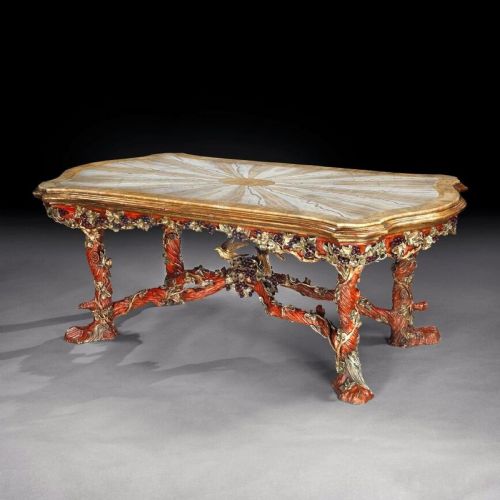
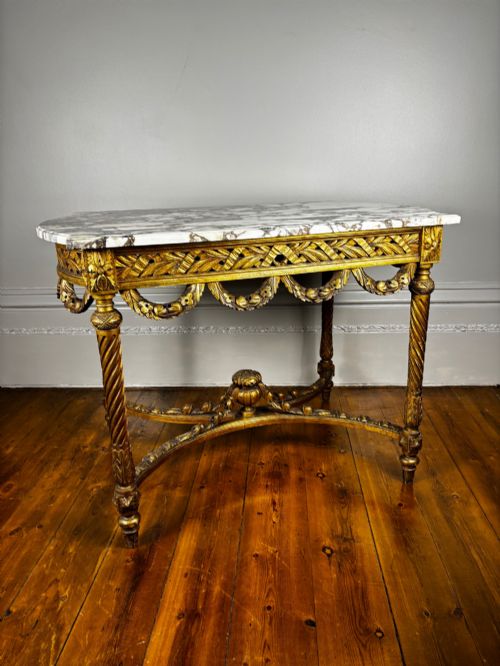
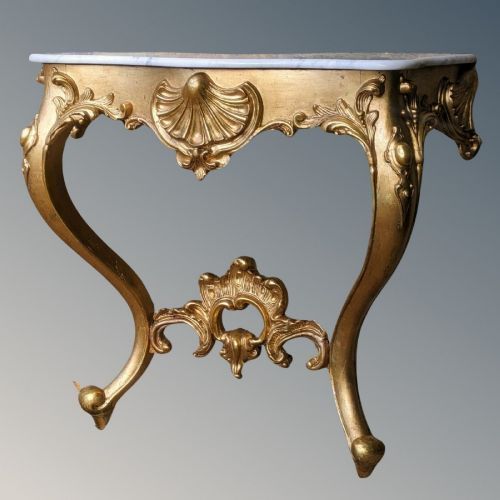
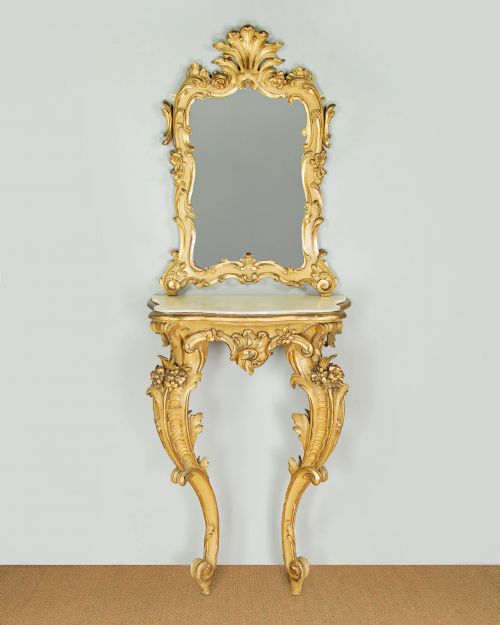
When you search for an ornate gold hall table, you encounter console tables, centre tables, and pier tables designed to sit flat against a wall or anchor the middle of a grand room. These pieces frequently appear paired with matching wall mirrors, creating a unified decorative scheme for an entrance hall or reception room.
The selections span from the 1700s through the nineteenth century and into the early twentieth century, drawing heavily on French Rococo, Louis XV, and Rococo Revival idioms. You will find forms ranging from compact side tables to monumental console tables topped with heavy slabs of marble or onyx.
Materials and construction
Giltwood, carved wood, and gesso form the structural base of these tables, applying gold leaf or liquid gilding over intricately sculpted timber. Artisans carved deep scrolls, foliage, and figural motifs such as putti, rams, and maiden heads into the wood before applying the golden finish.
Periods represented range from the eighteenth century through Victorian iterations and into early twentieth-century interpretations.
Assessing quality and execution
The selection and thickness of the marble or onyx top also dictate the stature of the piece. Heavier, finely veined stone slabs fitted precisely to the wooden rails indicate a higher grade of workshop production.
Amleto Bertoni
The Ornate Gold Hall Table Glossary
- Giltwood
- Timber coated with gold leaf or powder over a prepared gesso ground. This technique creates a luminous, warm metallic surface that patinas softly over centuries.
- Console table
- A table supported by wall brackets or front legs, designed to stand flat against a wall. They often feature shaped marble tops to handle heavy display objects.
- Pier table
- A low table designed to sit specifically against the wall space between two windows, frequently positioned beneath a tall matching mirror.
- Rococo Revival
- A nineteenth-century design movement that reinterpreted the curving asymmetry, C-scrolls, and shell motifs of the mid-eighteenth-century French court style.
- Putto
- A plump, winged child figure, frequently carved in wood and gilded, appearing among the decorative mounts or structural supports of nineteenth-century tables.
Ornate Gold Hall Table: Frequently Asked Questions
How do I style an ornate gold hall table?
Place the table against a clear wall in an entryway or hallway to let the gilded woodwork catch the light. Keep the surface styling restrained with a single lamp or a decorative bowl so the carved details remain the focal point.
If your table includes a matching wall mirror, hang it directly above at a height that reflects incoming light and opens up the entrance space.
How do I tell an 18th-century table from a 19th-century revival piece?
Eighteenth-century originals display hand-carved joinery, older gesso formulations, and natural wear patterns in the gold leaf that reveal the red or white bole beneath. Revival pieces from the Victorian era or early twentieth century often use machine-sawn timber elements and denser, more uniform gilding applications.
Examining the underside of the wooden frame and the cut of the marble slab helps clarify the period of manufacture.
What is the difference between a console table and a centre table?
Console tables feature a flat back designed to rest directly against a wall, sometimes anchored with iron fixings or brackets for extra support. They prioritise front decoration while the back remains unadorned. 柏 Centre tables are finished on all four sides because they stand independently in the middle of a room, allowing you to walk completely around them.