



Ornate Gold Chairs
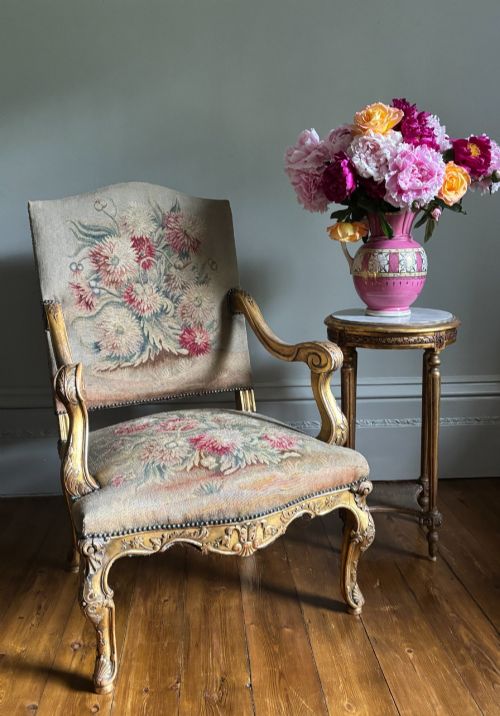
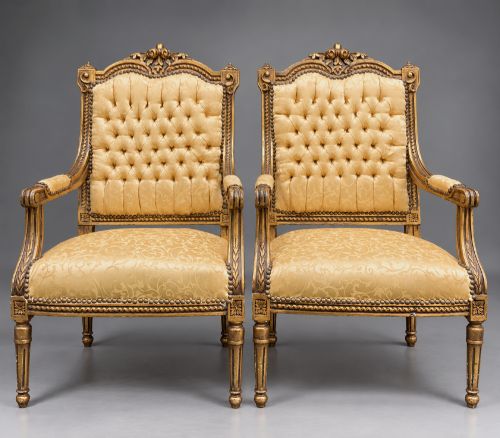
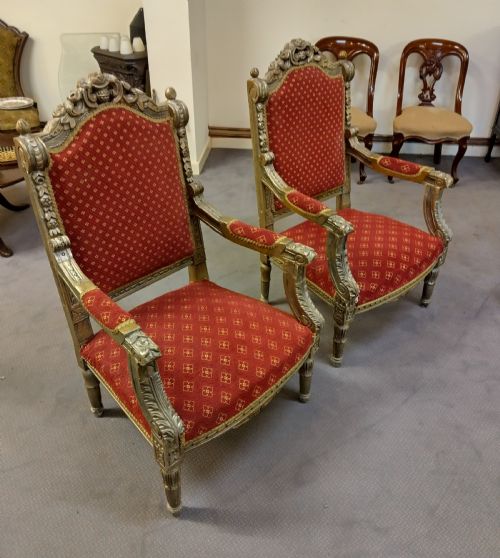
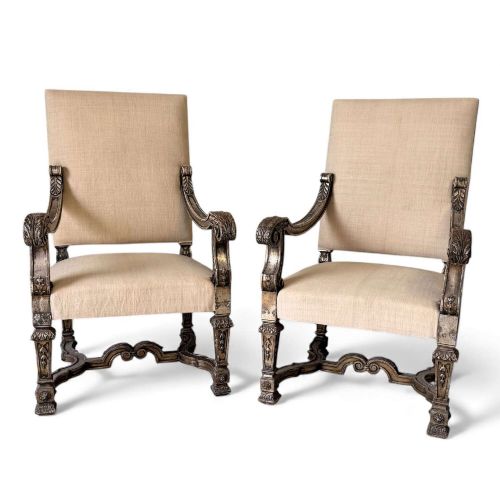
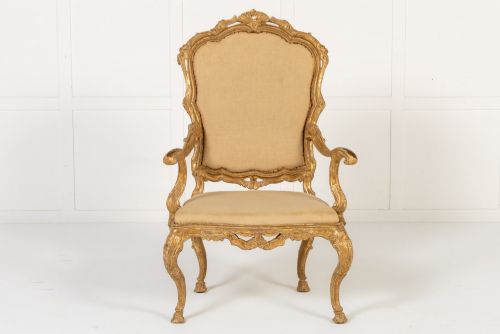
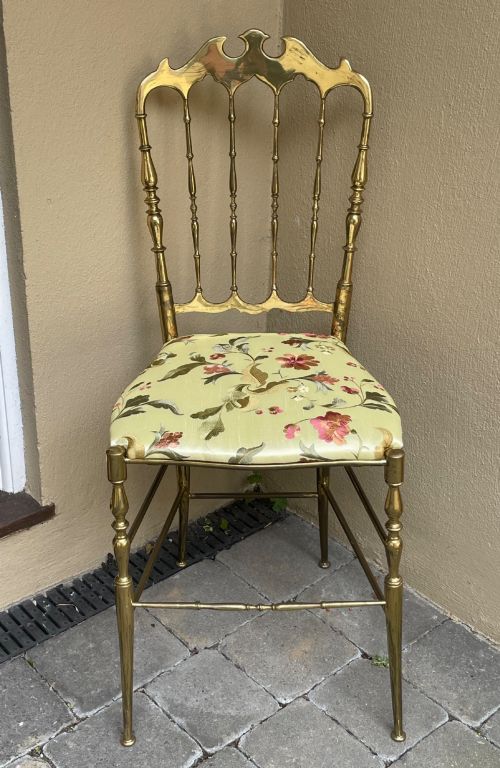
These ornate gold chairs bring immediate presence to a room, combining carved giltwood and polished brass with rich upholstery.
Ornate Gold Chairs
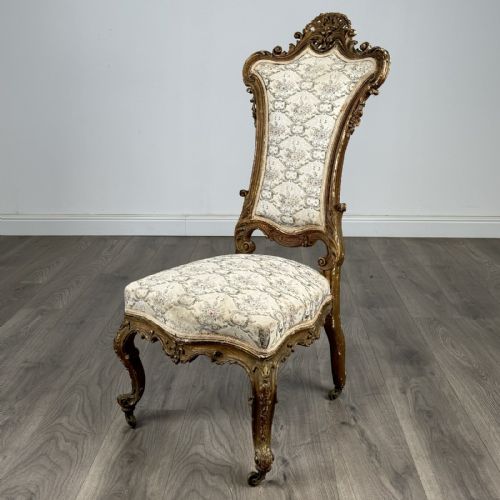
When you examine ornate gold chairs, you encounter seating built to command attention in formal reception spaces and parlours. The selection spans grand 18th-century Italian carved giltwood armchairs and Georgian gilt pieces to later 19th-century French salon chairs, throne armchairs, and side chairs.
The most common forms on this page are pairs of open armchairs, elbow chairs, and salon chairs featuring cabriole legs and detailed gilding. You will also find occasional brass side chairs and larger giltwood wingback or hall chairs from the Victorian and continental periods.
Makers and craftsmen drew on Baroque, Rococo, and Regency revivals, applying gold finishes to timber structures like walnut and oak. These seating options range from intimate tête-à-tête sofas to high-back side chairs upholstered in damask, velvet, linen, and silk.
Materials and construction
Craftsmen shaped these frames from solid timbers including oak, walnut, and general timber before applying a gilt finish, gold leaf, or polished brass. The structural integrity relies on traditional joinery to support heavy carving and daily use.
Upholstery completed the seating, utilising textiles such as damask fabric, velvet, linen, and silk often patterned with distinctive designs. Metal components like brass provided an alternative structural and aesthetic path for side chairs and salon seating.
Ornate Gold Chairs Retail Price Guide 2026
Typical asking prices for ornate gold chairs among the pieces listed under this phrase on Sellingantiques today, from the lower quarter to the upper quarter. They describe what is for sale here now, not the wider market.
One unexpected salon chair brings home a whimsical touch via an upholstery pattern featuring parrots.
The spectrum of quality
Quality rests upon the depth and precision of the hand-carved details across the giltwood frames. Pieces displaying crisp, deeply undercut foliage and scrollwork demonstrate superior craftsmanship compared to softer, shallower mouldings.
The integrity of the gilt finish and the weight of the underlying timber define the upper tier of these seats. Solid walnut or oak frameworks that retain their original gilding outlast lighter secondary woods finished with simpler metallic paints.
The Ornate Gold Chairs Glossary
- Giltwood
- Timber that has been coated with gold leaf or a gold-coloured finish. This surface treatment defines the primary visual appeal of many antique salon and throne chairs.
- Cabriole leg
- A furniture leg that curves outward and then tapers inward, typically ending in an ornamental foot. This form appears frequently on 19th-century French and continental seating.
- Tête-à-tête
- A small sofa or two-seat piece designed to allow two people to converse face-to-face. Examples from the Georgian period feature elaborate hand-carved frames.
- Damask fabric
- A reversible figured fabric woven on a jacquard loom, frequently used for upholstering period armchairs and salon seats.
- Open armchair
- An armchair without upholstered panels filling the space beneath the armrests. This style showcases the carved wooden framework of the sides.
Ornate Gold Chairs: Frequently Asked Questions
How do I identify a Baroque revival chair?
Baroque revival chairs display robust proportions, bold scrolling motifs, and heavy carving designed to project authority and drama. They often feature high backs and substantial giltwood frames.
Look for dense ornamentation such as acanthus leaves and cherubs carved into solid timber foundations. These elements distinguish the style from lighter Rococo or neoclassical designs.
Where should I place a gilt salon chair?
Gilt salon chairs suit formal reception spaces, drawing rooms, or bedrooms where their reflective finish catches ambient light. They function well as occasional seating rather than heavy everyday loungers.
Position them away from direct sunlight to protect delicate silk or velvet upholstery and the underlying gold leaf. A corner or flanking a small table highlights their decorative carving.
What is the difference between brass and giltwood chairs?
Brass chairs utilise polished metal tubing or solid brass frames to create a bright, reflective industrial or Regency aesthetic. They offer a rigid structure without wooden joinery.
Giltwood chairs rely on a carved timber core covered in gold leaf or finish. This traditional method allows for intricate sculptural details that metal casting cannot replicate.
How do I care for antique upholstered gold chairs?
Preserve the upholstery by vacuuming delicate fabrics like silk, damask, or velvet with a low-suction brush attachment. Avoid harsh chemical cleaners that damage textile fibres.
Dust the carved giltwood frames gently with a dry, soft cloth to protect the gold finish. Maintaining stable indoor humidity prevents the underlying timber from shifting and cracking the gilt.