


Ornate Gilt Hall Mirror
An ornate gilt hall mirror brings a flash of period light and carved detail to a narrow space.
Ornate Gilt Hall Mirror
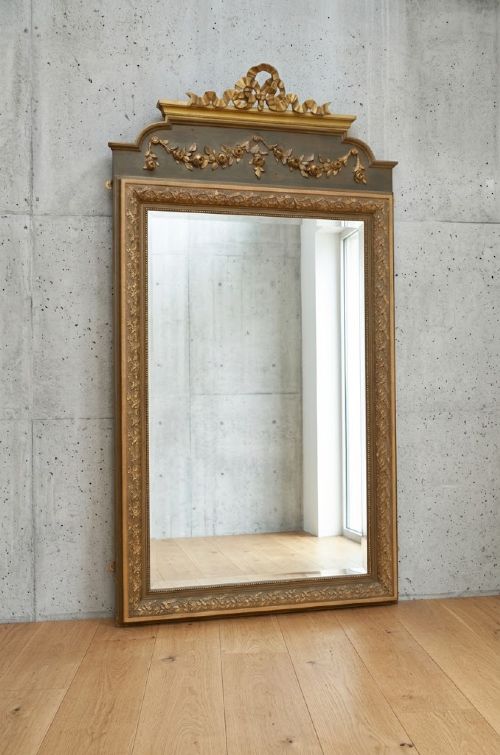
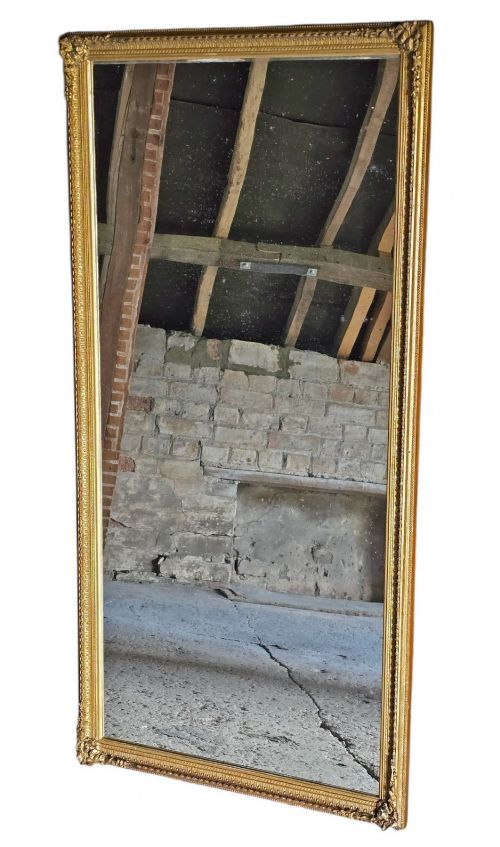
When you search for an ornate gilt hall mirror, you find large wall-mounted glasses and pier glasses designed to bounce daylight down entrance passages and reception rooms. These pieces date primarily from the nineteenth century through the early twentieth century, spanning styles from Victorian and Edwardian to Neoclassical and Rococo Revival.
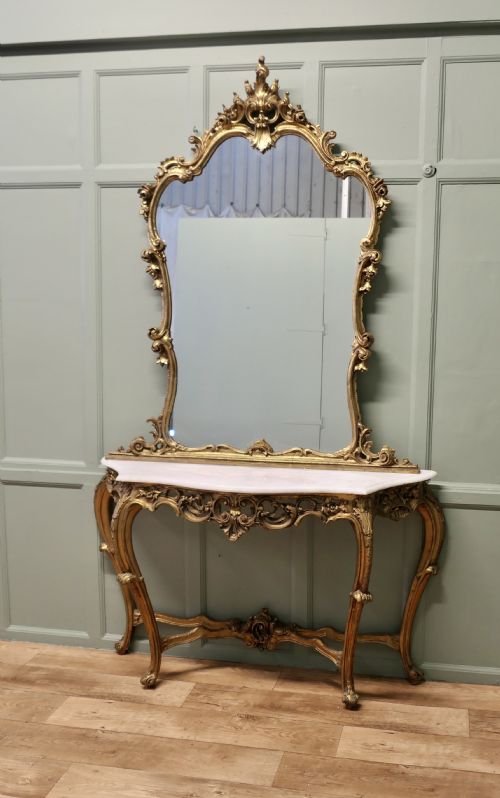
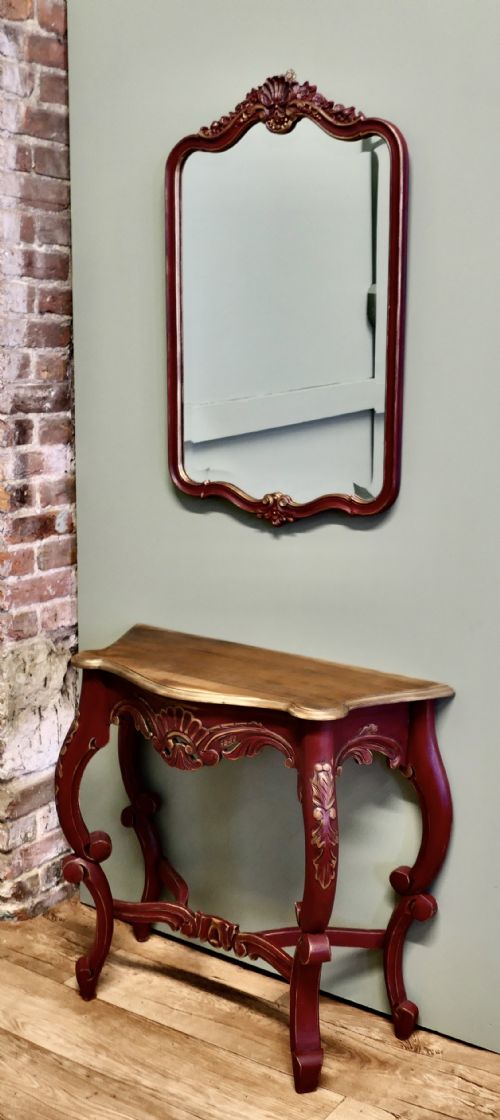
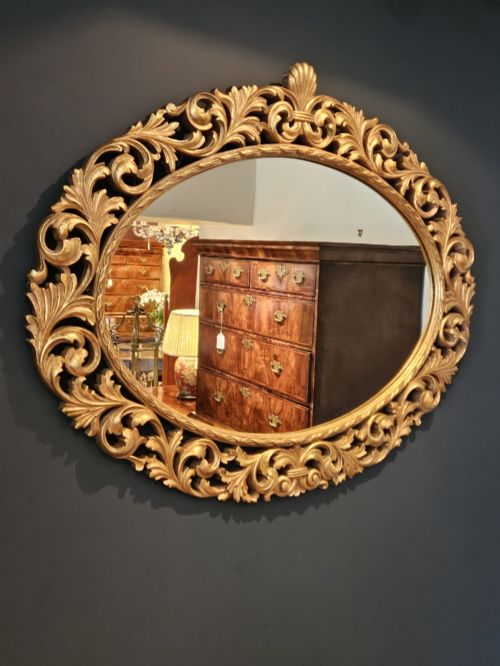
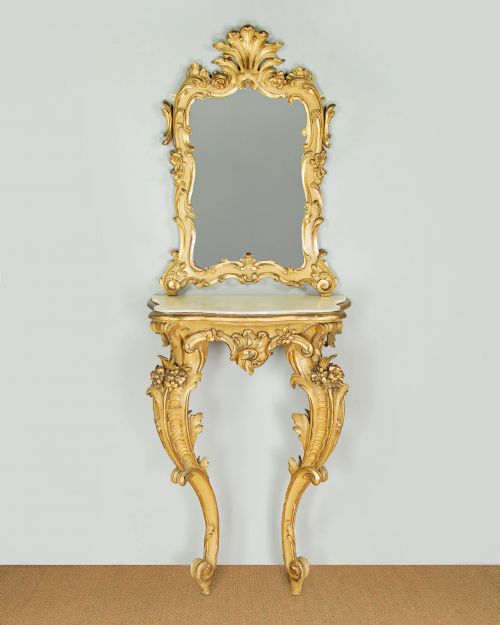
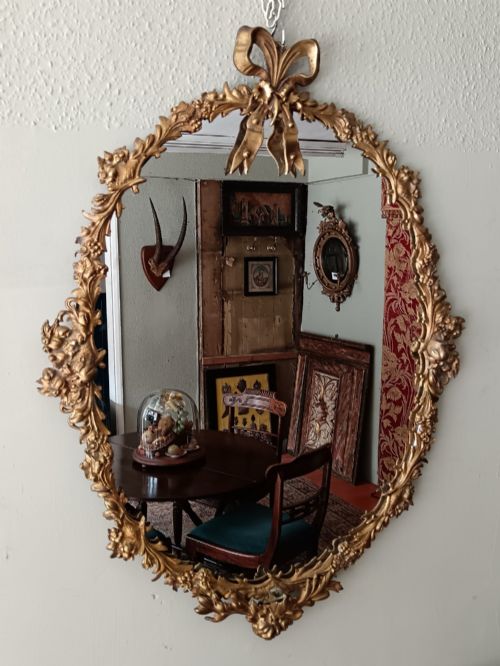
You are most likely to meet rectangular wall mirrors and tall oval pier glasses framed in carved timber or gesso. Many examples survive as part of matched sets alongside marble-topped console tables.
The regional origins on this page stretch across English, French, and Italian workshops. Each maker adapted classical vocabulary to suit domestic interiors of the Victorian and Belle Époque eras.
How they were made
Carvers shaped solid timber frames from wood and oak before applying layers of gesso to build up high-relief scrolls, ribbon crests, and acanthus leaves. Artisans then gilded these surfaces using gold leaf or silver-gilt foil.
Moulded composition ornament appears alongside hand-carved wood on later nineteenth-century pieces. Heavy glass plates, sometimes bevelled or showing original foxing, sit securely within the rebated wooden framework.
French and Italian design influences appear frequently alongside English cabinet work in the regional styles.
What varies in quality
The depth and crispness of the carving separate standard production pieces from exceptional ones. Hand-carved wooden ornament holds sharper undercut details than moulded composition pressed into shape.
Original mercury or silvered mirror plates retain a softer, mottled reflection compared to modern replacements. The integrity of the original gilding, whether bright gold leaf or muted silver-gilt, dictates the visual weight of the frame.
Nosetti
The Ornate Gilt Hall Mirror Glossary
- Giltwood
- Timber coated with gold leaf or metal leaf. This forms the primary reflective framing material for classical mirrors.
- Gesso
- A plaster-like mixture applied to wood frames and carved before gilding. It allows for intricate relief ornamentation.
- Pier glass
- A tall, narrow mirror designed to hang on the wall space between two windows. These pieces maximise interior light.
- Overmantel mirror
- A wide glass designed to sit directly above a fireplace mantelpiece. They often share decorative motifs with hall mirrors.
- Rococo Revival
- A nineteenth-century design style marked by asymmetric scrolls, C-scrolls, and naturalistic plant motifs. It heavily influenced mirror frames.
Ornate Gilt Hall Mirror: Frequently Asked Questions
Where should I hang a hall mirror?
Mount your glass opposite an entrance or side window to catch and multiply natural light in a dark hallway.
Ensure the wall fixings match the substantial weight of carved timber and gesso frames.
How do I date an ornate gilt mirror?
Examine the timber species at the back of the frame, the application of gesso, and the style of the crest.
Victorian and Edwardian pieces often display distinct revival motifs such as French Rococo or Neoclassical swags.
Are console tables attached to the mirrors?
Some surviving examples form a matched set where the marble-topped console table sits directly beneath the wall-mounted glass.
Other items appear as standalone wall mirrors or separate tables originating from the same period.
What is the difference between gesso and carved wood?
Carved wood involves shaping the solid timber frame by hand with chisels and gouges to create deep relief.
Gesso provides a smooth plaster ground for gilding and can be moulded into repetitive decorative elements.