




Ornate Gilt Bronze Clock
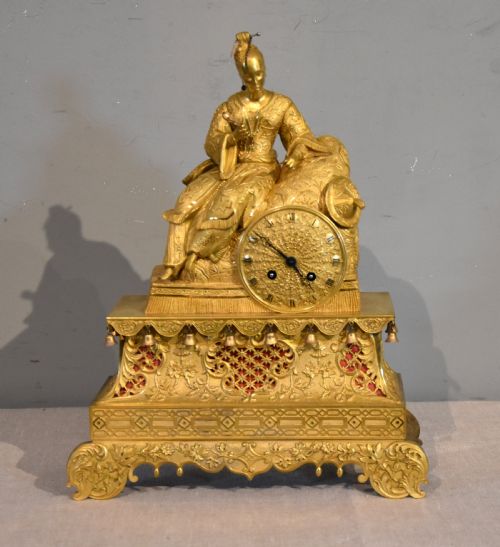
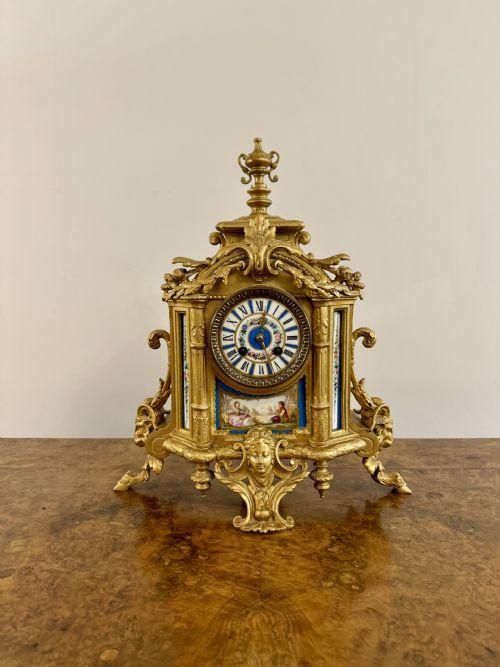
An ornate gilt bronze clock brings heavy nineteenth-century metalwork, porcelain panels, and visible movement into a room.

Ornate Gilt Bronze Clock
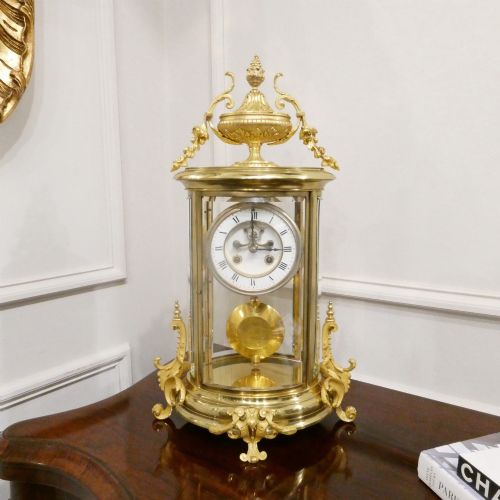
When you search for an ornate gilt bronze clock, you encounter heavy nineteenth-century timepieces shaped by French and English makers during the Victorian period. These pieces span mantel clocks, four glass designs, portico timepieces, and clock garnitures paired with side pieces.
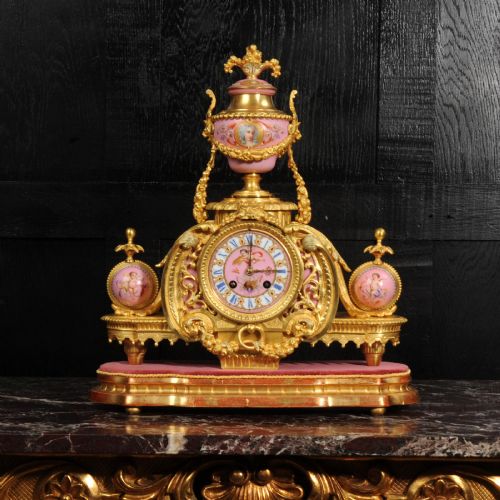
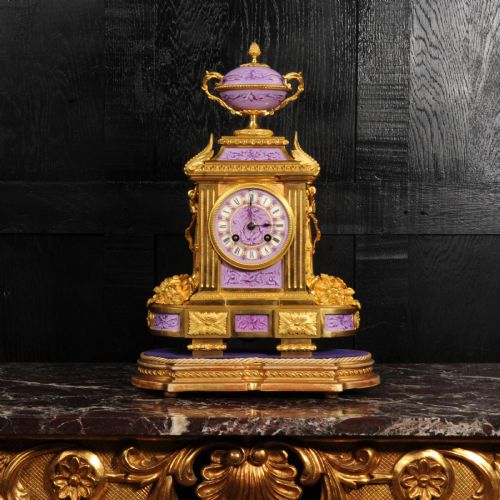
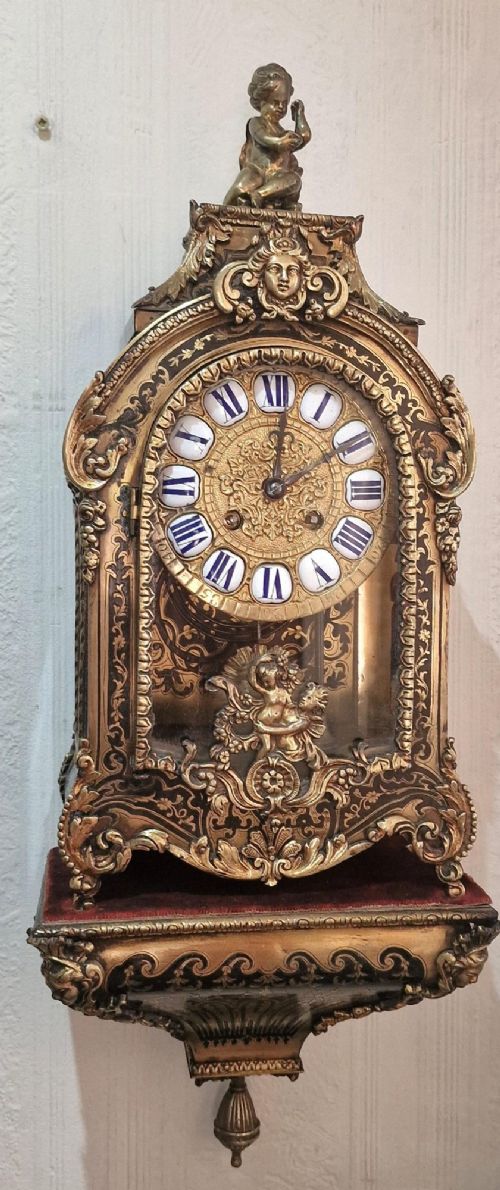
The dominant styles on this page follow French Rococo, Louis XVI, and Napoleon III revivals, alongside Boulle tortoise shell work and Champleve enamel details. You will frequently find mantel clocks combining gilt bronze or ormolu with Sèvres porcelain panels and marble bases.
Most items originate from the nineteenth century, specifically dated across the eighteen-fifties, sixties, seventies, eighties, and nineties. Makers such as Samuel Marti, Achille Brocot, and Japy Freres appear across the listings, alongside English works from London.
How they were made
Foundry workers cast bronze and brass into intricate Rococo and Louis-style frames before applying mercury gilding or modern electroplating to create the signature ormolu surface. Dial faces incorporated painted porcelain plates and enamel cartouches with Roman or Arabic numerals.
Clockmakers fitted mechanical eight-day striking movements, twin fusee systems, and pendulum escapements inside the metal housings. Cases integrated supplementary materials including red marble, glass panels for visible gears, and tortoiseshell veneer laid over brass in Boulle techniques.
The listings span the Victorian era, recording mantel clocks, wall clocks, and longcase clocks formed from ormolu, marble, porcelain, and glass.
What varies in quality
The crispness of the bronze casting defines the upper tier of these timepieces, where deep chasing brings out foliage and figures rather than smooth, soft edges. Heavy mercury gilding holds its warm lustre far longer than thin electroplated finishes.
Clock movements signed by established makers such as Samuel Marti or Achille Brocot separate standard pieces from superior examples. Intricate pairings with intact Sèvres porcelain and matching garniture sets elevate the construction complexity.
Achille Brocot·Samuel Marti·Japy Freres·William Payne
The Ornate Gilt Bronze Clock Glossary
- Ormolu
- Gilded bronze produced by applying a mercury and gold amalgam to cast metal and heating it off. This technique creates a durable, warm metallic golden surface characteristic of French mantel clocks.
- Garniture
- A set consisting of a central clock flanked by matching decorative objects such as urns or candelabra. These sets were designed to sit together on a mantelpiece.
- Twin Fusee
- A mechanical drive system using conical pulleys and chains to equalise the force of the mainspring as it unwinds. This mechanism improves timekeeping accuracy across the duration of the wind.
- Champleve
- An enamelling technique where troughs or cells are hollowed out of the metal surface and filled with vitreous enamel before firing. It creates vibrant coloured patterns across bronze clock faces and cases.
- Portico timepiece
- A clock housed within a architectural frame supported by four or more columns. They often feature a suspended pendulum swinging visibly between the upright supports.
Ornate Gilt Bronze Clock: Frequently Asked Questions
How do I wind an antique clock?
Use the key provided to turn the winding squares on the dial face gently until resistance is felt. Avoid over-winding, as this can snap the internal springs.
Ensure you do not force the hands backward past the hour, and let the pendulum settle into an even beat after moving the clock.
How do I date a French mantel clock?
Check the backplate of the movement for maker stamps, serial numbers, and exhibition medals awarded during the nineteenth century. Style indicators like Rococo asymmetry or Louis XVI symmetry also point to specific decades.
Dates stamped by makers such as Japy Freres or Samuel Marti align with active production periods recorded across Victorian manufacturing.
Where should I place a heavy marble clock?
Position the clock on a sturdy, level surface capable of supporting considerable weight, such as a stone mantelpiece or a heavy wooden sideboard. Uneven placement causes the pendulum to beat unevenly and stops the movement.
Keep the piece away from direct sunlight and drafts to protect porcelain panels and gilt surfaces.