


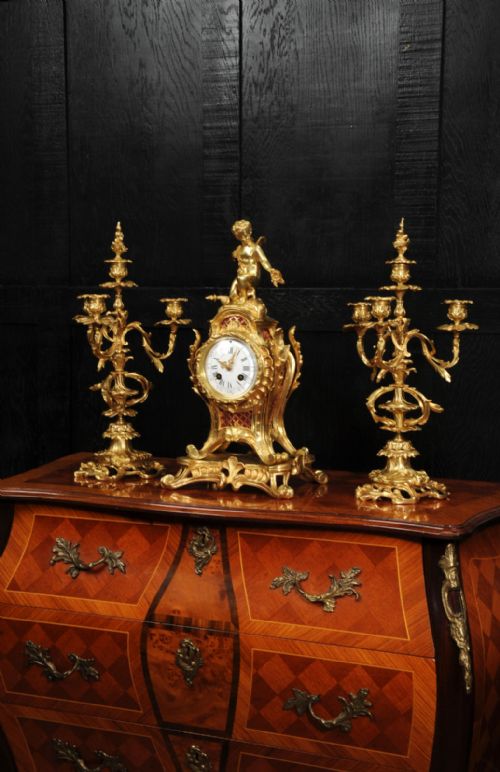


Ornate French Mantel Candelabras
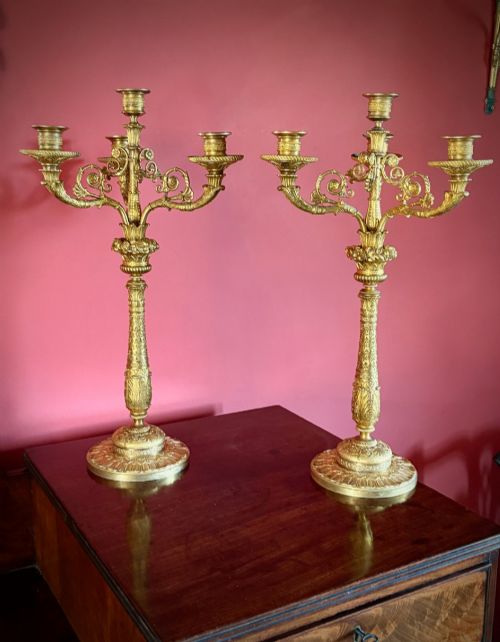
Ornate French mantel candelabras bring nineteenth-century gilt bronze and marble into a room with heavy classical weight and polished metal.
Ornate French Mantel Candelabras
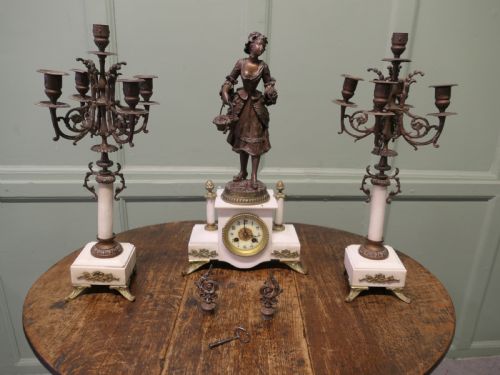
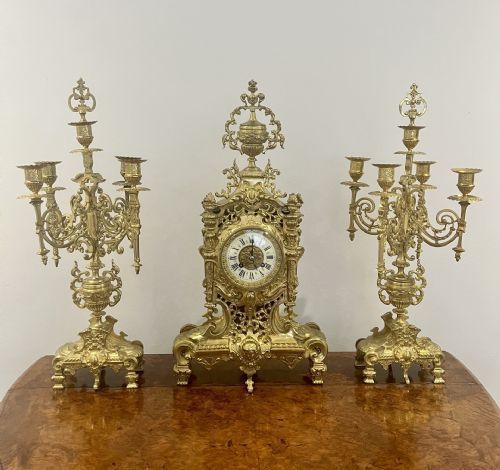
When you search for ornate french mantel candelabras, you look at nineteenth-century lighting and garniture sets shaped in revival styles like Louis XVI and French Rococo. These pieces frequently appear alongside matching mantel clocks in complete clock garniture sets, or as standalone pairs of multi-arm candle holders.
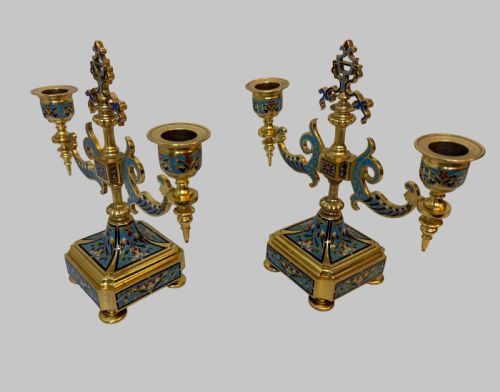
The materials recorded in the evidence point to heavy use of gilt bronze, ormolu, marble, and brass, often paired with champleve, enamel, or cloisonne details. Makers and foundries of the period utilised patinated bronze and steel alongside porphyry and green onyx bases to anchor the heavy metalwork.
Most examples date across the nineteenth century, spanning the eighteen-sixties through the Edwardian period, incorporating classical motifs such as cherubs and cupids. They stand on fireplace mantels, table mirrors, and sideboards, functioning both as functional illumination and decorative centrepieces.
Quality factors in metal and stone
The depth and crispness of the hand-chasing separate standard production metalwork from superior work, where every acanthus leaf and facial feature remains sharp and distinct. Finer examples retain the original mercurial gold or fire gilding, showing a deep, warm lustre rather than a flat, modern brassy finish.
The selection and weight of the mounting materials dictate the piece's stability and status, with solid marbles, porphyry, and green onyx offering superior heft compared to lighter substitutes. The structural integrity of the arm joints and the precision with which multiple candle nozzles align determine the overall standard of the casting.
Several pieces feature small bronze cupids keeping watch over the candles, ensuring your mantelpiece comes equipped with its own mythological security detail.
Thiebaut Freres
The Ornate French Mantel Candelabras Glossary
- Ormolu
- A gilded bronze technique utilising finely ground gold mercury amalgam applied to cast brass or bronze. This process produces a rich, durable golden surface finish characteristic of nineteenth-century decorative objects.
- Garniture
- A set of matching ornamental objects designed to be displayed together on a mantelpiece. These typically consist of a central clock flanked by two matching candelabras or urns.
- Champleve
- An enamelling technique where troughs or cells are hollowed out of a metal surface and filled with vitreous enamel paste. The piece is then fired to fuse the glass-like substance into the metal design.
- Cloisonne
- A decorative work in which enamel, glass, or gemstones are separated by thin strips of flattened wire placed edgewise on a metal backing. The resulting grid holds the coloured sections in place before firing.
- Porphyry
- An extremely hard igneous rock with large crystals embedded in a fine-grained groundmass, typically deep purple or red in colour. It provides a dense, durable base for high-status nineteenth-century bronzes.
- Rococo Revival
- A nineteenth-century design style drawing on eighteenth-century French asymmetry, C-scrolls, and naturalistic shell motifs. This aesthetic prioritises flowing, organic movement over rigid classical symmetry.
Ornate French Mantel Candelabras: Frequently Asked Questions
What is a clock garniture?
A clock garniture is a matched set designed for display together, usually featuring a central mantel clock accompanied by two matching candelabras or decorative urns.
These sets were produced in nineteenth-century France to create a balanced, symmetrical arrangement across a fireplace mantel or large sideboard.
How do I clean ormolu and gilt bronze?
Ormolu requires gentle dusting with a soft, dry brush to prevent the accumulation of dirt in the chased recesses of the metalwork.
Water, abrasive polishes, and chemical cleaners must be avoided entirely, as they strip away the historic gold gilding and expose the base brass.
What is the difference between ormolu and brass?
Ormolu is a historic gilding technique involving a gold amalgam applied to a bronze or brass base, resulting in a deep, warm metallic lustre.
Solid brass is a copper and zinc alloy that lacks this applied surface layer and tends to develop a brighter, yellower tone as it ages.
Can these candelabras hold real candles?
Most antique candelabras are structurally capable of holding standard taper candles in their sockets.
Care should be taken to catch dripping wax immediately to protect the antique bronze, marble, and gilt surfaces from staining.
How do I identify the Louis XVI style?
The Louis XVI style relies on strict classical symmetry, straight architectural lines, fluted columns, and motifs derived from ancient Greece and Rome.
This aesthetic stands in direct contrast to the curved asymmetry of the earlier Rococo Revival period.