



French Neoclassical Candelabra Pair
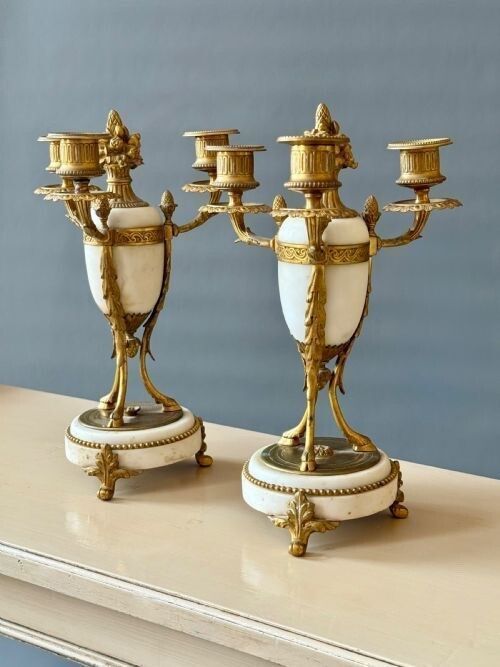
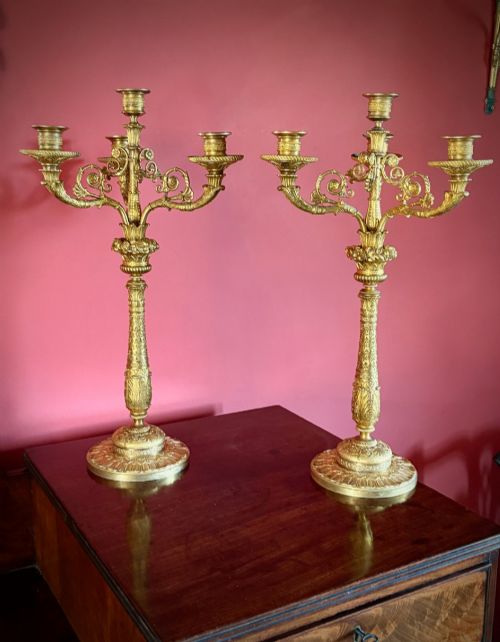
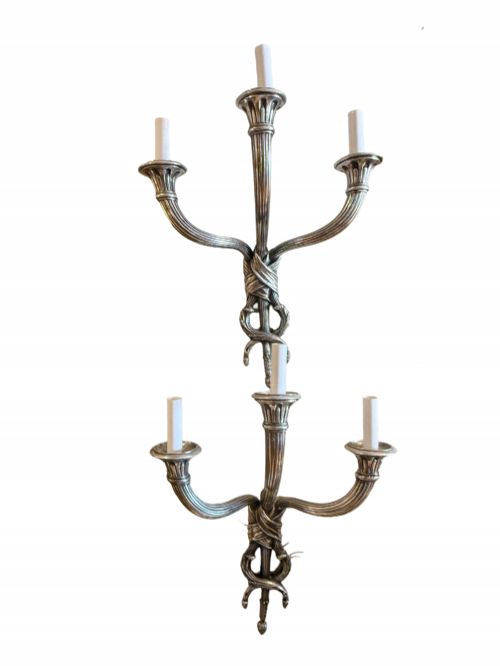
These French neoclassical candelabra pair selections bring symmetry and classical proportion to a mantelpiece, cast in bronze, brass, and marble.
French Neoclassical Candelabra Pair
A french neoclassical candelabra pair consists of matched multi-armed light holders designed in classical architectural styles, frequently appearing alongside clock garnitures or as standalone mantel ornaments. Buyers examining this page encounter pieces originating primarily across the nineteenth century, including Regency, Louis XVI, and French Empire periods, alongside later revivals from eighteen-eighty to nineteen-thirty.
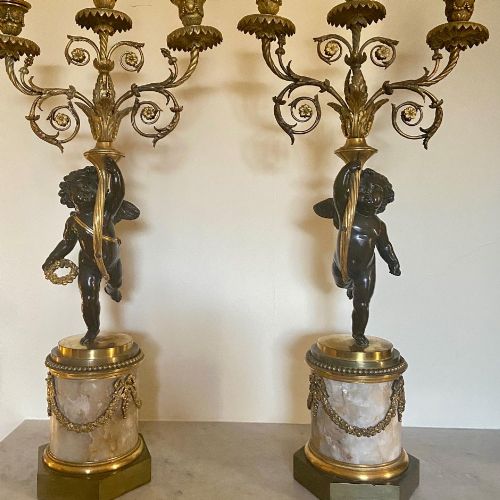
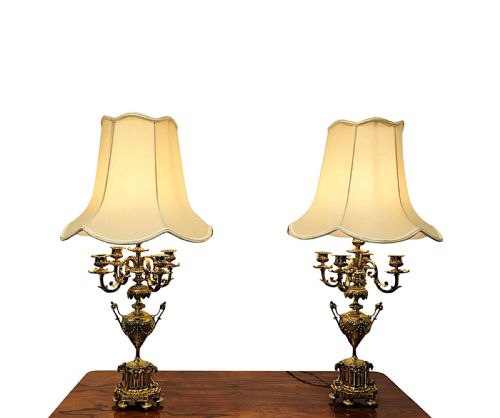
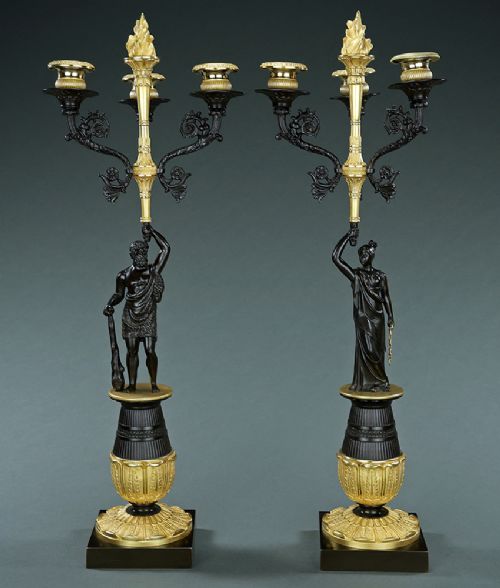
The dominant forms include figural and multi-branch candelabra alongside wall sconces and occasional conversions to table lamps, often featuring putti, cherubs, or mythological subjects like Hercules and Hesione. Most examples display balanced arm counts ranging from two to four branches, constructed to anchor a formal interior scheme with classical dignity.
Materials and construction methods
Foundries utilised cast bronze, patinated metal, and heavy brass as structural bases, frequently combining gilt bronze or ormolu with contrasting patinated surfaces to accentuate sculptural detail. Marble and slate pedestals provide dense, stable plinths for figural groupings, while specialised components incorporate enamel, fluorspar, and silver plating.
The assembly relies on precision casting followed by chasing, gilding, and patination, with individual arms threaded or pinned securely to central shafts. Master workshops applied mercury gilding or fire-gilding on early nineteenth-century pieces, creating a durable golden sheen that contrasts against dark patinated bronze figures.
Listings feature pieces spanning the eighteenth century through nineteen-thirty, with nineteenth-century productions dominating the available inventory.
Distinctions in craftsmanship and design
Quality rests upon the crispness of the bronze chasing and the harmony of the proportions, where sharper anatomical detailing in figures and cleaner acanthus leaf casting separate superior items from standard production. Maker attribution significantly elevates a piece, particularly works signed by established nineteenth-century founders or designed after celebrated sculptors.
The selection of base materials dictates refinement, with dense natural marble and heavy fire-gilded ormolu outperforming lighter spelter alloys and simpler brass castings. Preservation of original mercury finishes and complete, matching multi-arm configurations maintain the historical integrity expected by collectors.
Francois Redmond·Rabiat·Claude Clodion·Thomas Hope
The French Neoclassical Candelabra Pair Glossary
- Ormolu
- Gilded bronze produced by applying a mercury and gold amalgam to a bronze base and heating it until the mercury vaporised. This technique yields a rich, golden surface finish characteristic of high-status French lighting.
- Patinated bronze
- Bronze treated with chemical solutions to produce a controlled dark or antique surface coloration. It provides a visual counterpoint to bright gilt bronze elements in classical figural groups.
- Clock garniture
- A matching decorative set comprising a mantel clock flanked by two matching candelabras or urns. These ensembles dominated formal nineteenth-century interior arrangements.
- Putto
- A representation of a plump, winged infant figure frequently incorporated into neoclassical candelabra shafts and bases. Pluralised as putti, they often support the branching candle arms.
- Chasing
- The manual finishing of a cast metal object using small punches and hammers to sharpen surface details and textures. Fine chasing distinguishes high-grade foundry work from mass-produced items.
French Neoclassical Candelabra Pair: Frequently Asked Questions
How do I clean antique ormolu and bronze candelabra?
Dust surfaces gently with a soft, dry brush to prevent accumulation in crevices and chased details. Avoid harsh chemical cleaners or abrasive metal polishes that strip original patination and gilding.
For stubborn grime, use a slightly damp cloth with mild soap, followed immediately by thorough drying. Preservation of the historic surface finish remains vital for maintaining the character of nineteenth-century metalwork.
Were these candelabra originally wired for electricity?
Nineteenth-century lighting fixtures were built exclusively for wax candles or oil combustion before the widespread adoption of domestic electricity. Many surviving examples underwent conversion to table lamps during the twentieth century to accommodate modern domestic use.
Buyers find both unconverted candle-holding formats and electrified adaptations across this inventory. Assessing the wiring method reveals whether alterations respect the original structure of the metal arms.
What is a clock garniture set?
A clock garniture pairs a central mantel clock with two matching decorative side pieces, typically candelabras or urns. These matched suites were manufactured together to create a unified display across a fireplace mantel.
Such ensembles represent high-status interior decoration from the nineteenth century. Finding an intact pairing of candelabras with their original companion clock completes the intended decorative arrangement.
How do I distinguish French Empire from Louis XVI style?
Louis XVI pieces display lighter, straight-line neoclassical proportions influenced by Greco-Roman architecture, featuring delicate floral swags, ribbons, and restrained urn motifs. French Empire designs, emerging under Napoleon, introduce heavier, more martial imagery with solemn patinated figures, sphinxes, and bold ormolu mounts.
Comparing the base forms and figural subjects clarifies the specific neoclassical sub-period. Understanding these stylistic shifts helps date mixed nineteenth-century inventories accurately.