



Ornate French Hall Table
An ornate french hall table brings sculptural giltwood and marble into an entranceway, offering a dramatic surface for display.
Ornate French Hall Table
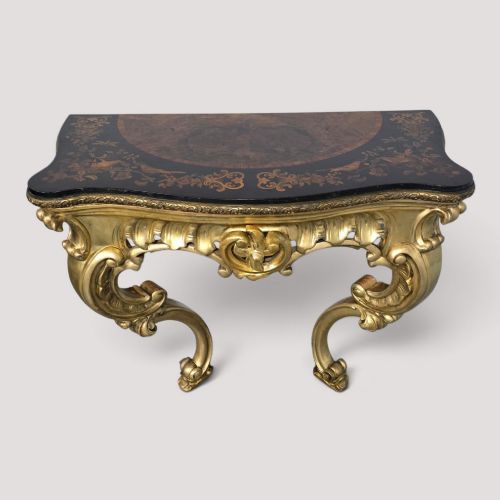
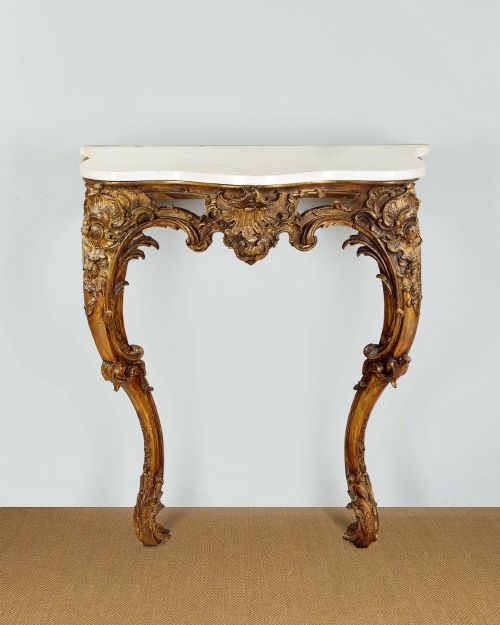
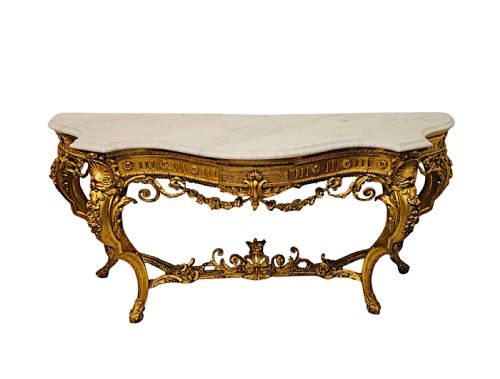
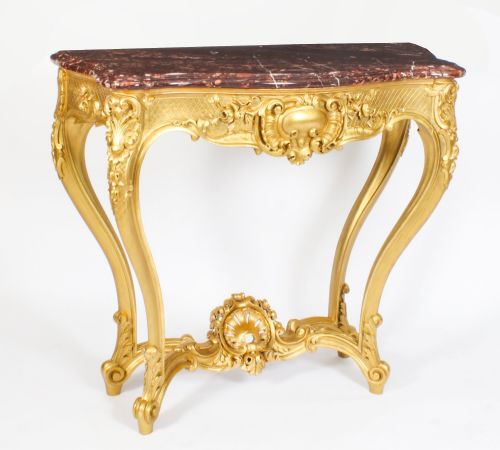
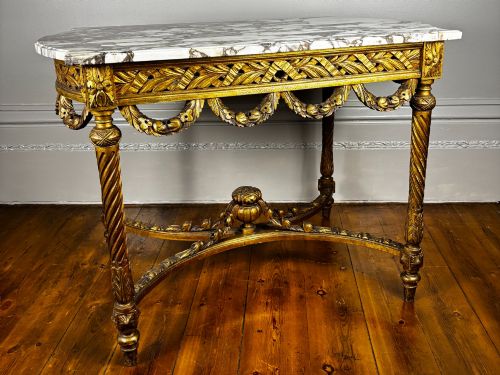
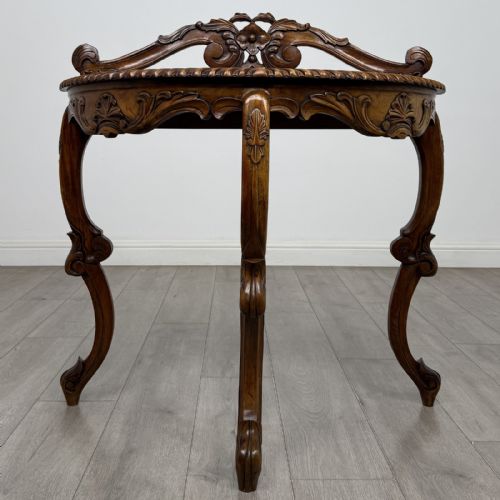
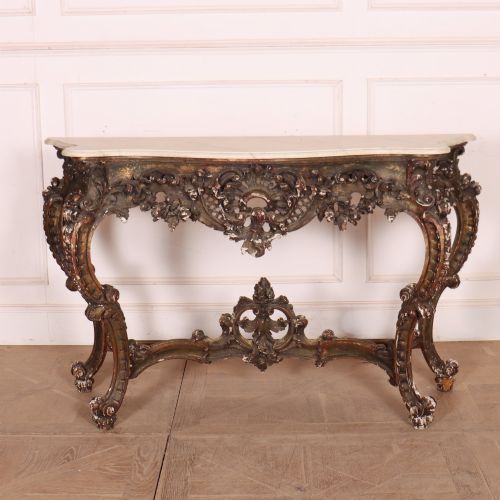
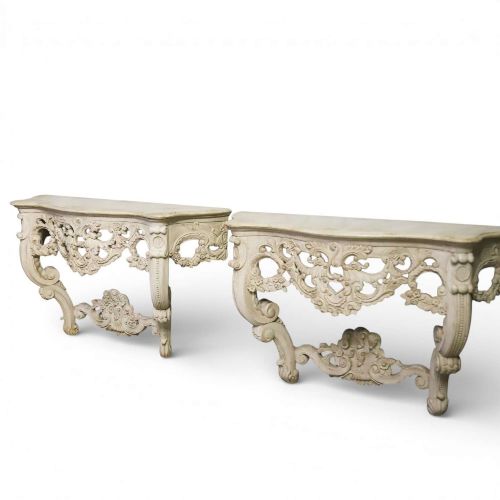
When searching for an ornate french hall table, you encounter console tables, pier tables, and centre tables originating predominantly from the nineteenth and eighteenth centuries. These pieces frequently pair heavy carved wooden frames with fitted marble tops designed to sit against a wall or anchor a hallway.
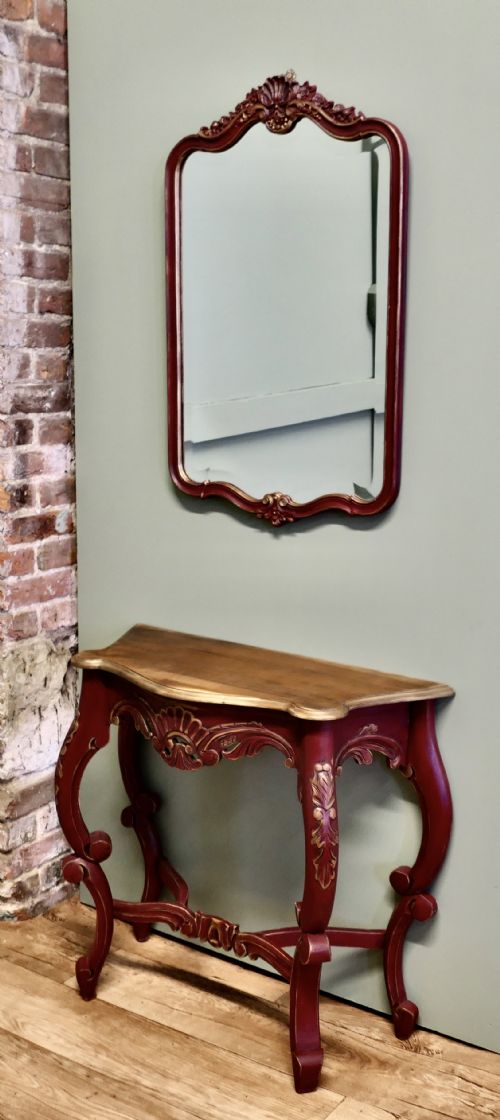
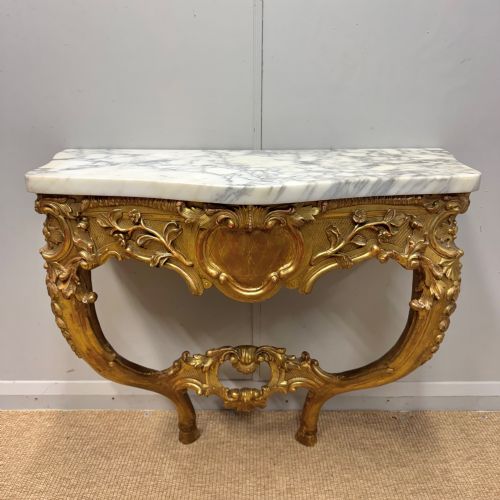
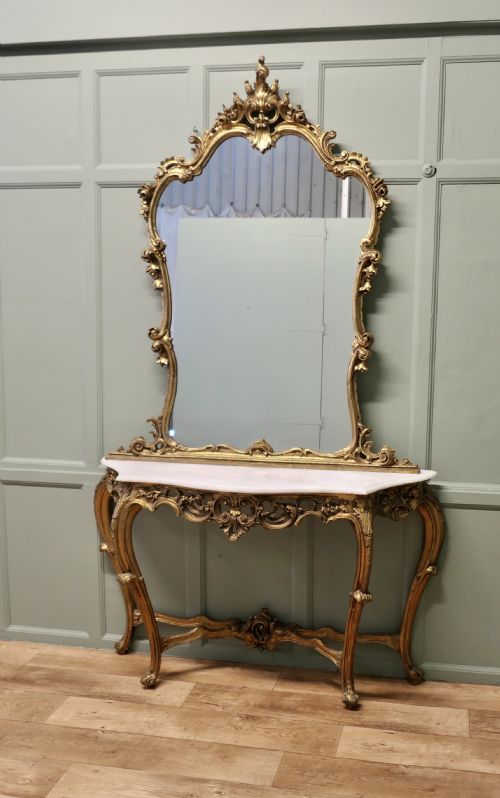
The dominant aesthetic draws heavily on French Rococo and Louis XV revival styles, featuring asymmetrical scrolls, pierced cartouches, and heavily gilt surfaces. Many examples include matching wall mirrors, creating a unified architectural arrangement for a grand interior.
Materials and construction methods
Carpenters carved structural frames from solid timbers including walnut, oak, and pine before applying layers of gesso to prepare the surface for gilding or painting. Artisans laid gold leaf over boluses or applied paint finishes such as antique white and parcel gilt.
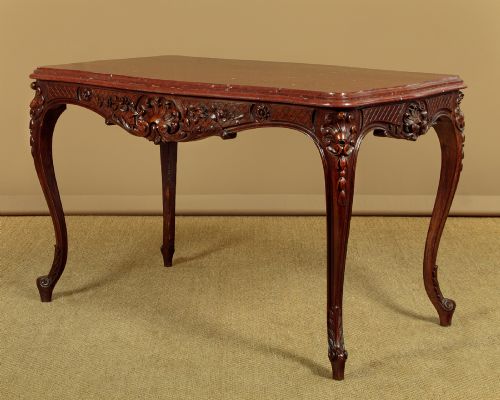
Tops consist predominantly of heavy slabs of marble, including white Carrara and rouge varieties, shaped to follow serpentine or straight fronts. Giltwood and carved wood elements receive intricate hand-chiselling to achieve deep relief ornamentation.
Ornate French Hall Table Retail Price Guide 2026
Typical asking prices for ornate french hall table among the pieces listed under this phrase on Sellingantiques today, from the lower quarter to the upper quarter. They describe what is for sale here now, not the wider market.
Current listings feature materials ranging from Carrara marble and giltwood to carved walnut, alongside periods spanning the eighteenth through the twentieth centuries.
Distinctions in quality
Depth and crispness of the hand-carving separate masterwork frames from mass-produced or later revival pieces, where shallow machine routing lacks dimensional shadow. The quality of the original gilding, specifically the burnished integration of gold leaf over smooth gesso, dictates the visual brilliance of the frame.
The thickness, figuring, and original matching of the marble top significantly influence the integrity of the piece. Superior examples retain intact primary timbers and crisp sculptural details without heavy filler or poorly executed historic repairs.
The Ornate French Hall Table Glossary
- Console table
- A table designed to be fixed against a wall, frequently supported by two front legs with the rear secured to the architectural structure.
- Giltwood
- Timber coated with gold leaf or powder over a prepared gesso ground, creating a reflective metallic surface.
- Gesso
- A plaster mixture applied to carved wooden frames to provide a smooth base for subsequent gilding and paint work.
- Serpentine front
- A furniture edge characterised by a central convex curve flanked by two concave curves.
- Pier table
- A low table specifically built to stand against the wall space situated between two windows.
Ornate French Hall Table: Frequently Asked Questions
Where should an ornate french hall table be placed?
These tables function best in large entrance halls or principal reception rooms where their decorative profiles receive adequate clearance. Placing them against a solid wall allows the associated mirror or carving to anchor the visual space.
Because many examples feature finished backs primarily intended for wall placement, checking the rear construction ensures proper stability without requiring structural wall fixings.
How do I care for a marble top?
Marble surfaces require regular dusting with a soft cloth and immediate blotting of acidic liquids like wine or citrus to prevent etching. Avoid abrasive household cleaners that strip the historic polish from the stone.
Applying a neutral stone wax periodically helps protect the porous surface from moisture rings and daily wear.
Are these tables designed to stand freely?
Traditional console tables rely on wall attachment for complete stability because their front legs carry the downward weight while the rear relies on structural support. Centre tables, by contrast, possess four fully developed legs and stand independently in the middle of a room.
Verifying whether a piece is a true console or a centre table determines how it must be positioned within your interior layout.
How do I distinguish eighteenth-century pieces from later revivals?
Early pieces exhibit hand-cut joinery, mature timber shrinkage, and foundational construction methods consistent with period workshop practices. Nineteenth-century and later revivals often employ machine-sawn elements and standardised decorative motifs while replicating earlier styles.
Examining the underside, tool marks, and wear patterns on the gesso and gilding provides reliable indicators of age.